How Can We Achieve Radical Climate Action Now?
TL;DR
Achieving radical climate action requires concerted global efforts to reach net-zero emissions, which can halt the climate crisis and reverse its impacts. Solutions include transitioning to renewable energy, addressing the negative effects of capitalism, and mobilizing political will. It is crucial to recognize that political will is a renewable resource that can drive necessary change.
Transcript
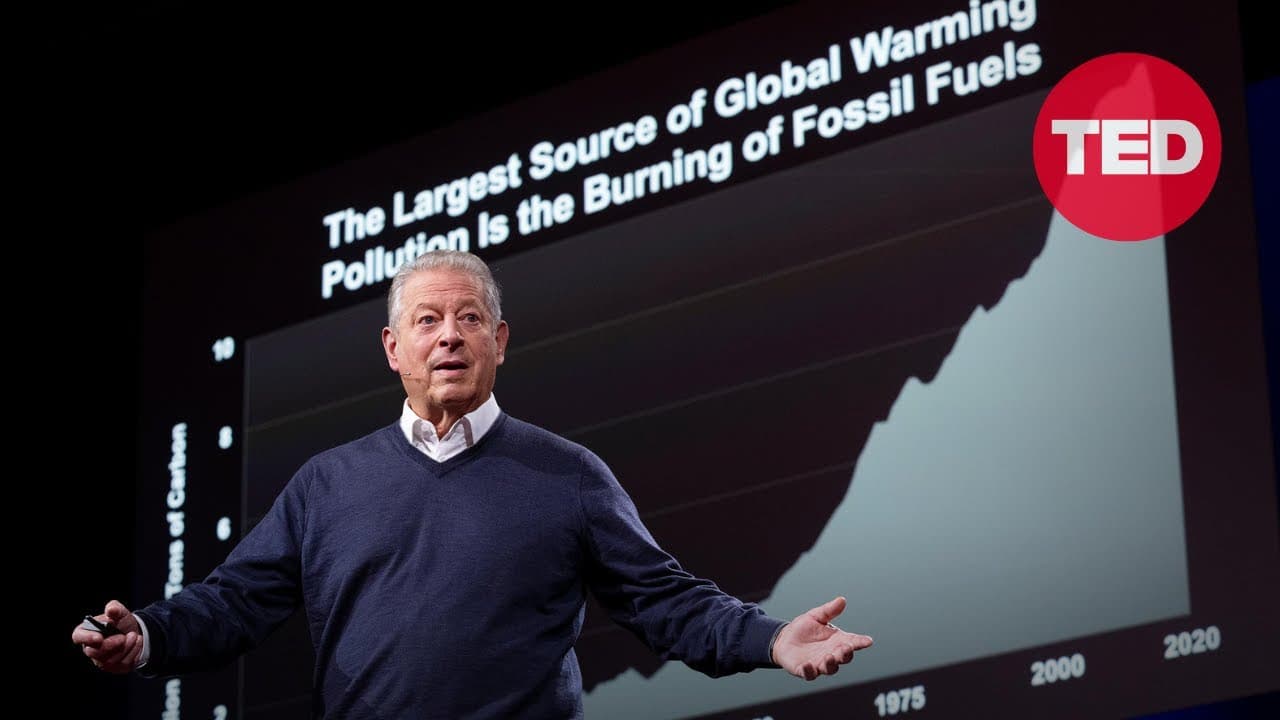
So the climate crisis, in my way of thinking about it, is the most serious manifestation of an underlying collision between human civilization as we’ve presently organized it and the Earth's ecological systems. And the system most in jeopardy is the very thin shell of atmosphere surrounding our planet, because we're spewing 162 million tons of huma... Read More
Key Insights
- 🌍 The climate crisis is the most serious manifestation of the collision between human civilization and Earth's ecological systems, particularly the thin shell of atmosphere surrounding the planet.
- 🔥 Rising temperatures, extreme weather events, and sea level rise are all direct consequences of human-caused global warming pollution.
- 🌊 The increased heat from global warming is causing cyclonic storms, such as hurricanes and typhoons, to become stronger and more frequent.
- 🌧️ Intense rain events, known as "rain bombs," are becoming more frequent and extreme, leading to flooding and devastation.
- 💨 Droughts are worsening, with 93% of the American West currently experiencing drought conditions.
- 🔋 Renewable energy sources, particularly solar and wind, are rapidly becoming the cheapest sources of electricity worldwide.
- 🌱 The sustainability revolution presents the largest business opportunity in history, but reforms are needed to address the negative externalities of capitalism, such as pollution and inequality.
- 🌍 Reaching net-zero emissions is crucial to halt the climate crisis, and it is not an impossible task. Political will is a renewable resource that can drive change.
Install to Summarize YouTube Videos and Get Transcripts
Explore YouTube Video Summarizer or Get YouTube Transcript Extractor
Questions & Answers
Q: What is the most serious manifestation of the collision between human civilization and Earth's ecological systems?
The most serious manifestation of this collision is the climate crisis, which threatens the very thin shell of atmosphere surrounding our planet. Human activities, such as the burning of fossil fuels, are releasing immense amounts of greenhouse gases into the atmosphere, trapping heat and causing temperatures to rise at alarming levels.
Q: How much human-caused global warming pollution is being released into the atmosphere daily?
We are spewing 162 million tons of human-caused global warming pollution into the atmosphere every single day. This amount is equivalent to treating the atmosphere as an open sewer, disregarding its thinness and the impact it has on our planet's climate system.
Q: How does the warming of ocean temperatures affect cyclonic storms?
As the ocean temperatures rise, more water vapor is released into the atmosphere. This, in turn, leads to the intensification of cyclonic storms like hurricanes and typhoons. The warming ocean contributes to the formation of stronger and more destructive storms, posing a significant threat to coastal communities.
Q: What are the impacts of the climate crisis on global population and migration?
The climate crisis is already causing a significant number of climate refugees and migrants, with four times more people being displaced by the climate crisis than by wars and conflicts. The Lancet commission has even predicted that as many as one billion climate refugees may be forced to migrate in this century alone. This wave of migration and displacement is one of the reasons behind the rise of populist authoritarianism.
Q: What are the consequences of the climate crisis on global food security?
Extended droughts, exacerbated by rising temperatures, are resulting in severe food insecurity for millions of people. Southern Africa, in particular, is experiencing food insecurity due to prolonged droughts, affecting around 100 million people. The depletion of resources, such as topsoil and underground water aquifers, further threatens agricultural production and exacerbates food scarcity.
Summary & Key Takeaways
-
The climate crisis is the result of a collision between human civilization and Earth's ecological systems, with the atmosphere being the most vulnerable.
-
Greenhouse gas emissions are causing temperatures to rise at alarming rates, leading to extreme weather events and making certain areas uninhabitable.
-
Solutions to the climate crisis exist, including transitioning to renewable energy sources and implementing reforms in capitalism, but concerted global action is needed to achieve net-zero emissions.
Read in Other Languages (beta)
Share This Summary 📚
Summarize YouTube Videos and Get Video Transcripts with 1-Click
Try YouTube Summary with ChatGPT & Claude or YouTube Transcript Generator
Explore More Summaries from TED 📚



Summarize YouTube Videos and Get Video Transcripts with 1-Click
Try YouTube Summary with ChatGPT & Claude or YouTube Transcript Generator