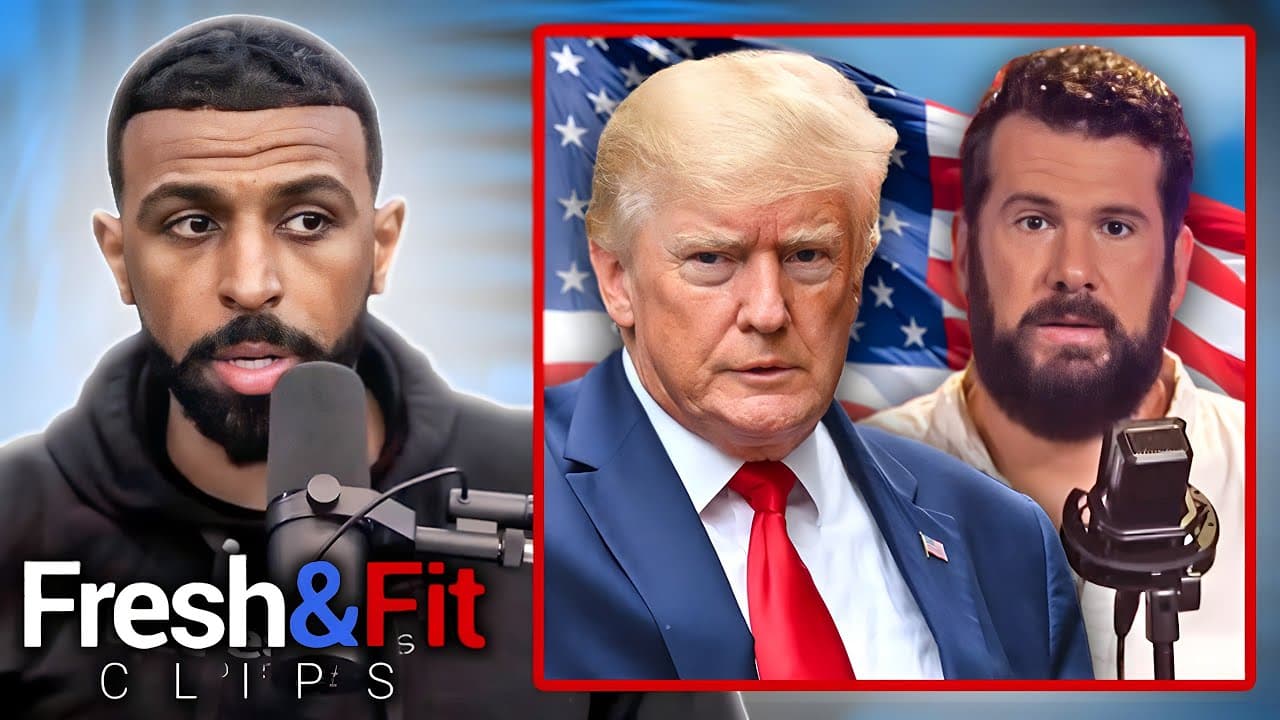
Crowder's HIDDEN Footage Reveals TRUE Reason Trump Got INDICTED
TL;DR
Crowder discusses political motivations behind Trump's indictments and DOJ's actions.
Transcript
okay so yeah let's actually um cover this so you guys saw um Crowder Crowder uh getting banned on Facebook and I think it's also because of this which you guys are going to see right now let's play this clip so we got um St Crowder goes breaking Department of Justice chief of public affairs admits Trump indictments are a politically motivated perve... Read More
Key Insights
- ✋ The discussion emphasizes the perception of a politically motivated justice system, specifically targeting high-profile figures like Trump with allegations that may manipulate legal standards.
- 👨⚖️ Crowder’s critique showcases distrust in the legal proceedings, denouncing the conduct of state prosecutors as opportunistic and focused on gaining publicity rather than delivering true justice.
- 😀 There is a recognition that the political climate impacts public perception of legal actions, potentially rallying supporters around figures facing legal challenges.
- 🍵 The differences between the state and federal judicial systems reflect systemic challenges in handling varied case volumes, contributing to the debate about fairness in prosecution.
- 🇨🇫 Insights into the motivations behind public officials’ statements reveal a tension between legal integrity and political influence, challenging the public's trust in judicial processes.
- 🙂 Concerns over privacy and recording shed light on societal changes regarding communication, illustrating an atmosphere of wariness in personal interactions.
- 🌥️ Historical references to the Southern District of New York enrich the conversation by framing current legal issues within a larger historical narrative of prosecutions in the U.S.
Install to Summarize YouTube Videos and Get Transcripts
Explore YouTube Video Summarizer or Get YouTube Transcript Extractor
Questions & Answers
Q: What is the main argument Crowder presents regarding the Trump indictments?
Crowder argues that the Trump indictments are politically motivated actions orchestrated by the Democrats, specifically calling out Alvin Bragg for allegedly manipulating charges against Trump. He views these actions as underscoring a broader travesty of justice, which might ultimately enhance Trump's appeal among supporters.
Q: Who is the chief of public affairs mentioned in the discussion, and why is he significant?
Nicholas Biasi, the chief of public affairs for the DOJ's Southern District of New York, plays a critical role in the conversation. He commented on the nature of the Trump indictments, indicating that they are politically charged and may demonstrate a perversion of justice, which adds credibility to Crowder’s arguments about political bias in legal proceedings.
Q: What key differences are highlighted between state and federal court systems?
The main distinction lies in the volume and type of cases each court handles. State courts manage a vast array of cases from minor offenses to serious crimes, leading to a more lenient approach towards weaker cases. In contrast, federal courts typically engage in more serious, well-prepared cases, resulting in a significantly higher conviction rate.
Q: How does Crowder perceive the impact of the indictments on Trump’s political status?
Crowder suggests that rather than hindering Trump's campaign, the indictments may actually boost his political status. He argues that these legal challenges reinforce a narrative of victimization and resilience among Trump’s base, which could lead to increased support ahead of elections.
Q: What are the implications of the DOJ's public affairs leader's statements?
The statements made by the DOJ's public affairs chief imply a recognition of the potential political bias affecting legal processes. Such admissions may spark debates on the integrity of the judicial system and the extent to which political interests influence legal actions against prominent figures.
Q: Why does Crowder mention concerns about in-person conversations being recorded?
Crowder expresses concerns about privacy and the possibility of being recorded during candid conversations. He highlights an increasingly cautious approach to public discourse, revealing anxieties surrounding the motivations of individuals who might be recording conversations for ulterior purposes.
Q: What historical context does Crowder provide regarding the Southern District of New York?
Crowder outlines that the Southern District of New York is notable for its aggressive prosecution strategies and historical significance, referencing its successes against organized crime, including the Mafia. This context emphasizes the district's reputation and suggests a pattern of strong legal actions in politically charged cases.
Summary & Key Takeaways
-
Steven Crowder critiques the recent indictments against Donald Trump, labeling them as politically motivated from the Department of Justice, specifically the actions led by Alvin Bragg, alleging a manipulation of justice.
-
A clip featuring a DOJ chief of public affairs suggests internal conflicts in the justice system, revealing that Trump's indictments may backfire and bolster his support among voters.
-
The conversation touches on the differences between state and federal court systems, emphasizing how state prosecutors face a higher volume of cases, leading to potentially weaker cases against high-profile figures like Trump.
Read in Other Languages (beta)
Share This Summary 📚
Summarize YouTube Videos and Get Video Transcripts with 1-Click
Try YouTube Summary with ChatGPT & Claude or YouTube Transcript Generator
Explore More Summaries from FreshandFit 📚

Summarize YouTube Videos and Get Video Transcripts with 1-Click
Try YouTube Summary with ChatGPT & Claude or YouTube Transcript Generator