How to Negotiate Effectively in English at Work
TL;DR
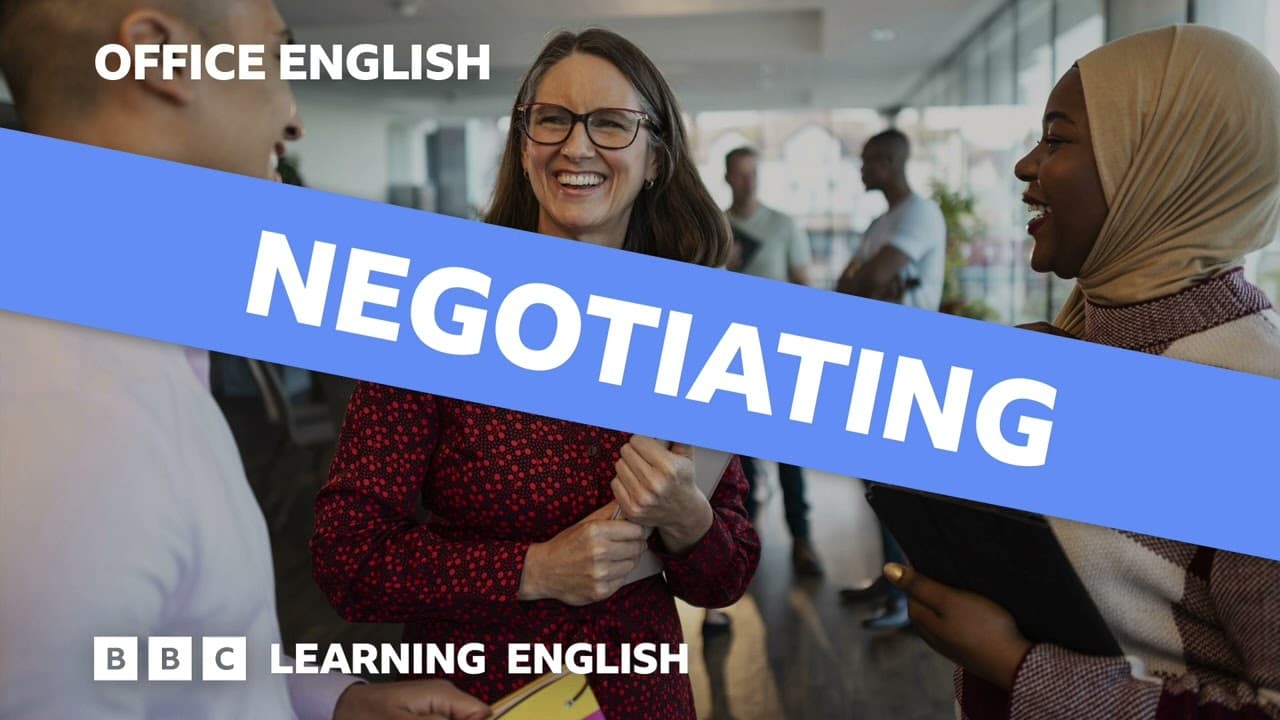
To negotiate effectively in English at work, be clear about what you want before starting the discussion. Use polite phrases to initiate the conversation, and don't hesitate to make a higher opening offer to allow room for compromise. Maintaining a friendly tone throughout the negotiation helps foster positive relationships afterwards.
Transcript
Sometimes at work, we need to be able to negotiate. I guess the important thing is to be sure of what you actually want, so um you don't want to come away feeling that you've er negotiated badly. I find negotiating very awkward because my main instinct is to be polite and kind, so I find it quite difficult to be direct in what I want. Today on Of... Read More
Key Insights
- Negotiation is essential in professional settings to ensure you achieve desired outcomes without feeling compromised.
- Opening a negotiation often involves polite small talk before getting down to business, especially in UK contexts.
- Starting with a higher offer than what you'd accept is a common tactic in negotiations to reach a favorable compromise.
- Haggling involves professional and persistent discussions to agree on a price, often requiring compromise and strategic phrasing.
- Effective negotiation phrases include 'cover our costs' and 'realistic about our budget' to justify price points.
- Maintaining a positive business relationship post-negotiation is crucial, using phrases like 'I look forward to working with you.'
- Negotiations can be challenging for those not accustomed to them, emphasizing the importance of preparation and clarity on desired outcomes.
- Being clear about acceptable high and low points before entering negotiations helps avoid unfavorable agreements.
Install to Summarize YouTube Videos and Get Transcripts
Explore YouTube Video Summarizer or Get YouTube Transcript Extractor
Questions & Answers
Q: How should one start a negotiation in a UK context?
In the UK, negotiations typically begin with polite small talk or pleasantries before addressing the main business matters. This approach helps set a friendly tone and eases into the negotiation process. Once the initial greetings are done, phrases like 'Let's get down to business' can be used to transition into the negotiation phase.
Q: What is a common tactic used in negotiations?
A common tactic in negotiations is to start with a higher offer than what one is actually willing to accept. This strategy allows room for negotiation and compromise, potentially leading to a more favorable outcome. By initially asking for more, negotiators can navigate the discussion to reach an agreeable middle ground.
Q: What are some effective phrases to use during a negotiation?
Effective phrases in negotiations include 'We need to cover our costs' and 'We have to be realistic about our budget.' These phrases help justify price points and demonstrate a realistic approach to the negotiation process. They also help maintain a professional tone and focus the discussion on practical considerations.
Q: How can one maintain a positive relationship after a negotiation?
To maintain a positive relationship after a negotiation, it's important to end on a friendly note. Phrases like 'I look forward to working with you' or 'It was great doing business with you' help reinforce a collaborative spirit. This approach ensures that both parties leave the negotiation feeling respected and open to future interactions.
Q: What challenges do people face during negotiations?
Many people find negotiations challenging because they require directness and assertiveness, which can be uncomfortable for those accustomed to being polite and kind. Additionally, negotiations often involve strategic thinking and compromise, which can be difficult for those who are not experienced or confident in these areas.
Q: Why is preparation important before entering a negotiation?
Preparation is crucial before entering a negotiation to ensure clarity on what you want to achieve. Knowing your acceptable high and low points helps prevent unfavorable agreements and ensures you don't concede too much. Being prepared also boosts confidence and helps navigate the negotiation process more effectively.
Q: How does haggling differ from other negotiation tactics?
Haggling is a form of negotiation that involves persistent and professional discussions to agree on a price. Unlike other negotiation tactics that might involve more formal presentations or discussions, haggling is characterized by back-and-forth exchanges and requires both parties to be flexible and open to compromise.
Q: What role does cultural context play in negotiations?
Cultural context plays a significant role in negotiations, as different cultures have varying approaches to communication and business interactions. For example, in the UK, negotiations often start with small talk, while in other cultures, discussions may begin more directly. Understanding these cultural nuances is essential for effective international business negotiations.
Summary & Key Takeaways
-
Negotiation at work involves discussions to achieve desired outcomes, often requiring strategic communication and compromise. In the UK, negotiations typically start with polite small talk before addressing business matters directly. Knowing what you want is crucial to ensure effective negotiation.
-
Key negotiation tactics include starting with a higher offer and using specific phrases to justify prices. Haggling is a professional back-and-forth discussion, aiming for a compromise. It's important to maintain a positive relationship with the other party after negotiations.
-
Negotiations can be challenging, especially for those not used to them. Preparation and clarity on what you want to achieve are essential. Ending negotiations on a positive note helps maintain business relationships and ensures future collaboration.
Read in Other Languages (beta)
Share This Summary 📚
Summarize YouTube Videos and Get Video Transcripts with 1-Click
Try YouTube Summary with ChatGPT & Claude or YouTube Transcript Generator
Explore More Summaries from BBC Learning English 📚
Summarize YouTube Videos and Get Video Transcripts with 1-Click
Try YouTube Summary with ChatGPT & Claude or YouTube Transcript Generator