Cell Biology: Active Transport
TL;DR
Active transport is the process by which cells move particles from areas of low concentration to high concentration, requiring energy, and it can be achieved through endocytosis, exocytosis, or protein pumps.
Transcript
in this video we'll discuss active transport active transport is when particles move from an area of low concentration to high concentration this is also known as moving against the concentration gradient the key thing to remember is that active transport requires energy if passive transport is like a ball naturally rolling down a hill active trans... Read More
Key Insights
- 🧠 Active transport is a process in which particles move from an area of low concentration to high concentration, requiring energy.
- 🚀 Heart muscle cells, responsible for the heart's heartbeat, use active transport to move molecules or ions against their concentration gradient.
- 🔑 There are three main types of active transport: endocytosis, exocytosis, and protein pumps.
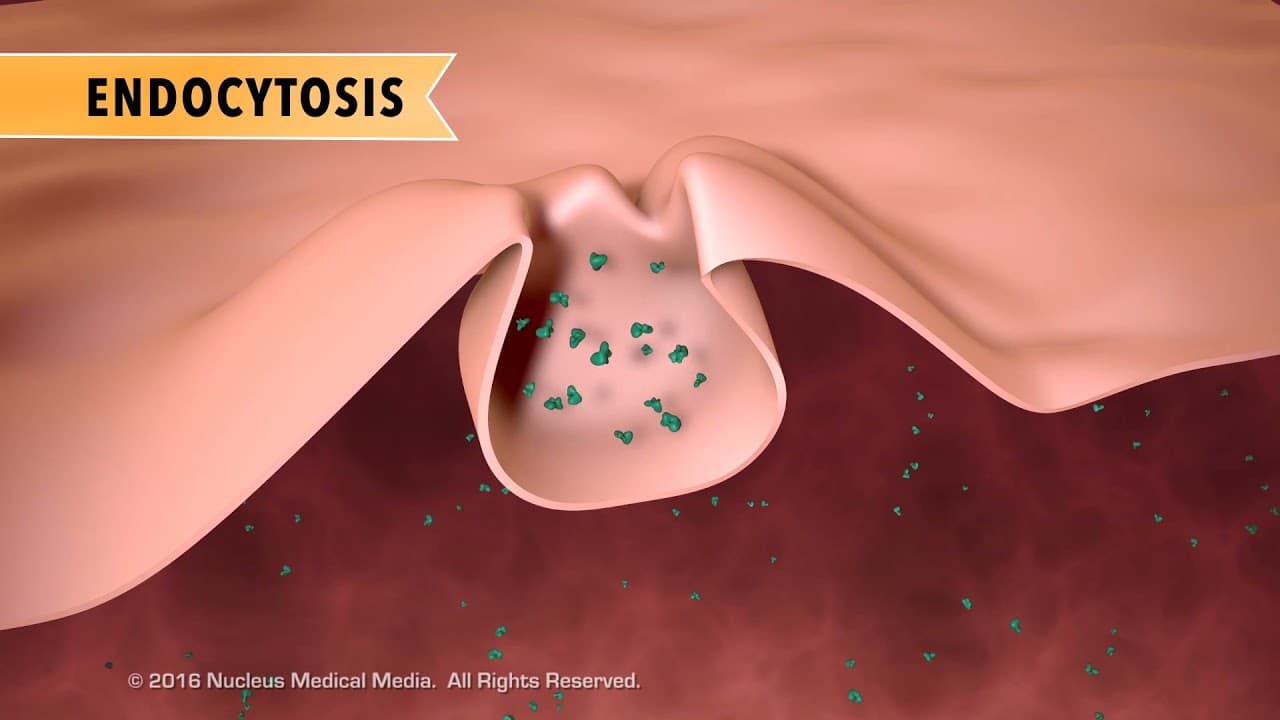
- 🔎 Endocytosis is the process by which cells pull in large particles by creating pockets in the cell membrane, with phagocytosis and pinocytosis being specific types.
- ⤴️ Exocytosis is the opposite of endocytosis, where molecules or wastes exit the cell by fusing vesicles with the cell membrane.
- ⚡ Protein pumps, such as the sodium-potassium pump, use energy to move small molecules or ions against the concentration gradient into or out of the cell.
- 🌟 Active transport plays a vital role in maintaining cell function and proper substance movement.
- 🔁 Remember: "Exocytosis" sounds like "exit," representing things leaving the cell, while "endocytosis" sounds like "enter," representing things moving into the cell.
Install to Summarize YouTube Videos and Get Transcripts
Explore YouTube Video Summarizer or Get YouTube Transcript Extractor
Questions & Answers
Q: How does endocytosis differ from exocytosis?
Endocytosis and exocytosis are opposite processes in active transport. Endocytosis involves pulling in large particles by creating pockets in the cell membrane, while exocytosis removes large molecules by fusing vesicles with the membrane to force them out of the cell.
Q: How do protein pumps function in active transport?
Protein pumps are used by cells to move small molecules or ions against the concentration gradient. They require energy in the form of ATP molecules to transport sodium ions out of the cell and potassium ions into the cell.
Q: What is the purpose of active transport in cells?
Active transport is necessary for cells to properly function. It allows the movement of substances into or out of the cell against the concentration gradient, enabling vital processes such as the contraction of heart muscle cells.
Q: How is endocytosis classified into different types?
Endocytosis can be classified into different types based on the specific mechanisms involved. Phagocytosis is a type of endocytosis where the cell engulfs large particles, while pinocytosis involves the formation of pockets in the cell membrane to ingest fluids.
Q: Why does active transport require energy?
Active transport requires energy because it involves moving particles against the concentration gradient, from areas of low concentration to high concentration. This movement requires the cell to expend energy in order to maintain the balance of substances.
Summary & Key Takeaways
-
Active transport involves moving particles from areas of low concentration to high concentration, requiring energy.
-
Endocytosis is a type of active transport where cells pull in large particles by creating pocket-like structures in the cell membrane.
-
Exocytosis is the opposite process of endocytosis, where cells remove large molecules or wastes by fusing vesicles with the cell membrane.
-
Protein pumps are special pumps that use energy to move small molecules or ions against the concentration gradient into or out of the cell.
Read in Other Languages (beta)
Share This Summary 📚
Summarize YouTube Videos and Get Video Transcripts with 1-Click
Try YouTube Summary with ChatGPT & Claude or YouTube Transcript Generator
Explore More Summaries from Nucleus Biology 📚
Summarize YouTube Videos and Get Video Transcripts with 1-Click
Try YouTube Summary with ChatGPT & Claude or YouTube Transcript Generator