Japanese Rice Bowl vs. Korean Rice Bowl
TL;DR
Japanese and Korean rice bowls are compared for their unique ingredients, flavors, and enjoyment.
Transcript
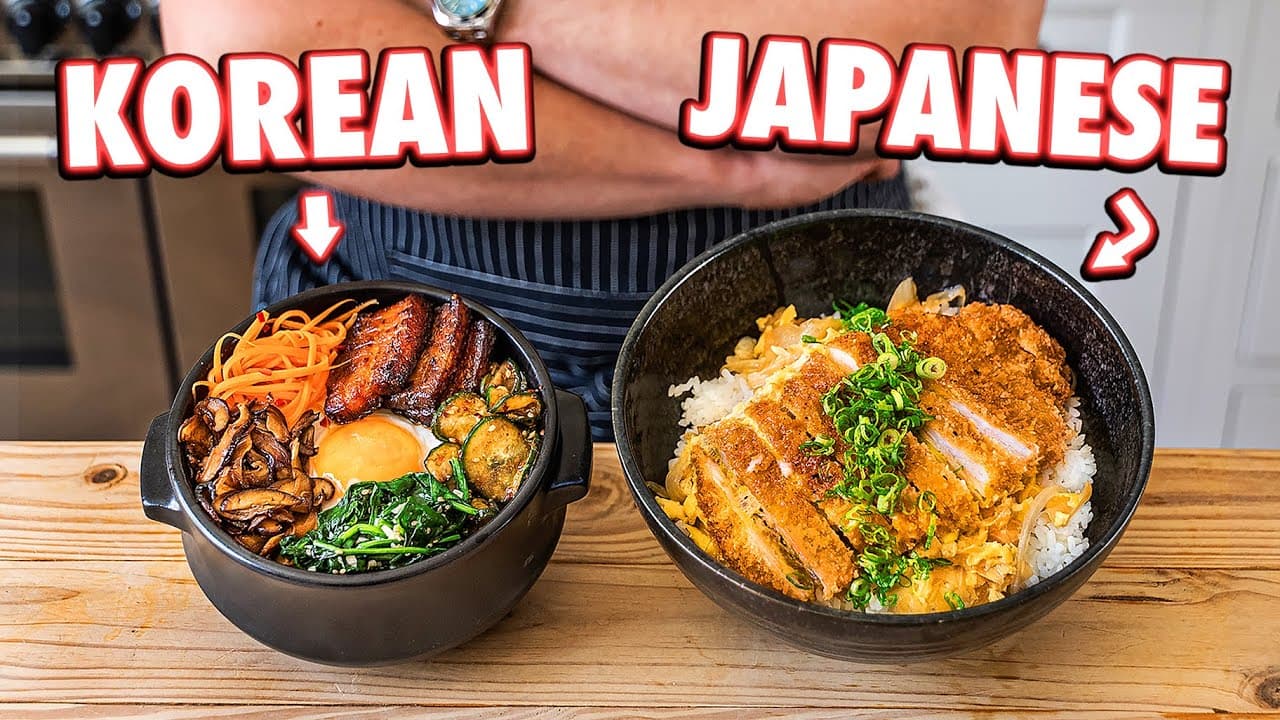
everybody loves a rice bowl so we're putting arguably the two best head to head okay so today is japanese versus korean rice bowl two cuisines that i have so much love for they share some similarities but there's also vast differences not only in the ingredients but the flavors the way they're combined the way that they're enjoyed this isn't just a... Read More
Key Insights
- 👹 Japanese and Korean rice bowls offer distinct flavors and ingredients.
- 💨 Katsudon is focused on a sweet dashi broth and fried pork, while bibimbap has marinated pork belly and a variety of toppings.
- 🌾 Both rice bowls can be customized with different proteins and vegetables.
- 🌾 The choice between the two rice bowls depends on personal preference for simplicity or complexity of flavors.
- 👹 Japanese katsudon is easier to make, while Korean bibimbap requires more preparation and assembly.
- 🏪 Sourcing specific ingredients like gochujang and shiradashi may require a visit to an Asian grocery store.
- 🌾 Experimenting with different toppings and seasonings can create unique variations of these rice bowls.
Install to Summarize YouTube Videos and Get Transcripts
Explore YouTube Video Summarizer or Get YouTube Transcript Extractor
Questions & Answers
Q: What is the main difference between a Japanese rice bowl and a Korean rice bowl?
The main difference lies in the ingredients and flavors. Japanese katsudon focuses on fried pork and a sweet dashi broth, while Korean bibimbap offers a variety of marinated meats, pickled vegetables, and spicy flavors.
Q: Can the pork in katsudon be substituted with other proteins?
Yes, you can substitute the pork with chicken, beef, or even tofu to create a different variation of katsudon.
Q: Where can I find ingredients like gochujang and shiradashi?
Gochujang and shiradashi can usually be found at Asian grocery stores or online. If you can't find shiradashi, you can omit it or try using soy sauce as a substitute.
Q: Is it necessary to use a rice cooker for cooking the rice?
While a rice cooker ensures perfectly cooked rice, you can also use a saucepan or pot to cook the rice on the stovetop. Just make sure to follow the cooking instructions on the rice packaging.
Summary & Key Takeaways
-
Japanese rice bowl (katsudon): Make a quick dashi broth, fry pork chops, and combine them with a mixture of eggs, onions, and seasonings. Serve over rice.
-
Korean rice bowl (bibimbap): Prepare marinated pork belly, pickled carrots, mushrooms, spinach, and cucumbers. Arrange them on top of rice, topped with a fried egg and bibimbap sauce.
Read in Other Languages (beta)
Share This Summary 📚
Summarize YouTube Videos and Get Video Transcripts with 1-Click
Try YouTube Summary with ChatGPT & Claude or YouTube Transcript Generator
Explore More Summaries from Joshua Weissman 📚




Summarize YouTube Videos and Get Video Transcripts with 1-Click
Try YouTube Summary with ChatGPT & Claude or YouTube Transcript Generator