Six Buildings That Shaped Harvard History
Transcript
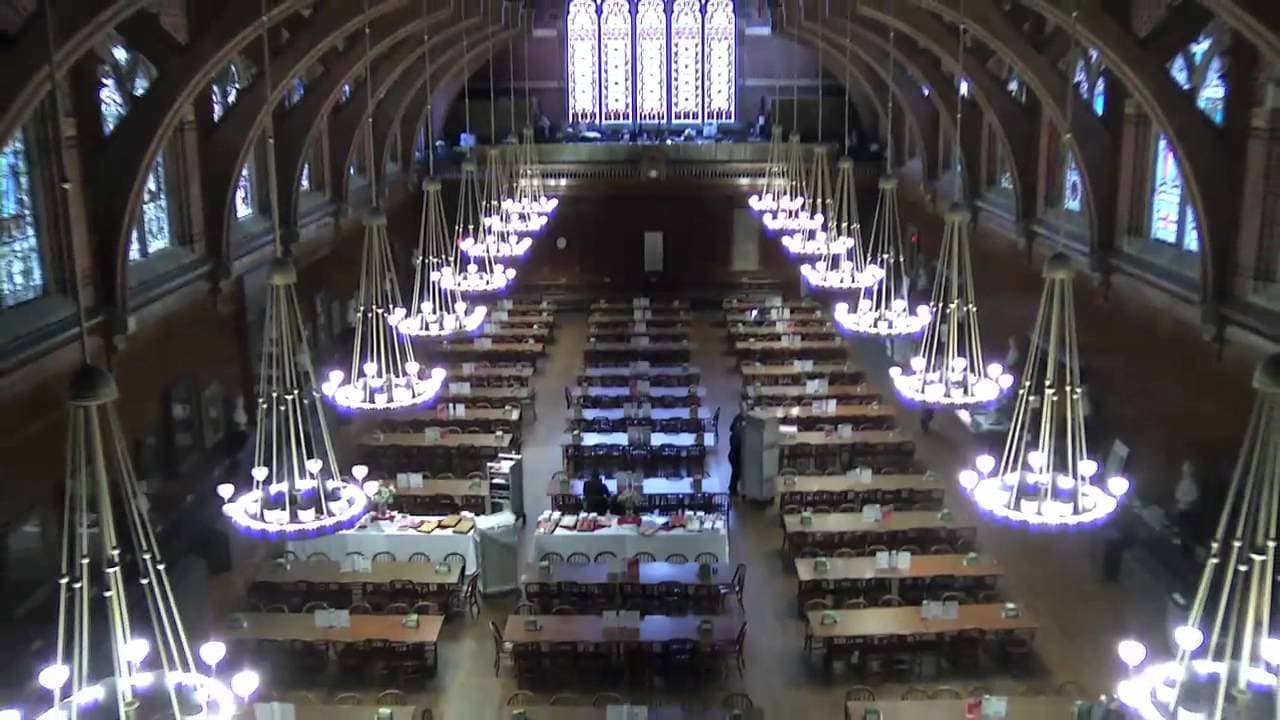
[MUSIC PLAYING] MICHAEL WEISHAN: As with most stories, it's best to begin at the beginning. And Harvard story begins right here in this tiny quadrangle formed by Massachusetts and Harvard Halls. Harvard's first building, called the Old College, or the first Harvard Hall, had been built just to the South in 1638. Poorly sited and hastily built with ... Read More
Install to Summarize YouTube Videos and Get Transcripts
Explore YouTube Video Summarizer or Get YouTube Transcript Extractor
Summary
This video discusses the history of Harvard University, starting from its early buildings and the intertwined financial relationship with the colonial government. It explores how the move to Cambridge had unintentional effects on the college and how it became increasingly radical during the revolutionary period. The video also highlights the building campaign and reforms during Charles W. Eliot's presidency, the construction of the Widener Library, and the establishment of the housing system.
Questions & Answers
Q: When was the first Harvard Hall built and why was it demolished?
The first Harvard Hall was built in 1638, but it was poorly constructed and made of inexpensive timber. It only lasted for about 30 years before being demolished.
Q: How did the relationship between the governor and the college impact Harvard during the cholera epidemic?
The governor and the college had a close relationship, and during the cholera epidemic in 1764, the governor moved the court to Cambridge, where Harvard Hall was located. Unfortunately, the building was consumed by fire, leading to the loss of almost all of Harvard's collection. The governor immediately appropriated funds for the college to build the third Harvard Hall.
Q: Why did Harvard move to Concord during the revolutionary period?
With the political situation in Boston deteriorating rapidly in 1770, the governor decided that Harvard Hall in Cambridge would be a much safer place for the court than the rebellion-plagued streets of Boston. The college administration reluctantly moved to Concord, where they stayed for four years until the court was dissolved in 1774.
Q: How did the move to Cambridge affect the students' involvement in the revolutionary cause?
The move to Cambridge allowed the students to be in closer proximity to the revolutionary leaders like Hancock, Otis, and Adams. As they listened to their fiery speeches in Harvard Hall and met under the Liberty elm, the students became increasingly supportive of the revolutionary cause, leading to the radicalization of the student body.
Q: How did the Revolutionary years impact Harvard financially and politically?
Harvard depended largely on the colonial government for its funding, but the revolutionary fever made it difficult for the college to please everyone. The dire financial straits and the refusal of John Hancock, the treasurer, to pay Harvard's bills resulted in the college entering the 19th century in a precarious position. The revolution also led to the questioning of Harvard's colonial past and its place in the new nation.
Q: How did Charles W. Eliot change Harvard during his presidency?
Charles W. Eliot, who became president in 1869, implemented significant reforms at Harvard. He brought about changes in the medical and law schools, introduced a new undergraduate curriculum with equal emphasis on modern languages, science, and the classics, and initiated a building campaign that reshaped the university. By the end of his 40-year tenure in 1909, Harvard had greatly expanded and modernized its facilities.
Q: How did the construction of Memorial Hall impact Harvard's reputation?
The construction of Memorial Hall in the late 19th century brought national attention to Harvard. People traveled from all around to view the massive building and experience its vast interior space. It became a symbol of Harvard's grandeur and positioned the university as a rival to Oxford and Cambridge.
Q: Who was Harry Elkins Widener and how did his death impact Harvard?
Harry Elkins Widener was a Harvard graduate and a prominent rare book collector. Unfortunately, he died in the sinking of the Titanic in 1912, along with his father and a significant portion of his book collection. His mother, Eleanor Elkins Widener, decided to donate funds for the construction of a new library at Harvard in his memory, which eventually became the Widener Library.
Q: Why did the Harvard Union fail as a social experiment?
The Harvard Union was intended to be a gathering place for students who couldn't afford the luxuries of the final clubs. However, the students of the early 20th century didn't show much interest in social equality. Membership declined, and the facility became financially unstable. The Crimson, Harvard's college newspaper, also moved out of the Union, further contributing to its decline.
Q: How did the housing system at Harvard come into existence?
The housing system at Harvard was introduced by President Abbott Lawrence Lowell in the early 20th century. Lowell believed that a college education should involve more than just classroom learning and that students needed to interact with peers from different backgrounds. He envisioned a system of small residential colleges, modeled after Oxford and Cambridge, that would create small communities within the university. Edward Harkness, a Yale graduate, provided the necessary funds to build the initial river houses.
Takeaways
Throughout its history, Harvard University has undergone significant changes and reforms. From its early buildings and financial relationship with the colonial government to the construction of iconic structures like Memorial Hall and the Widener Library, Harvard's reputation as an elite institution has solidified over time. The implementation of the housing system has also played a crucial role in creating a sense of community and fostering intellectual growth. These historical developments have shaped Harvard into the prestigious university it is today.
Read in Other Languages (beta)
Share This Summary 📚
Summarize YouTube Videos and Get Video Transcripts with 1-Click
Try YouTube Summary with ChatGPT & Claude or YouTube Transcript Generator
Explore More Summaries from Harvard University 📚


Summarize YouTube Videos and Get Video Transcripts with 1-Click
Try YouTube Summary with ChatGPT & Claude or YouTube Transcript Generator