Correlation vs. Causality: Unraveling the Relationship | Shao Lei | TEDxBeijing 101 High School
TL;DR
Correlation does not imply causation, and understanding the difference is crucial when examining data and making conclusions.
Transcript
thank you George though George's uh Speech he really led me to reconsider whether our volunteer work is doing any good anyway our next speaker is Professor sha from the Central University of finance and economics his research interests includes local government Finance property Taxation and Social Security his speech shall lead us into his world ex... Read More
Key Insights
- 🥺 Correlation between two variables does not imply a causal relationship, leading to potentially misleading conclusions.
- 💄 Sample selection bias can affect the results when studying a specific population, making the observations non-representative.
- 🌥️ Even large sample sizes may suffer from selection bias if not chosen randomly.
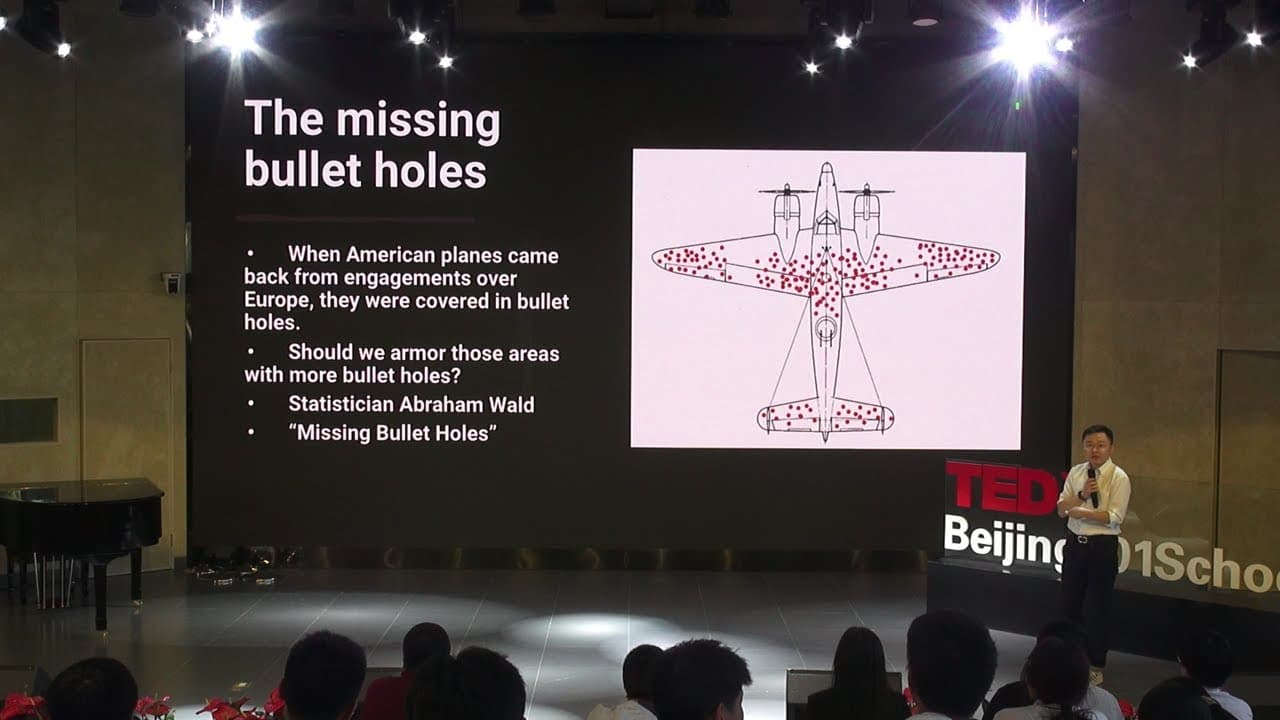
- ❓ Survival bias should also be considered, as observations often focus on the survivors rather than the entire population.
- 🏑 Causality is essential when analyzing public policies and making informed decisions in various fields such as economics.
- 🧑⚕️ Understanding correlation versus causality is crucial in evaluating health advice, success stories, and personal mindset.
Install to Summarize YouTube Videos and Get Transcripts
Explore YouTube Video Summarizer or Get YouTube Transcript Extractor
Questions & Answers
Q: What is the difference between correlation and causality?
Correlation refers to the relationship between two variables, where they often occur together. Causality, on the other hand, suggests that one variable is the reason for the occurrence of another.
Q: Why is it crucial to differentiate between correlation and causality?
Understanding the difference prevents us from drawing incorrect conclusions and making faulty assumptions based on observed associations.
Q: What can cause correlation without implying causation?
Other factors, known as omitted variables, can contribute to the correlation between two variables. These omitted variables are what cause the occurrence of both variables without one causing the other.
Q: How does reverse causality play a role in correlation?
Reverse causality occurs when the relationship between two variables can be interpreted in the opposite direction. For example, smoking may not cause depression, but depression may lead individuals to smoke.
Summary & Key Takeaways
-
Professor Sha discusses the difference between correlation and causality, using various examples to illustrate how mistaking correlation for causation can lead to incorrect conclusions.
-
He highlights the importance of considering alternative explanations and factors that may influence the observed relationship between variables.
-
The speech emphasizes the significance of understanding causality, particularly in scientific research, social sciences, and everyday decision-making.
Read in Other Languages (beta)
Share This Summary 📚
Summarize YouTube Videos and Get Video Transcripts with 1-Click
Try YouTube Summary with ChatGPT & Claude or YouTube Transcript Generator
Explore More Summaries from TEDx Talks 📚






Summarize YouTube Videos and Get Video Transcripts with 1-Click
Try YouTube Summary with ChatGPT & Claude or YouTube Transcript Generator