How to Image Renal Proteins Using Expansion Microscopy
TL;DR
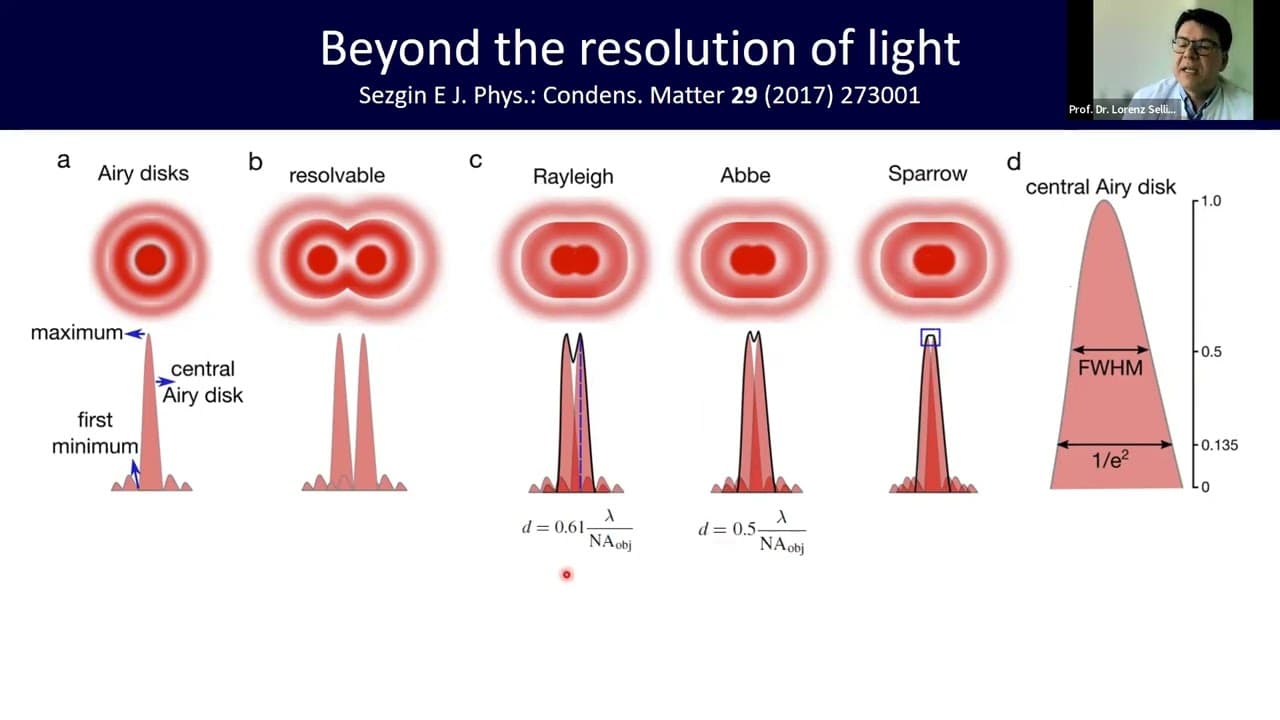
Expansion microscopy allows visualization of renal proteins at high resolution by physically expanding the sample, overcoming light microscopy's diffraction limits. This technique involves immunolabeling, anchoring, hydrogel embedding, and enzymatic digestion, leading to sample expansion. It offers a cost-effective alternative to super-resolution microscopy, enabling detailed study of structures like synaptic gaps and renal slit diaphragms.
Transcript
so welcome to the webinar my name is Ron Myers I'm the director of editorial here at Joe and today we're going to be having an update webinar from Dr Sullen at the unit uh at the University of Dusseldorf so he published with with us a few years back um on expansion microscopy and measuring measuring various photosynic proteins like actin various ot... Read More
Key Insights
- Expansion microscopy enables visualization of structures smaller than the diffraction limit of light microscopy by physically expanding the sample.
- The process involves immunolabeling, anchoring the labeled proteins to a hydrogel, and enzymatic digestion to allow for expansion.
- A typical expansion factor is 4.5 times, allowing for detailed visualization of subcellular structures such as synaptic vesicles and renal slit diaphragms.
- Some fluorescent dyes are incompatible with expansion microscopy due to chemical treatments, affecting signal intensity.
- Expansion microscopy provides a cost-effective alternative to super-resolution microscopy techniques like STED and STORM.
- The technique allows for multi-color labeling, making it versatile for various biological applications.
- Challenges include potential rupture artifacts during expansion and the dilution effect on rare antigens.
- The method is not yet routine in pathology, but offers promising applications in detailed structural imaging.
Install to Summarize YouTube Videos and Get Transcripts
Explore YouTube Video Summarizer or Get YouTube Transcript Extractor
Questions & Answers
Q: How does expansion microscopy overcome the diffraction limit of light microscopy?
Expansion microscopy overcomes the diffraction limit by physically expanding the sample, allowing structures smaller than 200 nanometers to be visualized. This is achieved by anchoring immunolabeled proteins to a hydrogel, digesting the structural matrix, and expanding the gel. The process magnifies the sample, effectively increasing resolution without the need for specialized equipment.
Q: What are the main steps involved in the expansion microscopy process?
The main steps in expansion microscopy include immunolabeling the target proteins, anchoring them to a hydrogel using a cross-linker, enzymatically digesting the structural matrix, and expanding the gel in a hyperosmotic medium. This process physically enlarges the sample, allowing for high-resolution imaging of subcellular structures using conventional fluorescence microscopy.
Q: What are the advantages of using expansion microscopy over other super-resolution techniques?
Expansion microscopy offers several advantages over other super-resolution techniques like STED and STORM. It is less expensive, does not require specialized equipment, and allows for multi-color labeling. Additionally, it provides fast image acquisition and is accessible using conventional fluorescence microscopes, making it a practical choice for many laboratories.
Q: What challenges might researchers face when using expansion microscopy?
Researchers may face challenges such as rupture artifacts during expansion, which can distort the sample. Additionally, the expansion process dilutes the antigen concentration, making it difficult to detect rare proteins. Some fluorescent dyes are also incompatible with the chemical treatments used in expansion microscopy, potentially affecting signal intensity and image quality.
Q: Can expansion microscopy be used on paraffin-embedded tissue samples?
Yes, expansion microscopy can be applied to paraffin-embedded tissue samples. Protocols are available for deparaffinization, typically involving paraformaldehyde fixation. Once deparaffinized, the samples can undergo the standard expansion microscopy process, allowing for high-resolution imaging of tissue structures.
Q: How can researchers ensure uniform expansion of their samples?
To ensure uniform expansion, researchers should ensure complete enzymatic digestion of the sample's structural matrix. Proper digestion allows the hydrogel to expand evenly without distortion. Additionally, using high-quality reagents and following established protocols can help achieve consistent and uniform expansion across samples.
Q: What types of biological structures can be studied with expansion microscopy?
Expansion microscopy is suitable for studying a wide range of biological structures, including synaptic vesicles, nuclear pores, focal adhesions, and renal slit diaphragms. Its high-resolution capabilities make it ideal for examining subcellular structures and understanding complex biological processes at a molecular level.
Q: What is the future potential of expansion microscopy in biological research?
The future potential of expansion microscopy lies in its ability to provide high-resolution images of complex biological structures using conventional equipment. As the technique evolves, it may become more routine in fields like pathology and neuroscience. Advances in hydrogel chemistry and labeling strategies could further enhance its applicability and resolution, opening new avenues for biological discovery.
Summary & Key Takeaways
-
Expansion microscopy allows researchers to visualize small structures beyond the diffraction limit of conventional light microscopy. By anchoring labeled proteins to a hydrogel and expanding the sample, the technique achieves high resolution imaging of subcellular structures. It offers a cost-effective alternative to more expensive super-resolution techniques.
-
The process involves immunolabeling, cross-linking proteins to a hydrogel, and enzymatic digestion to facilitate expansion. While it offers multi-color labeling capabilities, researchers must consider dye compatibility and potential artifacts. This method is particularly useful in studying complex biological structures like synaptic vesicles and renal slit diaphragms.
-
Despite its advantages, expansion microscopy faces challenges such as rupture artifacts and antigen dilution. However, its ability to produce high-resolution images using standard fluorescence microscopes makes it a valuable tool for biological research, with potential applications in various fields including pathology and neuroscience.
Read in Other Languages (beta)
Share This Summary 📚
Summarize YouTube Videos and Get Video Transcripts with 1-Click
Try YouTube Summary with ChatGPT & Claude or YouTube Transcript Generator