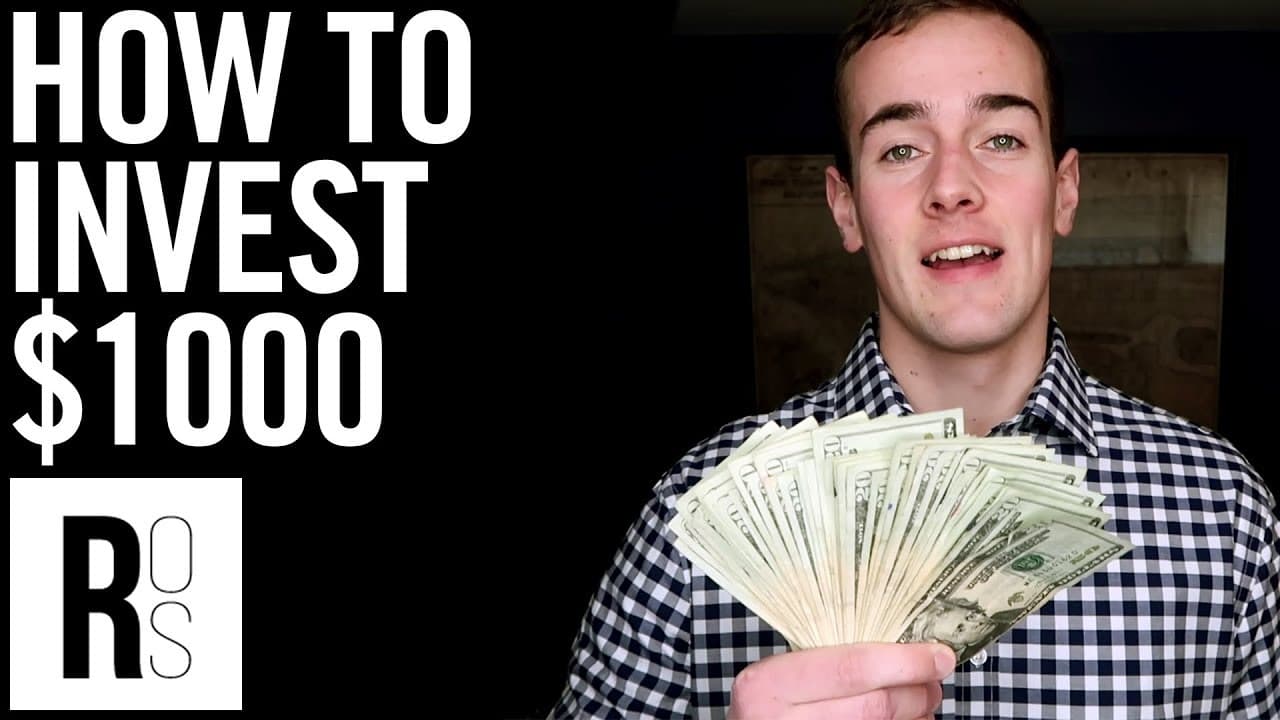
HOW TO INVEST $1,000 💸 6 Ways To Invest Your First 1000 Dollars!
TL;DR
Learn how to make the most of your first $1,000 by paying off high interest debt, building a cash cushion, and then investing in individual stocks, index funds, or yourself.
Transcript
- How's it going today, guys? Today, we're gonna be talking about how to invest your first $1,000. You have $1,000. You've decided you don't want to spend this money, and instead, you would like to invest that money, and let it grow into more money in the future. First of all, I would like to applaud you for making this decision. I can remember a t... Read More
Key Insights
- ✋ Prioritize paying off high interest debt before investing in the stock market to maximize returns.
- 🏛️ Building a cash cushion to cover expenses for three to six months helps prevent future debt.
- 😘 Invest in individual stocks or low-fee index funds for a diversified investment portfolio.
- ✋ Consider investing $1,000 in yourself by pursuing education or starting a business for potentially higher returns in the long run.
- ✋ Speculating on high-risk investments carries the potential for high returns or losses.
- 👨🔬 Research and choose companies you understand and believe in before investing.
- 💨 Index funds offer a way to invest in the entire market and minimize risk.
Install to Summarize YouTube Videos and Get Transcripts
Explore YouTube Video Summarizer or Get YouTube Transcript Extractor
Questions & Answers
Q: What is the first step to take before investing $1,000?
Evaluate your financial situation and pay off high interest debt, as it will likely yield a higher return than investing in the stock market.
Q: How much should be set aside as a cash cushion?
It is recommended to have enough money on hand to cover all expenses for three to six months to prevent the need for future debt.
Q: How can I invest in individual stocks?
Research and choose one or two companies you understand and believe in. Buy shares of those companies and stay updated on their progress through earnings reports and annual reports.
Q: Is it advisable to make speculative investments?
Speculative investments, such as penny stocks or recently public stocks, carry a higher risk of losing everything. If you decide to speculate, be prepared to lose 100% of your investment.
Q: What are index funds, and why are they recommended?
Index funds are pools of different stocks or investments that track the performance of a specific market index. Investing in low-fee index funds, such as the Vanguard 500 Fund, allows you to own the entire market and minimize risk.
Q: Can I invest $1,000 in myself, and how?
Absolutely! Investing in yourself could involve pursuing education, taking courses, or starting a business. By investing in yourself, you can potentially make higher returns in the long run.
Summary & Key Takeaways
-
Before investing, evaluate your financial situation, including any existing debt. Pay off high interest debt first, as it will likely yield a higher return than investing in the stock market.
-
After paying off debt, build a cash cushion to cover expenses for three to six months. This prevents the need for future debt.
-
When ready to invest, consider investing in individual stocks of companies you understand, or invest in low-fee index funds that track the entire market. Alternatively, invest in yourself by pursuing education or starting a business.
Read in Other Languages (beta)
Share This Summary 📚
Summarize YouTube Videos and Get Video Transcripts with 1-Click
Try YouTube Summary with ChatGPT & Claude or YouTube Transcript Generator
Explore More Summaries from Ryan Scribner 📚




Summarize YouTube Videos and Get Video Transcripts with 1-Click
Try YouTube Summary with ChatGPT & Claude or YouTube Transcript Generator