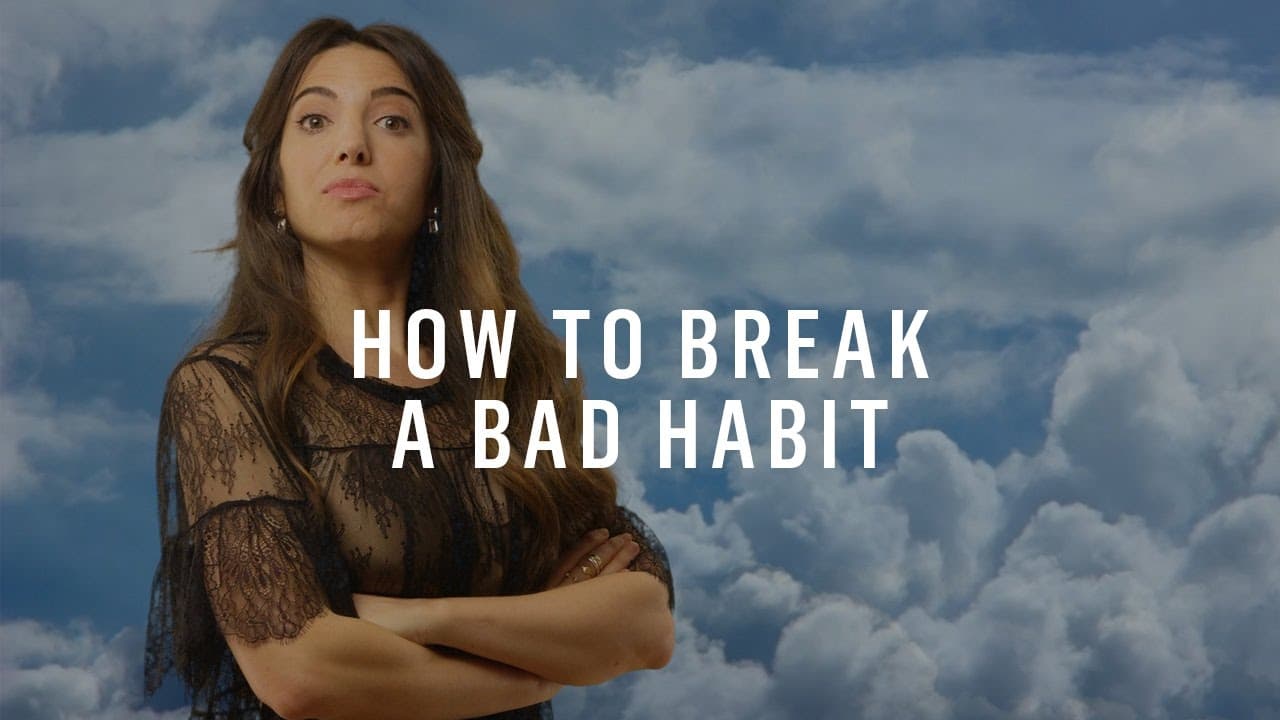
Struggling to Break a Bad Habit? Science Says You Should Do This
TL;DR
A simple change in self talk from "I can't" to "I don't" can significantly increase our ability to resist temptation and break bad habits.
Transcript
There just ain’t no love. We just get right into it, don't we? What is love? Baby, don't hurt me. Hey, it’s Marie Forleo and you are watching MarieTV. The place to be to create a business and life that you love. Now, if you’ve got some bad habits that just keep derailing your success and you are ready to break them for good, this episode, my friend... Read More
Key Insights
- 🖼️ Framing a refusal as "I don't" instead of "I can't" empowers us and increases our determination to resist temptations.
- 💄 Saying "I can't" makes us feel deprived and weak, making it harder to break bad habits.
- 🤳 The self talk technique of using "I don't" can be applied to various aspects of our lives, helping us make clear and strong declarations to break any habit.
- ⌛ Research shows that saying "I don't" is nearly three times as effective as saying "no" and eight times more effective than saying "I can't" in resisting unhealthy food cravings.
- 💦 This technique can be used to overcome challenges like checking social media during work, binge-watching TV, or any other habit that needs breaking.
- 🎮 Using the phrase "I don't" gives us a sense of choice and control, making it easier to resist temptations.
- ✊ The power of self talk can have a significant impact on our ability to resist bad habits and make positive choices.
Install to Summarize YouTube Videos and Get Transcripts
Explore YouTube Video Summarizer or Get YouTube Transcript Extractor
Questions & Answers
Q: How does framing a refusal as "I don't" instead of "I can't" help in breaking bad habits?
According to the research, saying "I don't" empowers us and increases our determination to resist temptation. It gives us a sense of choice and control, making it easier to break bad habits.
Q: Why is saying "I can't" less effective in resisting unhealthy food cravings?
When we say "I can't," it sounds like an external force is restricting us. This makes us feel deprived and more likely to give in to the temptation. Saying "I don't" shifts the power back to us, making it easier to resist unhealthy foods.
Q: Can this self talk technique be applied to other areas of our lives?
Absolutely. We can use it to make declarations in various aspects of our lives, such as not checking social media during work hours or not staying up late watching TV. The key is to empower ourselves with the phrase "I don't."
Q: How can we remember this self talk technique?
Marie Forleo suggests using a tweetable mantra: "When you need the strength to resist a bad habit, I don't is stronger than I can't." This can serve as a reminder of the power of framing our refusals as "I don't."
Summary & Key Takeaways
-
A professor of marketing at the University of Houston found that framing a refusal as "I don't" rather than "I can't" is more effective at resisting unhealthy food cravings and other temptations.
-
Saying "I don't" empowers and strengthens us, while saying "I can't" makes us feel deprived and weak.
-
This self talk technique can be applied to various aspects of our lives, helping us make clear and strong declarations to break any habit.
Read in Other Languages (beta)
Share This Summary 📚
Summarize YouTube Videos and Get Video Transcripts with 1-Click
Try YouTube Summary with ChatGPT & Claude or YouTube Transcript Generator
Explore More Summaries from The Marie Forleo Podcast 📚
Summarize YouTube Videos and Get Video Transcripts with 1-Click
Try YouTube Summary with ChatGPT & Claude or YouTube Transcript Generator