Dawood Ibrahim: Why The Indian Special Forces Never Went After Him
TL;DR
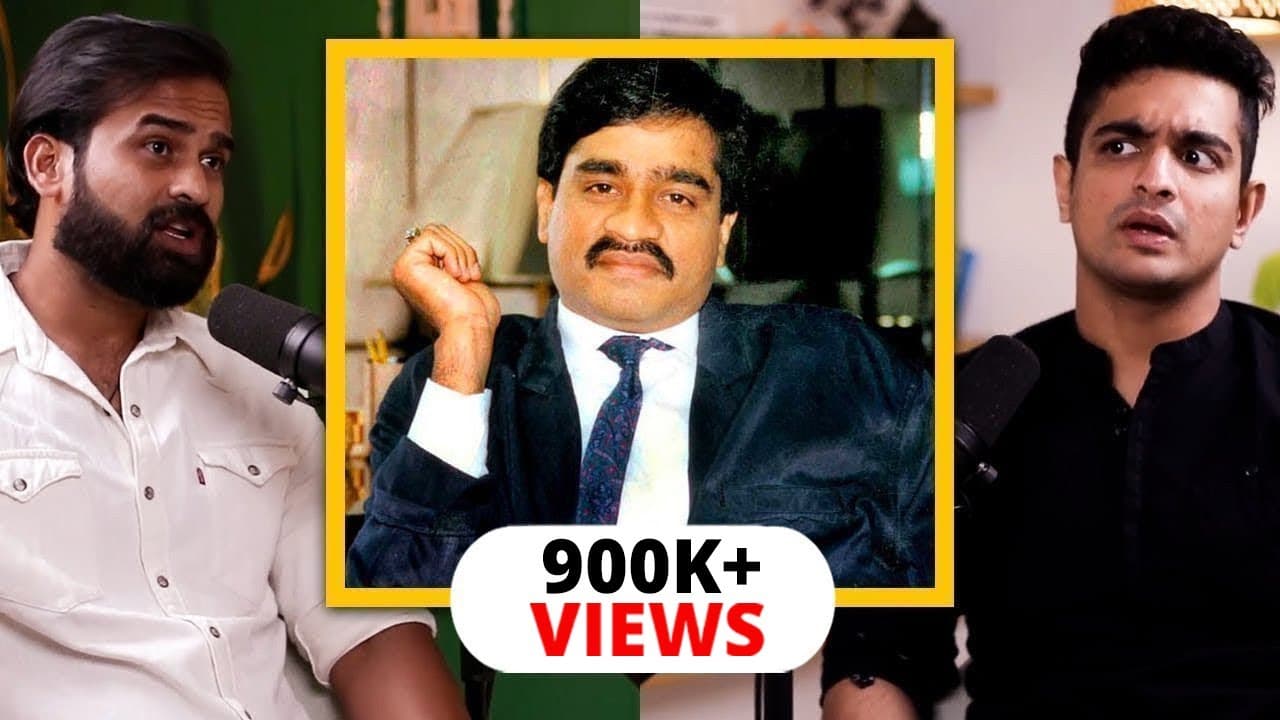
The discussion explores whether special forces should address organized crime in Mumbai.
Transcript
some of the best minds in the world bringing you some of the best knowledge on trs clips this is something i always wondered even when i was a kid you know we used to keep hearing about um crime syndicates in mumbai like the whole ibrahim uh phase of mumbai or even before that with the amount of dawns that this city has seen why didn't the governme... Read More
Key Insights
- 👮 The historical context of organized crime in Mumbai has shaped current discussions about law enforcement strategies.
- 😒 Special forces are traditionally intended for military operations rather than domestic crime situations, making their use in policing questionable.
- 💪 Strong leadership and political support are essential for effective crime reduction and establishing trust in law enforcement agencies.
- 🤝 The mention of D. Shivanandan reflects the significance of experience and strategic planning in dealing with urban crime issues.
- 👮 Current trends suggest a decline in organized crime in India, indicating improvements in policing methods and community engagement.
- 👮 Metaphors like the sword and knife provide clarity on the appropriateness of tools used in law enforcement and domestic security.
- 🌥️ Organized crime today appears more fragmented, with personal vendettas being more prevalent than large, organized criminal enterprises.
Install to Summarize YouTube Videos and Get Transcripts
Explore YouTube Video Summarizer or Get YouTube Transcript Extractor
Questions & Answers
Q: Why is there skepticism about using special forces to combat organized crime in Mumbai?
The skepticism arises from the belief that special forces are designed for military operations, such as engaging in combat situations, rather than dealing with crime, which is typically managed by police. The police are trained to handle community issues, and utilizing military forces in a domestic context could be inefficient and politically problematic.
Q: How does D. Shivanandan’s experience inform the conversation about urban crime in Mumbai?
D. Shivanandan's experience highlights the need for effective leadership and political backing in law enforcement initiatives. His efforts post-26/11 were crucial in restoring order in Mumbai. His insights suggest that organized crime can be tackled more successfully through good governance and proper resources for police rather than military force.
Q: What does the content suggest about the current state of organized crime in India?
The discussion indicates that organized crime is less prevalent in India today compared to the past. While there may still be isolated incidents of personal vendettas, the large-scale, hierarchical criminal organizations have diminished, suggesting effective law enforcement strategies have taken their toll.
Q: In what ways does the analogy of a sword versus a knife illustrate a point made in the content?
The analogy illustrates that using oversized or inappropriate tools for specific tasks can lead to inefficiency. In the discussion, using special forces (the sword) for organized crime (like cutting vegetables) is questioned. Instead, strengthening and utilizing the police force (the knife) seems to be a more sensible approach.
Q: What role do political factors play in addressing organized crime, according to the content?
Political support is crucial for law enforcement agencies to function effectively. Without it, initiatives may lack the necessary backing to implement strategies and reforms. The conversation suggests that effective crime control requires not just law enforcement but also solid political frameworks that ensure police receive the required support.
Summary & Key Takeaways
-
The content discusses the historical context of organized crime in Mumbai, especially the infamous underworld figures, and questions the efficacy of using special forces instead of more localized policing methods.
-
It emphasizes the importance of strategic planning and political support for law enforcement, as exemplified by former police chief D. Shivanandan’s efforts to combat crime post-26/11 attacks.
-
The conversation concludes that while organized crime has diminished, the approach to law enforcement should be rooted in the police's capabilities rather than military intervention.
Read in Other Languages (beta)
Share This Summary 📚
Summarize YouTube Videos and Get Video Transcripts with 1-Click
Try YouTube Summary with ChatGPT & Claude or YouTube Transcript Generator
Explore More Summaries from TRS Clips 📚





Summarize YouTube Videos and Get Video Transcripts with 1-Click
Try YouTube Summary with ChatGPT & Claude or YouTube Transcript Generator