How To "Win" A Trade War
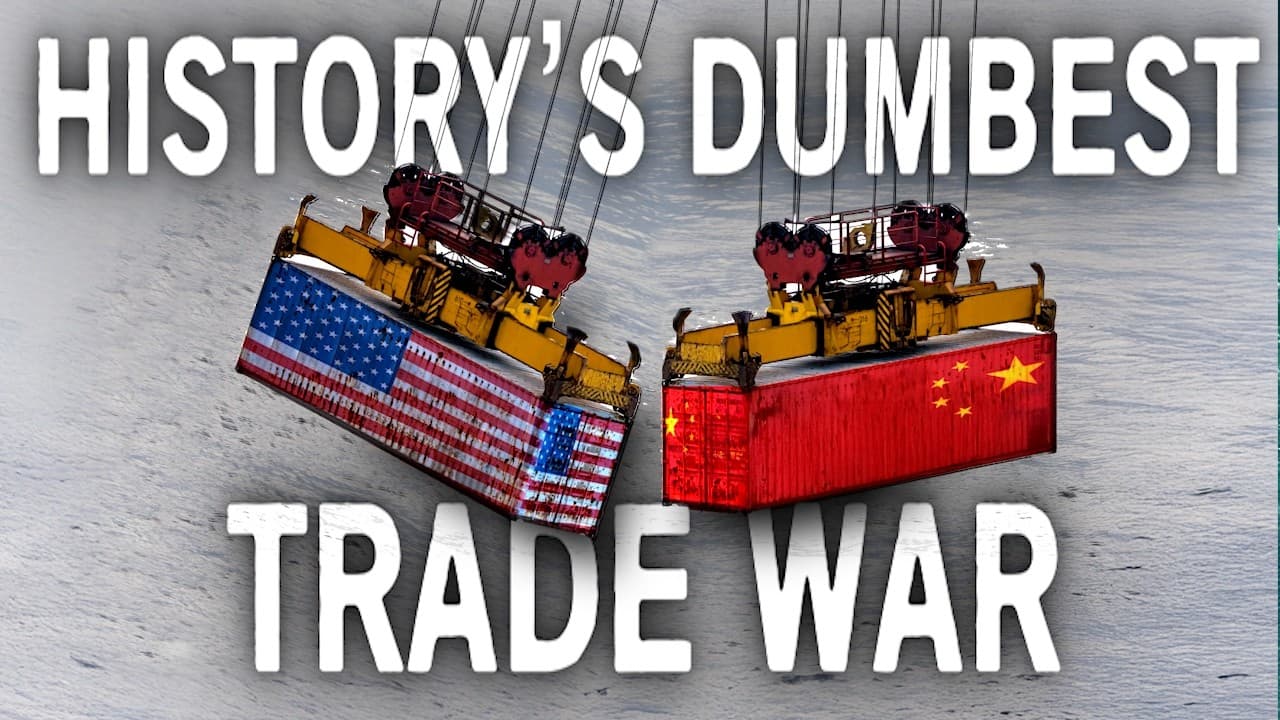
TL;DR
Trade wars impact global economies and local jobs.
Transcript
global trade has made the USA incredibly rich but what is good for America isn't always good for Americans globalization has let big businesses pull revenue from Global markets it's giving consumers cheap products subsidized by poverty wages and investors access to foreign capital from around the world the best part is all ... Read More
Key Insights
- Global trade has enriched the USA but at the cost of stable, productive jobs that once defined the American middle class.
- Tariffs on countries like Canada and Mexico are used as negotiating tactics for border security, not just trade balance.
- Tariffs can lead to higher consumer prices as businesses pass the costs onto customers, acting as an invisible tax.
- America's dependency on imports, especially from Mexico, complicates the impact of tariffs on local manufacturing jobs.
- The De Minimis value exemption allows goods under $800 to enter the US duty-free, benefiting foreign retailers but hurting local businesses.
- Globalization has created winners, like multinational companies and wealthy asset owners, and losers, such as unskilled workers and small businesses.
- Reversing free trade policies won't easily reverse the winners and losers of globalization due to the complexity of global markets.
- A coherent strategy is essential for businesses to adapt to trade policy changes, preventing hiring and investment freezes.
Install to Summarize YouTube Videos and Get Transcripts
Explore YouTube Video Summarizer or Get YouTube Transcript Extractor
Questions & Answers
Q: What is the impact of tariffs on American consumers?
Tariffs typically lead to higher prices for consumers as businesses pass on the additional costs of imported goods. This acts as an invisible tax on consumers, increasing the cost of living without directly improving local job markets. The complexity of supply chains means that tariffs can also affect the prices of locally manufactured goods.
Q: How does the De Minimis value exemption affect trade?
The De Minimis value exemption allows goods valued under $800 to enter the US without duties, taxes, or tariffs. This loophole benefits foreign retailers who can ship products directly to consumers, bypassing traditional import duties. While this makes goods cheaper for consumers, it disadvantages local businesses and workers by undermining fair trade practices.
Q: Who are the winners and losers of globalization?
Winners of globalization include multinational companies, wealthy asset owners, and large economies focused on exports. They benefit from reduced production costs and access to global markets. Losers are often unskilled or semi-skilled workers and small businesses that can't compete globally, leading to job losses and economic decline in certain regions.
Q: Why are trade wars considered complex and challenging?
Trade wars are complex due to the interconnectedness of global economies and supply chains. Tariffs affect not just international trade but also local economies, consumer prices, and job markets. The unpredictability of policy changes creates uncertainty, making it difficult for businesses to plan and adapt, potentially leading to economic stagnation.
Q: What role do tariffs play in US-Mexico trade relations?
Tariffs on Mexican imports are part of a broader strategy that includes negotiating border security. While intended to protect American jobs, these tariffs can disrupt supply chains, as many US manufacturers rely on Mexican components. The immediate effects include higher consumer prices and potential job losses if businesses cannot adapt quickly.
Q: How has globalization affected American manufacturing jobs?
Globalization has led to the outsourcing of many American manufacturing jobs to countries with lower labor costs. This has resulted in a decline of stable, middle-class jobs in the US. While consumers benefit from cheaper goods, the long-term impact includes economic challenges for regions reliant on manufacturing industries.
Q: What is the significance of the US as a consumer market in global trade?
The US is a major consumer market, making it a crucial player in global trade. Its large population and relatively high purchasing power attract international businesses. This consumer demand drives global supply chains but also means that US trade policies can have significant ripple effects on the global economy.
Q: What are the potential long-term effects of reversing free trade policies?
Reversing free trade policies could potentially bring back some manufacturing jobs but also lead to higher prices for consumers. The complexity of global markets means that such reversals won't easily change the established winners and losers. A coherent long-term strategy is needed to ensure that these policy shifts benefit the broader economy.
Summary & Key Takeaways
-
Global trade has made the USA rich but at the cost of stable jobs. Tariffs are being used as negotiating tactics rather than purely economic measures. The impact of these tariffs is complex, affecting prices and jobs differently across sectors.
-
The De Minimis value exemption has allowed foreign retailers to bypass import duties, impacting local businesses. The winners of globalization include multinational companies and asset owners, while the losers are often unskilled workers and small businesses.
-
A coherent strategy is needed for businesses to adapt to changing trade policies. Without it, hiring and investment could stagnate, affecting the economy negatively. The complexity of global markets makes reversing the effects of globalization challenging.
Read in Other Languages (beta)
Share This Summary 📚
Summarize YouTube Videos and Get Video Transcripts with 1-Click
Try YouTube Summary with ChatGPT & Claude or YouTube Transcript Generator
Explore More Summaries from How Money Works 📚






Summarize YouTube Videos and Get Video Transcripts with 1-Click
Try YouTube Summary with ChatGPT & Claude or YouTube Transcript Generator