Naming Acids Introduction
TL;DR
Learn how to name acids based on the negative ions present in the chemical formula, with examples and exceptions.
Transcript
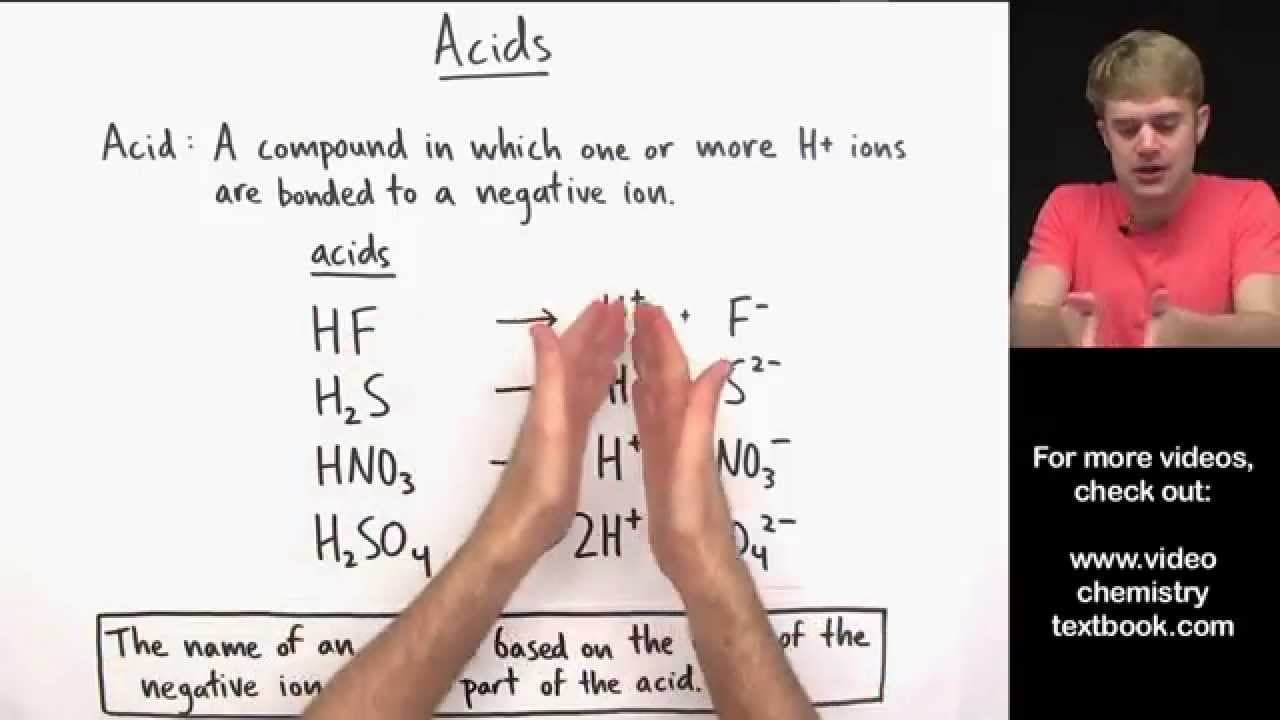
let's talk about naming acids we'll learn how to look at the chemical formula for an acid and write a name for it this video is going to be an introduction to the topic and then the next video is going to be a lot of example problems so you can really get some practice doing this so if we're going to be talking about naming acids let's start out by... Read More
Key Insights
- 😑 Acids consist of H+ ions bonded to negative ions.
- 😑 Naming acids is based on the name of the negative ion present in the compound.
- 🥳 Acids without oxygen are named by adding "hydro" and "ic" between the parts of the negative ion's name.
- 🛰️ Acids with oxygen contain polyatomic ions that end in "ate" and "ite," which determine the acid's name.
- 😑 Exceptions exist for acids containing phosphate, phosphite, sulfate, and sulfite ions, which have unique names.
- 😑 Acids with polyatomic ions starting with "hypo" or "per" follow the same naming rules, focusing on the ending of the ion's name.
- 📏 A mnemonic, "My Ride Has Hydraulics," helps to remember the rules for naming acids.
Install to Summarize YouTube Videos and Get Transcripts
Explore YouTube Video Summarizer or Get YouTube Transcript Extractor
Questions & Answers
Q: How are acids defined?
Acids are compounds with H+ ions bonded to a negative ion, although the definition may vary depending on the context.
Q: What is the basis for naming acids?
The name of an acid is derived from the name of the negative ion present in the compound.
Q: How are acids without oxygen named?
Acids without oxygen have their negative ions' names modified by removing the "ide" ending and adding "hydro" and "ic" in between.
Q: What are the exceptions to the naming rules for acids?
Common acids like phosphate, phosphite, sulfate, and sulfite have slightly different names that deviate from the standard naming rules.
Summary & Key Takeaways
-
An acid is a compound with one or more H+ ions bonded to a negative ion.
-
Acids can be classified into two types: those with oxygen and those without oxygen.
-
Acids without oxygen are named by removing the "ide" ending from the negative ion and inserting "hydro" and "ic" in between.
Read in Other Languages (beta)
Share This Summary 📚
Summarize YouTube Videos and Get Video Transcripts with 1-Click
Try YouTube Summary with ChatGPT & Claude or YouTube Transcript Generator
Explore More Summaries from Tyler DeWitt 📚




Summarize YouTube Videos and Get Video Transcripts with 1-Click
Try YouTube Summary with ChatGPT & Claude or YouTube Transcript Generator