What Happens When Mercury Is Dropped into Liquid Nitrogen?
TL;DR
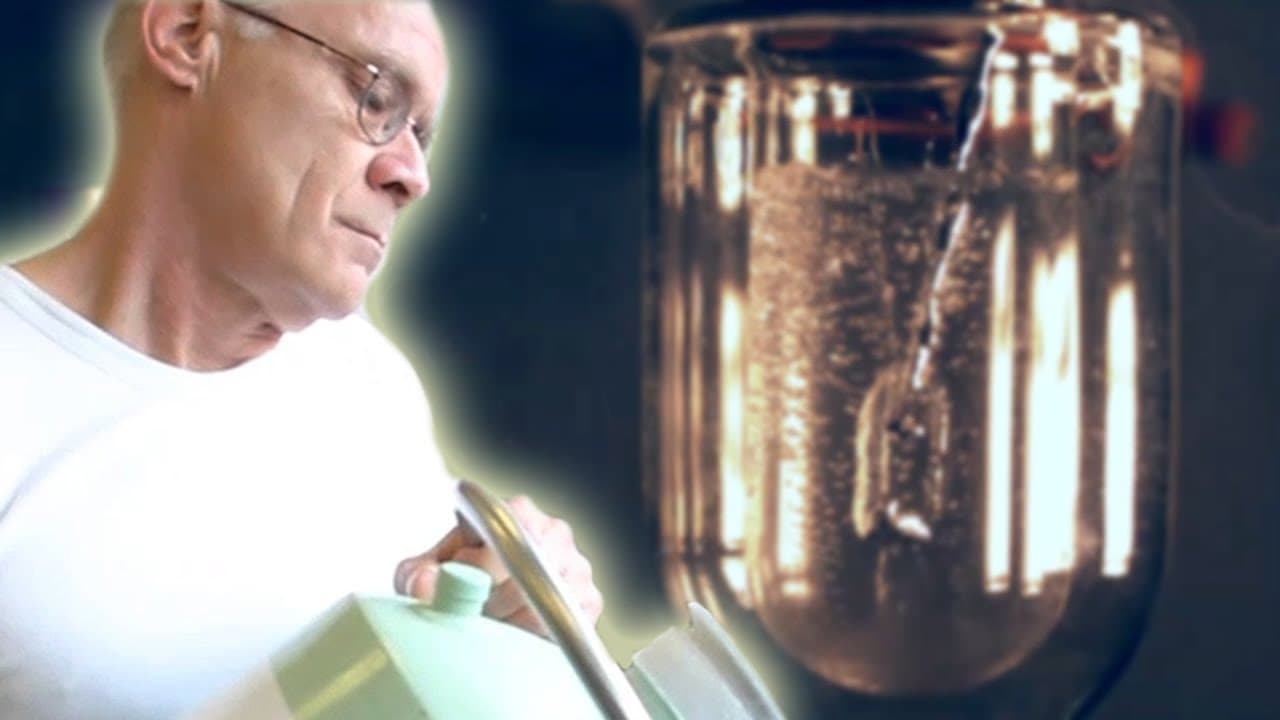
Dropping mercury into liquid nitrogen causes a violent boiling effect due to the large surface area of the mercury, which allows heat to transfer rapidly. This interaction results in a striking visual display as the nitrogen vaporizes violently when the mercury hits the cold liquid. Using boiling mercury could lead to even more explosive reactions.
Transcript
(gas hissing) It's not often that I think of an experiment for Periodic Videos where I really want to know the answer, rather than just having a regular demonstration. Today, I thought of one of those experiements. There is quite a well known effect -known as a fuel-coolant interaction- where a molten metal drops, say, into water and causes an expl... Read More
Key Insights
- 💦 Fuel-coolant interaction is a well-known effect where a molten metal dropped into water causes an explosion.
- 🥺 The experiment aims to test whether dropping mercury into liquid nitrogen would lead to a rapid vaporization of the nitrogen.
- 😃 The experiment was conducted in three stages using solid copper, a big vessel, and a small vacuum flask.
- 🥶 The freezing point of mercury is -40° C, and crystals form on its surface when it comes into contact with liquid nitrogen.
- 🫗 Heat transfer from the liquid is demonstrated by the violent boiling reaction observed when mercury is dropped into liquid nitrogen.
- 🥵 The large surface area of mercury allows for efficient heat transfer, resulting in the vigorous boiling effect.
- 😅 Dropping hot or boiling mercury into liquid nitrogen could potentially cause an even more explosive reaction.
Install to Summarize YouTube Videos and Get Transcripts
Explore YouTube Video Summarizer or Get YouTube Transcript Extractor
Questions & Answers
Q: What is the purpose of the experiment?
The experiment aims to test the fuel-coolant interaction by observing the reaction between mercury and liquid nitrogen.
Q: Why was solid copper used in the first stage?
Solid copper was used to ensure safety since it cannot break up into small droplets like mercury, reducing the risk of splashing.
Q: What happens when mercury is dropped into a big vessel of liquid nitrogen?
The mercury freezes, forming crystals on its surface, but poses difficulty in removing it later. It does not contribute to the main experiment.
Q: How does the experiment in the small vacuum flask differ from the previous stages?
In the vacuum flask, as the mercury enters the liquid nitrogen, nitrogen gas bubbles form around it. The boiling effect becomes more violent due to the larger surface area of the mercury.
Summary & Key Takeaways
-
The experiment involves dropping mercury into liquid nitrogen to observe the fuel-coolant interaction.
-
Three stages are conducted: using solid copper, a big vessel, and a small vacuum flask.
-
The results demonstrate a violent boiling effect due to the large surface area of the mercury.
Read in Other Languages (beta)
Share This Summary 📚
Summarize YouTube Videos and Get Video Transcripts with 1-Click
Try YouTube Summary with ChatGPT & Claude or YouTube Transcript Generator
Explore More Summaries from Periodic Videos 📚
Summarize YouTube Videos and Get Video Transcripts with 1-Click
Try YouTube Summary with ChatGPT & Claude or YouTube Transcript Generator