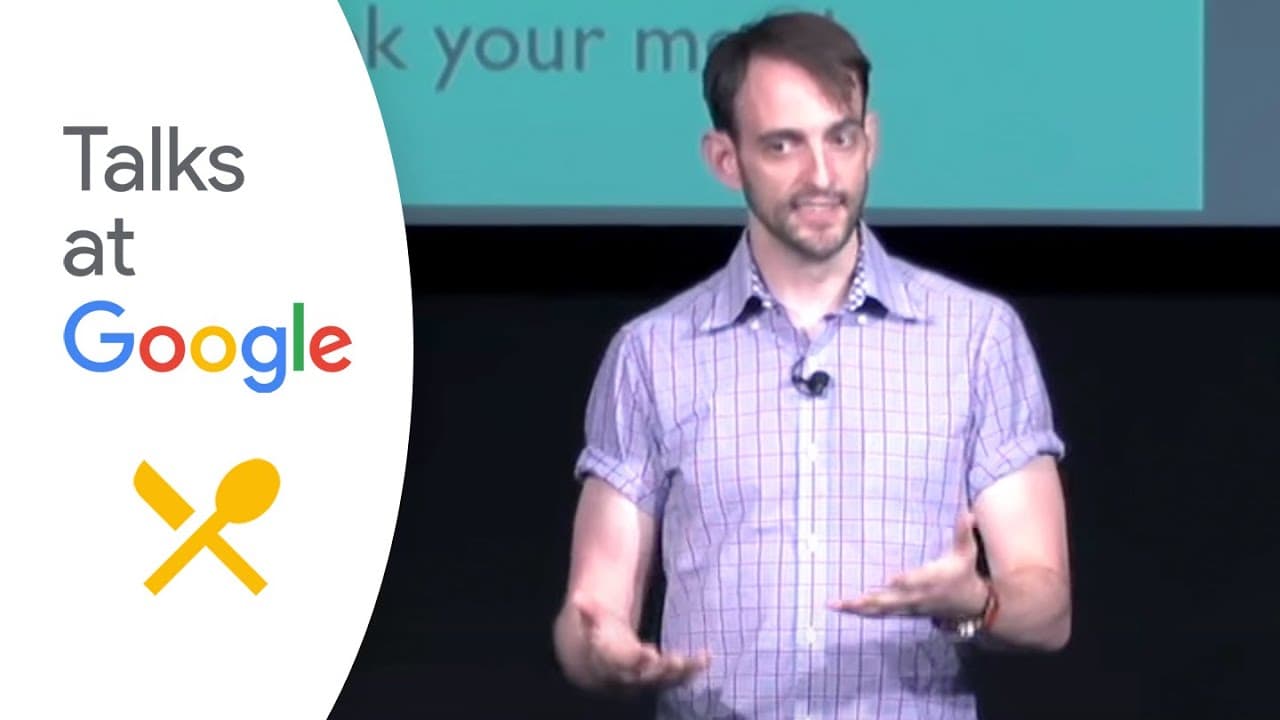
Cooking for Geeks | Jeff Potter | Talks at Google
TL;DR
Cooking involves understanding the chemical reactions that occur at different temperatures, while food perception is influenced by genetics and sensory analysis.
Transcript
PRESENTER: Hello. Welcome to Google Los Angeles. And for those of you watching on our Talks at Google channel, welcome. We're very pleased to welcome Jeff Potter, author of "Cooking for Geeks," who will be running some experiments today that will involve all of you. A little bit about Jeff. Jeff's background is computer science and art. He's workin... Read More
Key Insights
- 🖐️ Temperature plays a crucial role in cooking, as different reactions occur at different temperatures.
- 👅 Taste perception varies among individuals and is influenced by genetics and sensory analysis.
- 🍳 Models can be used to improve cooking techniques and achieve desired outcomes.
Install to Summarize YouTube Videos and Get Transcripts
Explore YouTube Video Summarizer or Get YouTube Transcript Extractor
Questions & Answers
Q: Why is temperature more important than time in cooking?
Temperature is crucial in cooking as specific reactions, such as protein denaturation and caramelization, occur at different temperatures. Time is just a proxy for achieving the desired temperature.
Q: How can one use models to improve cooking techniques?
Models in cooking involve understanding the chemical and molecular changes that occur during cooking. By using models, one can make more informed decisions about the cooking process, such as adjusting temperatures and cooking times to achieve desired results.
Q: How does the perception of taste and flavor vary among individuals?
Taste perception is influenced by genetics, such as the ability to taste bitterness in cilantro or sweetness in certain berries. Additionally, sensory analysis, including factors like color and presentation, can also impact taste perception.
Q: How does the understanding of chemical reactions improve cooking outcomes?
Understanding chemical reactions in cooking allows for more precise control of cooking processes and can result in improved textures and flavors. By understanding the reactions, one can adjust cooking methods and temperatures to achieve desired outcomes.
Summary & Key Takeaways
-
Cooking involves understanding the temperatures at which different reactions occur, such as melting butter, starches changing structure, and caramelization.
-
Food perception is influenced by genetics, such as the ability to taste bitterness in cilantro or the sweetness of certain berries.
-
The perception of food can also be influenced by sensory analysis, where factors like color and presentation can impact the taste experience.
Read in Other Languages (beta)
Share This Summary 📚
Summarize YouTube Videos and Get Video Transcripts with 1-Click
Try YouTube Summary with ChatGPT & Claude or YouTube Transcript Generator
Explore More Summaries from Talks at Google 📚

Summarize YouTube Videos and Get Video Transcripts with 1-Click
Try YouTube Summary with ChatGPT & Claude or YouTube Transcript Generator