Reflex klystron oscillator | Construction | Microwave Engineering | Lec-90
TL;DR
Reflex Klystron oscillators convert DC into RF signals using velocity modulation.
Transcript
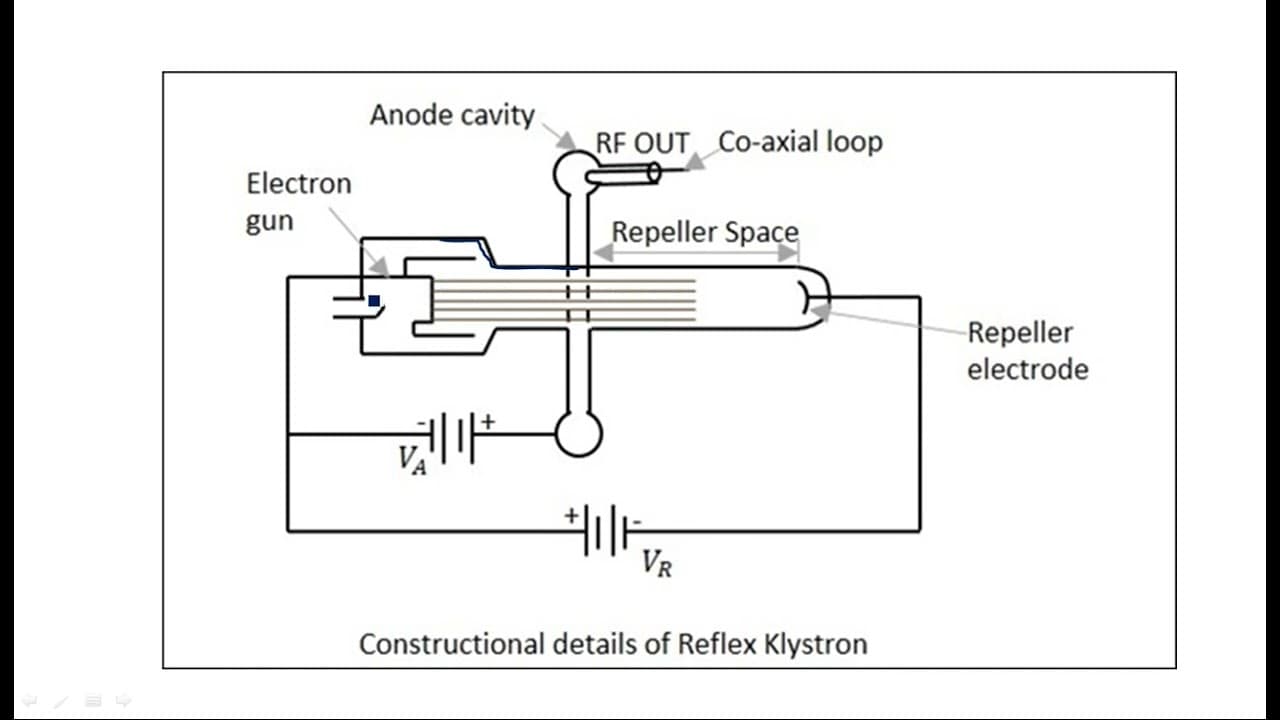
hi everyone in this video I am going to explain about the operation and construction of this reflex Kyle Stone oscillator reflection oscillator is a second type of wow type tubes and what I chose first we have seen Klystron amplifier every type of tube says having two different types of categories one is the amplifier another one is oscillator and ... Read More
Key Insights
- ✋ The reflex Klystron oscillator is essential for applications requiring high-power RF signal generation.
- 🎨 The design of the oscillator emphasizes the separation of electron paths, crucial for an oscillation process.
- 🧪 The concept of velocity modulation is fundamental to understanding electron behavior in Klystron tubes.
- 📶 While amplifiers increase signal strength, oscillators transform DC into usable RF signals, demonstrating different roles in signal processing.
- 👷 The construction of the reflex Klystron requires precise voltage management to control electron behavior effectively.
- 💝 The interaction between early, reference, and late electrons is critical for successful RF signal modulation provided by the oscillator.
- 💨 Understanding electron dynamics in such devices paves the way for advancements in electronic communication technologies.
Install to Summarize YouTube Videos and Get Transcripts
Explore YouTube Video Summarizer or Get YouTube Transcript Extractor
Questions & Answers
Q: What distinguishes a reflex Klystron oscillator from a Klystron amplifier?
While both devices use velocity modulation, a Klystron amplifier enhances input signals and outputs an amplified version, whereas a reflex Klystron oscillator generates RF signals from DC without taking an AC input, focusing solely on creating oscillations.
Q: How does velocity modulation play a role in the operation of the reflex Klystron oscillator?
Velocity modulation refers to changing the speed of electrons as they move through the Klystron tube. This modulation creates different electron types—reference, early, and late electrons—each traveling at varying velocities, which are essential for generating RF oscillations through their collective interactions.
Q: What are the components required for the construction of a reflex Klystron oscillator?
The reflex Klystron oscillator comprises a glass tube, an electron gun, an anode voltage for accelerating electrons, a rippler voltage for reflecting them back, and specialized focusing anodes to direct the electron beam. These components work together to produce RF signals.
Q: Can you explain the significance of the different types of electrons generated in the reflex Klystron oscillator?
The reflex Klystron generates three types of electrons—reference, early, and late. These electrons travel through different paths due to their velocities but arrive at the same time at the gap, creating a bunching effect necessary for generating RF oscillations, demonstrating the complex dynamics of electron behavior in the device.
Summary & Key Takeaways
-
The reflex Klystron oscillator operates using velocity modulation to convert direct current (DC) into radio frequency (RF) signals, vital for communication systems.
-
Unlike amplifiers, oscillators like the reflex Klystron do not accept AC signals; they reflect electrons to generate oscillations.
-
The operation involves specific voltages and electron dynamics, where early, reference, and late electrons interact within a cavity to create RF output.
Read in Other Languages (beta)
Share This Summary 📚
Summarize YouTube Videos and Get Video Transcripts with 1-Click
Try YouTube Summary with ChatGPT & Claude or YouTube Transcript Generator