Ionic Bonding Part 2
TL;DR
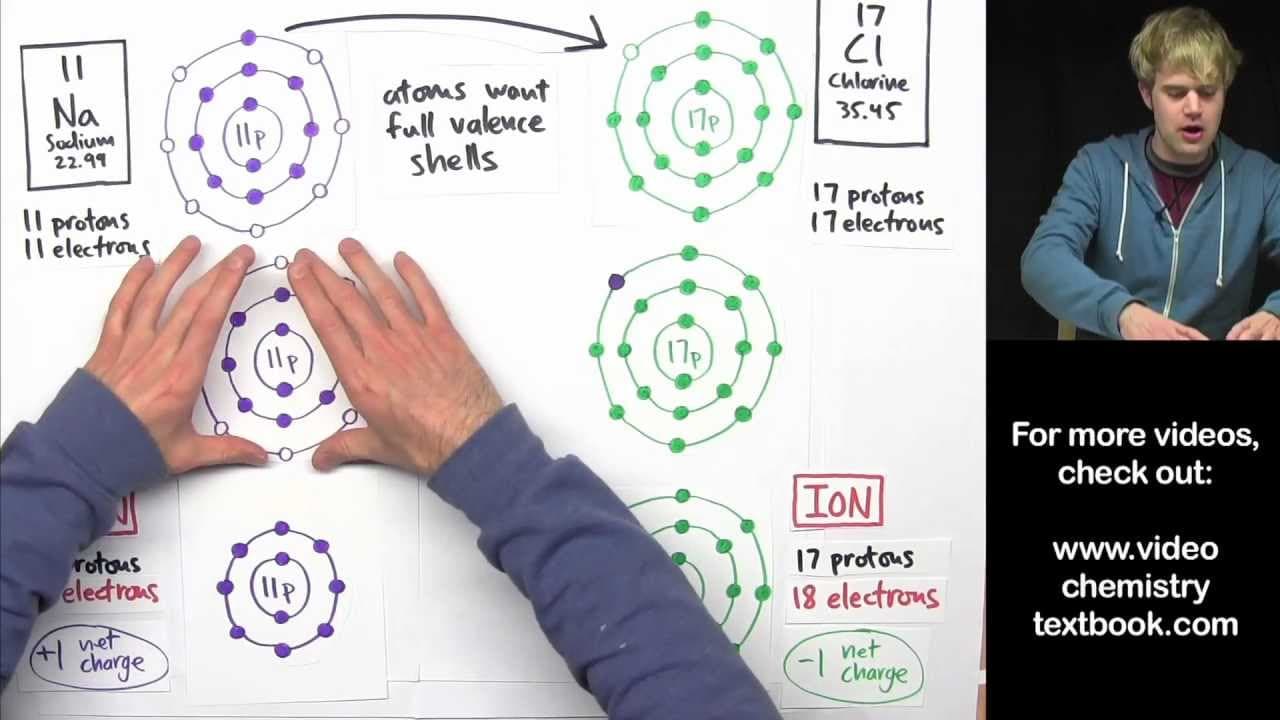
In ionic bonding, sodium and chlorine atoms exchange electrons to achieve a full valance shell, resulting in an ionic bond.
Transcript
Let's talk about ionic bonding in much more depth. In the previous video we talked about the basic fundamentals of how ionic bonds get made in sodium chloride. Now I want to look at why and how these steps happen during the formation of ionic bonds. In order to really understand what's going on in ionic bonding, we have to take a look at the indivi... Read More
Key Insights
- 🫀 Ionic bonding involves the exchange of electrons between atoms to achieve a full valance shell.
- 😑 Both sodium and chlorine atoms become ions with charges after ionic bonding occurs.
- 💁 Oppositely charged ions attract each other, leading to the formation of an ionic bond.
Install to Summarize YouTube Videos and Get Transcripts
Explore YouTube Video Summarizer or Get YouTube Transcript Extractor
Questions & Answers
Q: What is ionic bonding?
Ionic bonding is a type of chemical bond where electrons are transferred between atoms, leading to the formation of ions with opposite charges.
Q: Why are sodium and chlorine atoms unhappy?
Both sodium and chlorine atoms are unhappy because they have incomplete valance shells; sodium has only one electron in its valance shell, while chlorine has one empty spot in its valance shell.
Q: How does sodium become a positively charged ion?
Sodium becomes a positively charged ion (cation) by giving away one electron, resulting in fewer electrons than protons in its atomic structure.
Q: Why does chlorine become a negatively charged ion?
Chlorine becomes a negatively charged ion (anion) because it gains one electron from sodium, resulting in more electrons than protons in its atomic structure.
Q: What is the role of electrons in ionic bonding?
Electrons play a crucial role in ionic bonding as they are transferred between atoms, allowing them to achieve a full valance shell.
Q: How do oppositely charged ions form an ionic bond?
Oppositely charged ions, such as the positively charged sodium ion and negatively charged chlorine ion, attract each other and form an ionic bond.
Q: What is the significance of achieving a full valance shell?
Atoms strive to achieve a full valance shell as it represents a stable electron configuration, leading to increased stability for the atom.
Q: Why is understanding ionic bonding important in chemistry?
Understanding ionic bonding is essential in chemistry as it is a fundamental concept that explains the formation of compounds and the behavior of ions.
Summary & Key Takeaways
-
Ionic bonding involves the exchange of electrons between sodium and chlorine atoms to achieve a full valance shell.
-
Both sodium and chlorine atoms are initially unhappy because their valance shells are not full.
-
Sodium gives away one electron to chlorine, resulting in a positively charged sodium ion and a negatively charged chlorine ion.
Read in Other Languages (beta)
Share This Summary 📚
Summarize YouTube Videos and Get Video Transcripts with 1-Click
Try YouTube Summary with ChatGPT & Claude or YouTube Transcript Generator
Explore More Summaries from Tyler DeWitt 📚





Summarize YouTube Videos and Get Video Transcripts with 1-Click
Try YouTube Summary with ChatGPT & Claude or YouTube Transcript Generator