Creature meets creator: Frankenstein episode 4
TL;DR
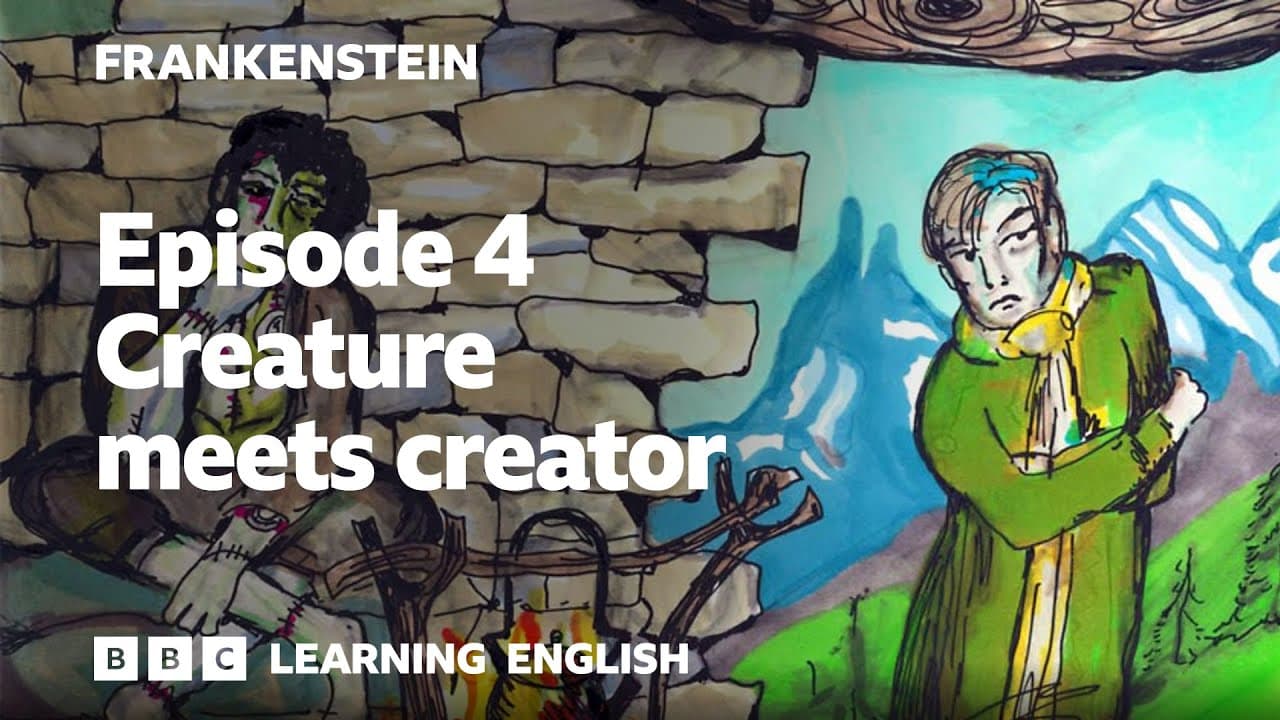
Frankenstein meets his creature at the top of Montavert, where the creature demands that his creator hear his story and fulfill a duty toward him. The creature says rejection and suffering changed his once-kind heart, while Frankenstein admits that abandoning him may have created a responsibility. Their tense encounter ends in a hut as the creature begins recounting his earliest moments. Read on to understand why Frankenstein agrees to listen.
Transcript
This is a podcast from BBC Learning English dot com. For more information, visit our website. Frankenstein, episode four. Scientist Viktor Frankenstein meets his creature. Hello. I'm Viktor Frankenstein. I've been telling you about how my young brother was murdered and his nanny was executed for the crime. But she was innocent! I felt guilty becaus... Read More
Key Insights
- Victor Frankenstein feels immense guilt over his brother's murder, believing his creature is responsible, highlighting the unintended consequences of his scientific ambition.
- The creature confronts Frankenstein, expressing feelings of rejection and loneliness, which stem from being abandoned by his creator and society at large.
- Frankenstein's initial reaction to the creature is one of fear and hostility, showcasing the complex relationship between creator and creation.
- The creature demands that Frankenstein fulfill his duty towards him, threatening to harm Frankenstein's loved ones if his demands are not met.
- The narrative explores themes of responsibility and the moral obligations of creators towards their creations, as Frankenstein grapples with his role in the creature's misery.
- The creature's story hints at a tragic transformation from innocence to malevolence, driven by societal rejection and personal suffering.
- Frankenstein's curiosity and a sense of responsibility compel him to listen to the creature's story, suggesting a potential shift in their dynamic.
- The episode sets the stage for further exploration of the creature's experiences and the consequences of Frankenstein's actions, building anticipation for the next installment.
Install to Summarize YouTube Videos and Get Transcripts
Explore YouTube Video Summarizer or Get YouTube Transcript Extractor
Questions & Answers
Q: What happens when Frankenstein meets his creature in episode 4?
Frankenstein encounters the creature after climbing alone to the top of Montavert. He initially threatens to kill him, but the creature asks him to be calm, demands that he fulfill his duty as creator, and persuades him to listen to his story.
Q: Why does Viktor Frankenstein feel guilty about his brother's murder?
Frankenstein thinks his creature killed his young brother. He also knows that the boy's innocent nanny was executed for the crime, while nobody knew about the creature he had created.
Q: What does the creature demand from Frankenstein?
The creature tells Frankenstein to do one unspecified thing for him. He promises to leave everyone in peace if Frankenstein complies, but threatens to kill Frankenstein's friends and family if he refuses.
Q: How does Frankenstein initially react to the creature?
Frankenstein reacts with hatred and repeatedly threatens to kill the creature. He wishes that killing his creation could bring back the people he believes the creature killed.
Q: Why does the creature say that he became bad?
The creature says he was once good and kindhearted, but suffering made him bad. He feels hated, rejected, and lonely, and claims that making him happy would allow him to become good again.
Q: Why does Frankenstein agree to hear the creature's story?
Frankenstein recognizes that the creature has a point because he created and then abandoned him. He also feels sorry for the creature and wants to discover whether the creature really killed his brother.
Q: What does Frankenstein realize about his responsibility as creator?
Frankenstein remembers running away in fear when the creature woke in his laboratory. After hearing that the creature was left alone like a child, he begins to think that he may have had a duty toward his creation.
Q: How does the creature begin his life story?
The creature says his first moments are difficult to remember because he was confused. Light from the sun hurt his eyes, and he felt hungry and thirsty before being left to survive by himself in the forest.
Summary & Key Takeaways
-
Victor Frankenstein is haunted by guilt over his brother's murder, which he suspects was committed by his own creation, a creature he deems evil. This episode delves into the complex emotions of guilt and responsibility that plague Frankenstein.
-
The creature confronts Frankenstein, expressing feelings of loneliness and rejection. Despite Frankenstein's initial hostility, the creature demands that Frankenstein fulfill his duties as a creator, threatening dire consequences if he refuses.
-
Frankenstein reluctantly agrees to listen to the creature's story, which promises to reveal the creature's early experiences and interactions with humanity. This episode sets the stage for exploring themes of creation, responsibility, and the impact of societal rejection.
Read in Other Languages (beta)
Share This Summary 📚
Summarize YouTube Videos and Get Video Transcripts with 1-Click
Try YouTube Summary with ChatGPT & Claude or YouTube Transcript Generator
Explore More Summaries from BBC Learning English 📚

Summarize YouTube Videos and Get Video Transcripts with 1-Click
Try YouTube Summary with ChatGPT & Claude or YouTube Transcript Generator