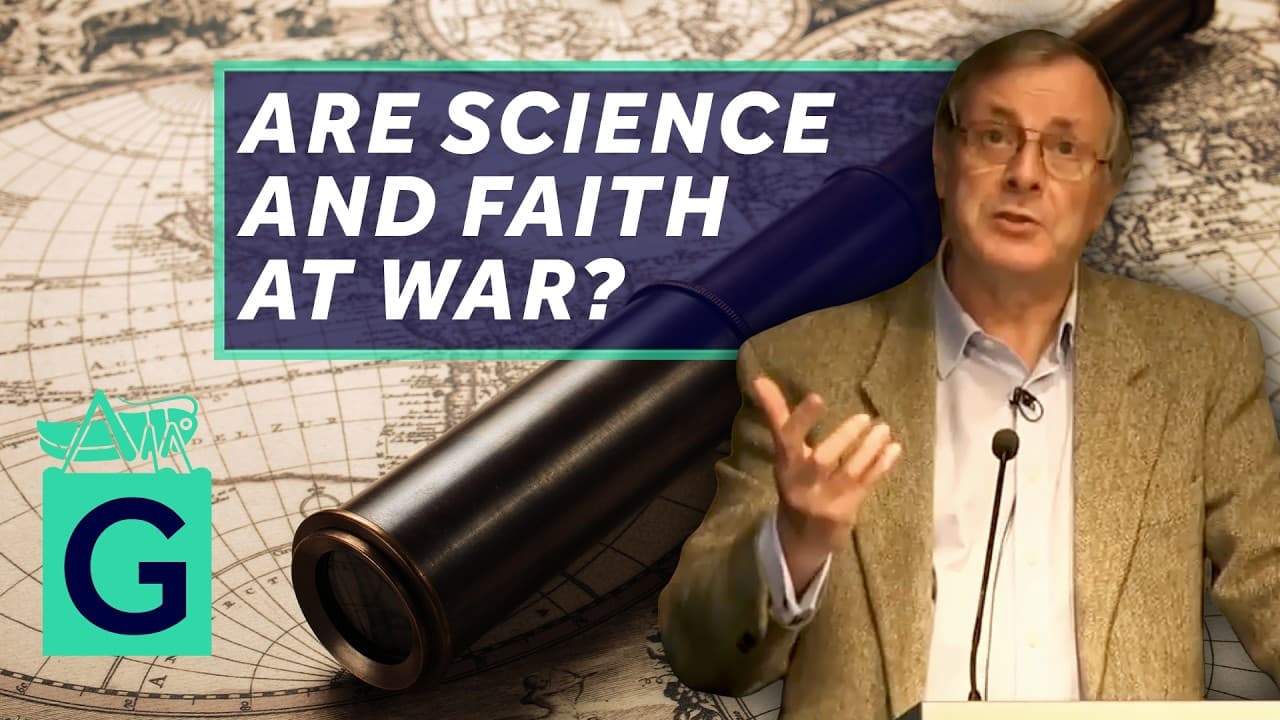
Are Science and Faith at War? - Professor Alister McGrath
TL;DR
The lecture explores the relationship between science and religion, questioning the idea of their conflict and proposing a dialogue for deeper understanding.
Transcript
well good afternoon ladies and gentlemen and it's a great pleasure to be here again and give the last of my final series of lectures in my three-year term as chrétien professor all division let it begin by saying that I'd greatly enjoyed my time as gresham professor but I'm finding that the administrative and academic demands of oxigen diversity ar... Read More
Key Insights
- 🔬 Science and religion are not necessarily in conflict; their perceived tension is a recent invention and does not consider the historical complexity of their relationship.
- 🌍 The lecture emphasizes the importance of interpreting the world and discerning meaning, value, and purpose, which science alone may not be able to address.
- 🔬 The lecture proposes multiple approaches to understanding the relationship between science and religion, including conflict, independence, dialogue, and integration.
Install to Summarize YouTube Videos and Get Transcripts
Explore YouTube Video Summarizer or Get YouTube Transcript Extractor
Questions & Answers
Q: How does the lecture challenge the idea of science and religion being in conflict?
The lecture argues that the conflict between science and religion is a recent invention and fails to consider the historical complexity and varied interpretations of their relationship. It suggests that a dialogue between the two can lead to mutual enrichment.
Q: Are there limits to what science can answer, according to the lecture?
Yes, the lecture argues that science can provide useful explanations and knowledge about how the world works, but it may not be able to answer questions of meaning, value, and purpose. These existential questions require a more holistic and philosophical approach.
Q: What are the proposed approaches to understanding the relationship between science and religion?
The lecture suggests four approaches: conflict, independence, dialogue, and integration. It examines the strengths and weaknesses of each approach, emphasizing the need for multiple perspectives to gain a comprehensive understanding.
Q: How does the lecture address the complexity of the world and the limitations of individual disciplines?
The lecture proposes the integration of multiple disciplines and perspectives to weave together a bigger picture. It uses the analogy of looking through different windows into a complex aquarium, illustrating the need for patience and open-mindedness in exploring and understanding the complexities of the world.
Summary & Key Takeaways
-
The lecture discusses the importance of interpreting the world and discerning meaning, value, and purpose, which cannot be solely derived from empirical evidence.
-
It examines the concept of post-truth culture and the tendency to believe what we want to believe, without critical thinking.
-
The lecture explores different perspectives on the relationship between science and religion, including conflict, independence, dialogue, and integration.
-
It emphasizes the need for multiple perspectives to gain a deeper understanding of the complexities of the world.
Read in Other Languages (beta)
Share This Summary 📚
Summarize YouTube Videos and Get Video Transcripts with 1-Click
Try YouTube Summary with ChatGPT & Claude or YouTube Transcript Generator
Explore More Summaries from Gresham College 📚

Summarize YouTube Videos and Get Video Transcripts with 1-Click
Try YouTube Summary with ChatGPT & Claude or YouTube Transcript Generator