What Are Workplace Dress Codes and Their Importance?
TL;DR
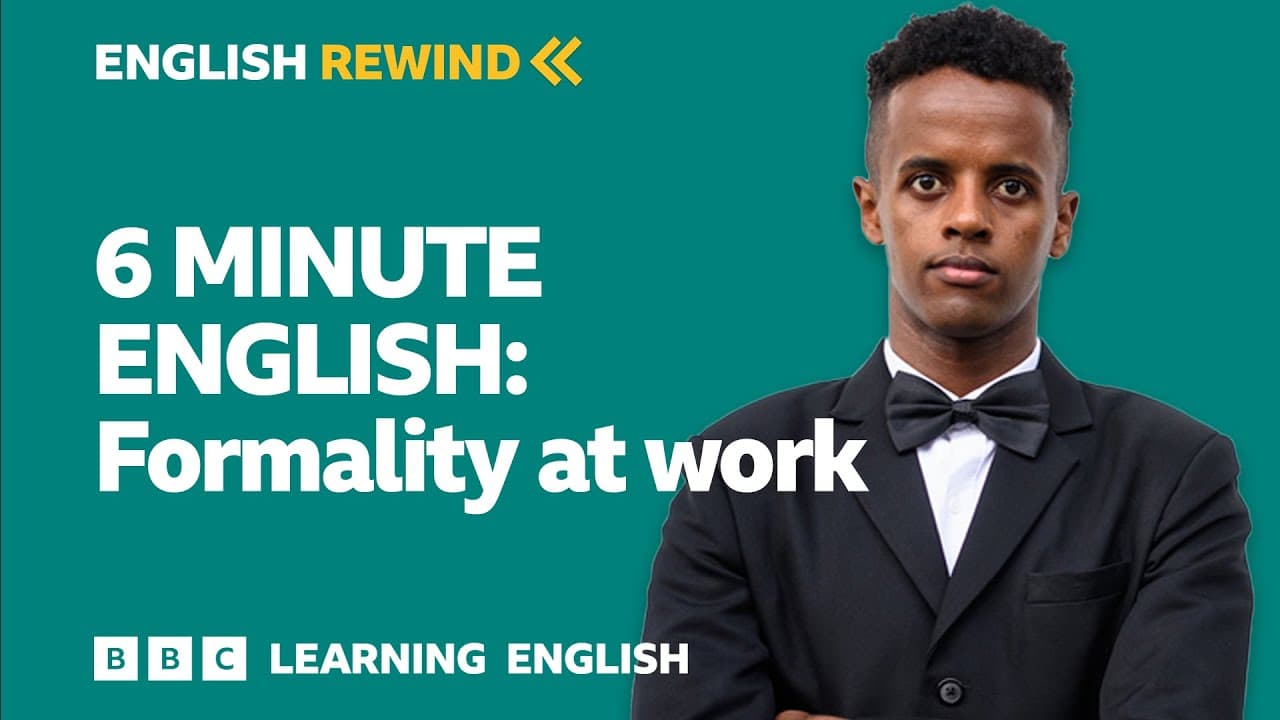
Workplace dress codes define the attire employees should wear, influencing the formality and dynamics of the work environment. While 85% of people in Britain prefer clear dress guidelines, workplaces like the BBC have shifted towards casual interactions and relaxed dress norms, promoting a first-name basis among colleagues.
Transcript
Hello! The programme you're about to listen to was first broadcast in June 2009 on the BBC Learning English website. For more English language learning programmes and podcasts, search for BBC Learning English. Hello, this is 6 Minute English. I'm Jackie Dalton and with me today is Neil Edgeller. — Hello, sir! — Sir! Very unusual: you don't usually ... Read More
Key Insights
- Formality at work varies greatly, with some workplaces being very formal while others are more relaxed and casual.
- The BBC World Service is described as a serious but informal workplace where employees are on first-name terms.
- Dress codes can dictate what employees should wear, with some preferring precise guidelines while others enjoy more freedom.
- Historically, the BBC had stricter formalities, including requiring newsreaders to wear dinner jackets even for radio broadcasts.
- Dress-down Fridays allow employees to wear casual clothes at work, contrasting with more formal attire required on other days.
- Addressing colleagues by their first names indicates an informal work environment, as opposed to using titles like 'Mr' or 'Mrs'.
- Some workplaces in the past had strict rules, such as requiring employees to ask permission to leave for the restroom.
- A survey revealed that 85% of people in Britain prefer to have a precise dress code at work, contrary to expectations.
Install to Summarize YouTube Videos and Get Transcripts
Explore YouTube Video Summarizer or Get YouTube Transcript Extractor
Questions & Answers
Q: What is the main topic of the episode?
The main topic of the episode is the level of formality in the workplace, specifically focusing on how formal or informal work environments can be. It explores dress codes, the use of first names, and how these elements contribute to the overall atmosphere at work.
Q: How does the BBC World Service compare to other workplaces in terms of formality?
The BBC World Service is described as a serious but informal workplace where employees are on first-name terms and have the freedom to wear casual clothes. This contrasts with more formal workplaces where strict dress codes and formal titles are the norm.
Q: What historical practices at the BBC are mentioned in the episode?
The episode mentions that historically, the BBC required newsreaders to wear dinner jackets even for radio broadcasts, despite the audience not being able to see them. This highlights the level of formality that was once expected within the organization.
Q: What are 'dress-down Fridays'?
'Dress-down Fridays' are a workplace practice where employees are allowed to wear casual clothes on Fridays, as opposed to the more formal attire expected on other days of the week. This practice is meant to create a more relaxed atmosphere at the end of the workweek.
Q: Why might some employees prefer a precise dress code?
Some employees might prefer a precise dress code because it provides clear guidelines on what is appropriate to wear, reducing ambiguity and potential stress about making clothing choices. It can also ensure a consistent and professional appearance across the workplace.
Q: How does addressing colleagues by first names affect workplace dynamics?
Addressing colleagues by first names fosters a more informal and relaxed work environment. It can help break down hierarchical barriers, promote open communication, and create a sense of camaraderie among employees, contributing to a positive workplace culture.
Q: What strict rules did some workplaces have in the past?
In the past, some workplaces had strict rules such as requiring employees to ask permission to leave the office for the restroom. This reflects a highly controlled and formal work environment where employee autonomy was limited.
Q: What surprising survey result is discussed in the episode?
The episode discusses a survey result where 85% of people in Britain said they would prefer to have a precise dress code at work. This was surprising to the hosts, who expected a lower percentage, indicating that many people value clear guidelines over the freedom to choose their attire.
Summary & Key Takeaways
-
This episode of 6 Minute English discusses the varying levels of formality in workplaces, using the BBC as a case study. It highlights how the BBC has evolved from a formal environment to a more relaxed atmosphere where employees are on first-name terms and dress codes are less strict.
-
The programme explores the concept of dress codes and how they impact workplace dynamics. It discusses 'dress-down Fridays' and how they allow employees to dress more casually, contrasting with the more formal attire expected on other days. Historical practices at the BBC, such as newsreaders wearing dinner jackets on radio, are also mentioned.
-
Through interviews and anecdotes, the episode reveals that while some employees prefer strict dress codes, others enjoy the freedom of a casual work environment. The discussion includes the importance of addressing colleagues by first names and how this reflects the level of formality in the workplace.
Read in Other Languages (beta)
Share This Summary 📚
Summarize YouTube Videos and Get Video Transcripts with 1-Click
Try YouTube Summary with ChatGPT & Claude or YouTube Transcript Generator
Explore More Summaries from BBC Learning English 📚
Summarize YouTube Videos and Get Video Transcripts with 1-Click
Try YouTube Summary with ChatGPT & Claude or YouTube Transcript Generator