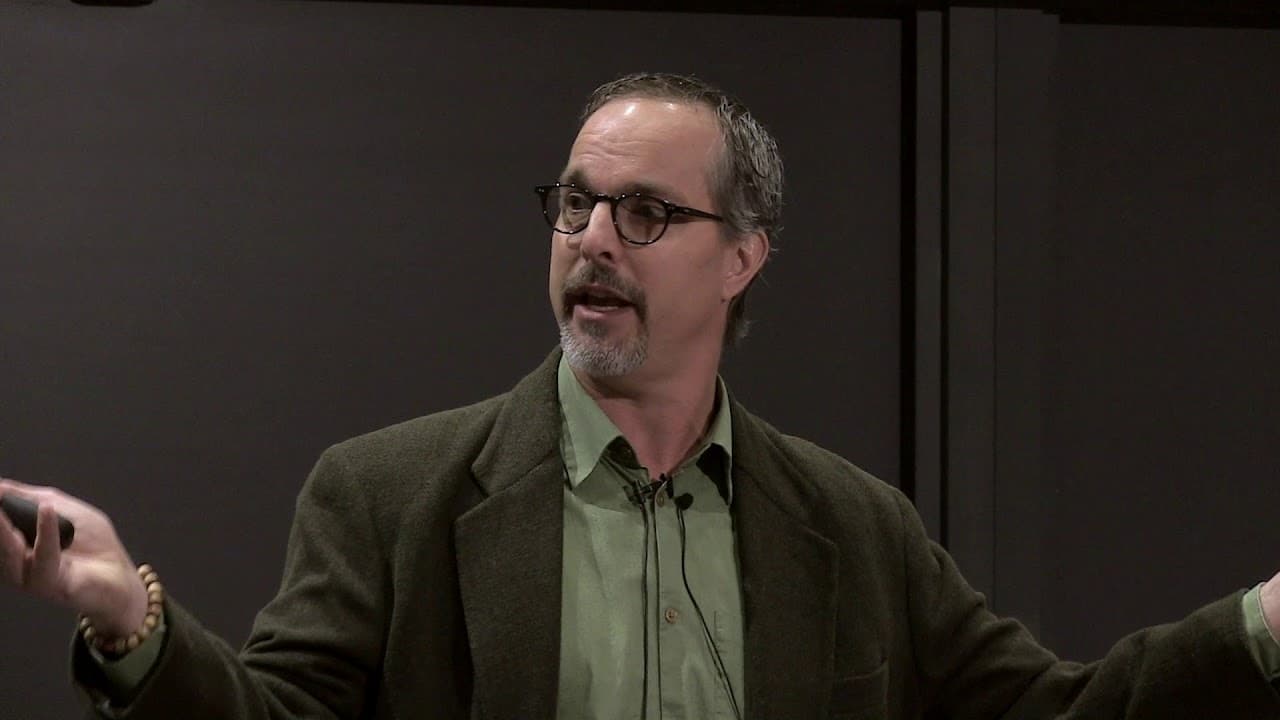
Self Worth Theory: The Key to Understanding & Overcoming Procrastination | Nic Voge | TEDxPrincetonU
TL;DR
Procrastination is not a sign of weakness or laziness, but rather a protective strategy driven by the fear of failure and the need to maintain self-worth, and can be overcome through self-awareness and shifting focus towards positive motivations.
Transcript
Translator: Tanya Cushman Reviewer: Peter van de Ven About two decades ago, when I was a PhD student at UC Berkeley, I found myself in a seminar taught by a psychology professor who was renowned for his research on self-worth theory, on motivation, teaching and learning. I'd no business being there; it had nothing to do with my research interests, ... Read More
Key Insights
- 🎯 Procrastination is a common issue in academic life and can be better understood by examining the deep motivational roots behind it rather than just viewing it as a bad habit.
- 🎓 Procrastination is not a sign of weakness or a flaw, but rather a predictable behavior that arises in highly competitive and evaluative environments such as Princeton.
- 💡 Self-worth theory suggests that procrastination is a strategy for self-protection, allowing individuals to have an excuse for potential failure while also providing an opportunity to feel even smarter if successful.
- 🧠 Procrastination is often caused by being overmotivated, with countervailing forces of both strong desire to achieve and intense fear of failure.
- 🤔 Overcoming procrastination requires developing awareness of the motivations underlying the behavior and tipping the balance towards approach motivations rather than avoidance motivations.
- 💪 Strategies to overcome procrastination include stacking up reasons to complete a task and focusing on its benefits, making tasks feel manageable by breaking them down, and challenging the flawed equation that equates performance with ability and self-worth.
- ❗️ Awareness of one's own motivations, feelings, and tendencies towards procrastination can help weaken its grip and allow for more active choice and decision-making.
- 🌟 Ultimately, the goal should be to have choices driven by hopes and aspirations rather than fears and avoidance.
Install to Summarize YouTube Videos and Get Transcripts
Explore YouTube Video Summarizer or Get YouTube Transcript Extractor
Questions & Answers
Q: How can self-awareness help in overcoming procrastination?
Self-awareness plays a crucial role in overcoming procrastination as it helps individuals understand their motivations, fears, and thought patterns. By being aware of their tendencies towards avoidance and approach, individuals can actively choose how to shift their focus and motivate themselves effectively.
Q: Why is procrastination often viewed as self-sabotage?
Procrastination is commonly seen as self-sabotage because it can hinder performance and success. However, from a self-worth perspective, procrastination is actually a strategy for self-protection. Individuals procrastinate to avoid the possibility of failure and to maintain their sense of self-worth. It is a way to protect themselves psychologically, even if it comes at the cost of performance.
Q: How does the equation of performance equaling ability and self-worth contribute to procrastination?
The equation of performance equaling ability and self-worth is flawed, yet it is a common belief that many individuals hold. This equation creates anxiety and fear of failure, leading to procrastination. Individuals may feel that if they don't perform at a high level, it reflects negatively on their worth as a person. Overcoming procrastination requires challenging this equation and realizing that self-worth is not solely determined by performance.
Q: What are some strategies for overcoming procrastination?
One strategy is to develop self-awareness by understanding the motives behind procrastination and being mindful of one's thoughts and feelings. Shifting the focus towards positive motivations and stacking them up against avoidance motives can also help in tipping the balance towards action. Additionally, challenging the flawed equation of performance equaling ability and self-worth can alleviate the fear of failure and reduce procrastination tendencies.
Summary & Key Takeaways
-
Procrastination is not a bad habit, but a deep-rooted motivation to protect one's self-worth and avoid failure.
-
Procrastination is driven by the fear of not meeting high standards and the desire to have a built-in excuse if performance falls short.
-
Overcoming procrastination requires shifting focus towards positive motivations, gaining self-awareness of avoidance and approach motives, and challenging the equation of performance equaling ability and self-worth.
Read in Other Languages (beta)
Share This Summary 📚
Summarize YouTube Videos and Get Video Transcripts with 1-Click
Try YouTube Summary with ChatGPT & Claude or YouTube Transcript Generator
Explore More Summaries from TEDx Talks 📚



![The future of Employment Everything] is Social & Digital | Syed Aiyaz Uddin | TEDxVIFT thumbnail](/_next/image?url=https%3A%2F%2Fi.ytimg.com%2Fvi%2F9Ta_I24CB-M%2Fhqdefault.jpg&w=750&q=75)
Summarize YouTube Videos and Get Video Transcripts with 1-Click
Try YouTube Summary with ChatGPT & Claude or YouTube Transcript Generator