Is the Fed Driving the Economy Off a Cliff?
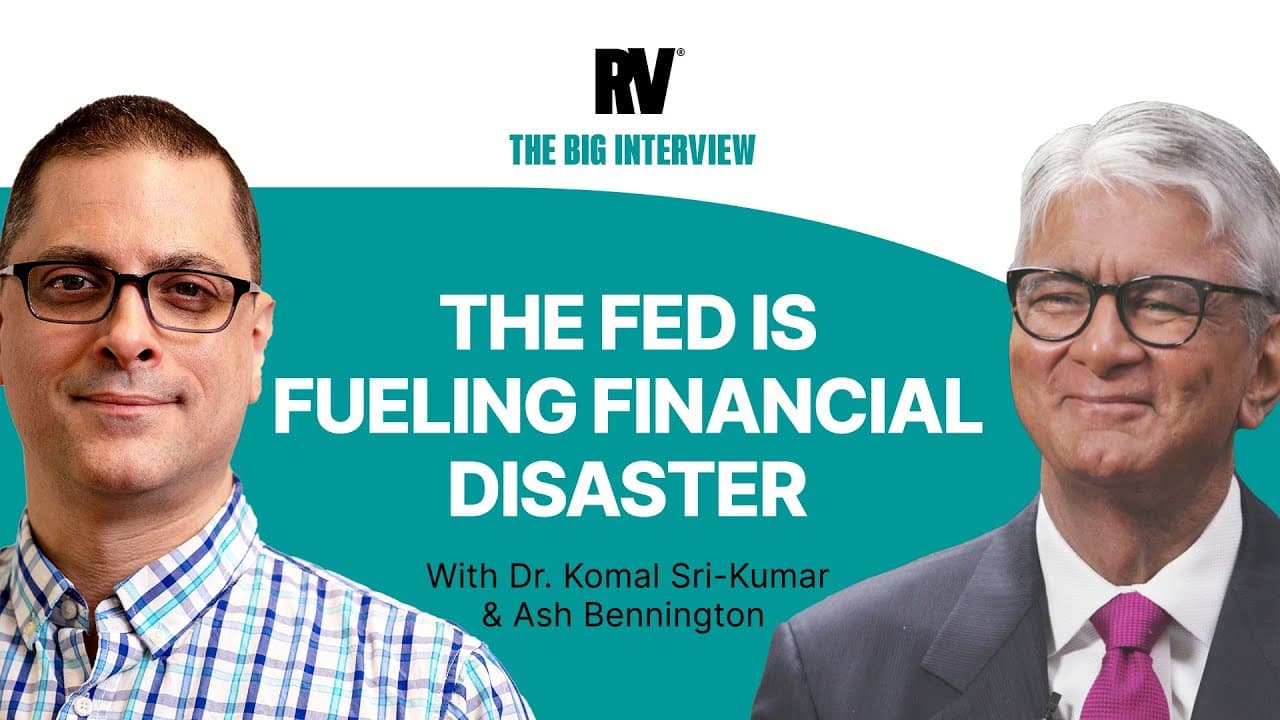
TL;DR
Fed's policies influence inflation, employment, and equity markets.
Transcript
hi it's R guess what I can't believe but we're turning 10 at real Vision this September I can't believe it's a Whole Decade of democratizing the very best financial intelligence and building this kind of super community of Finance including the super platform of finance and to celebrate we're throwing a virtual party on September 27th at 12:00 p.m.... Read More
Key Insights
- The Fed is focusing on balancing inflation and employment but struggles with maintaining stable prices while supporting equity markets.
- There is a significant concern about the Fed's role in increasing income inequality by focusing more on stock market performance than on wage growth.
- Commercial real estate faces challenges due to high interest rates and low office occupancy, potentially leading to a credit event.
- The Fed's quantitative tightening may end soon due to market pressures, despite the need for a more disciplined monetary policy.
- The Fed's balance sheet has expanded significantly since 2008, raising concerns about its long-term impact on the economy.
- Data accuracy issues at the Bureau of Labor Statistics complicate economic assessments, impacting policy decisions.
- The US economy's fiscal deficit continues to grow, posing risks during future economic downturns.
- The Fed's forward guidance often leads to market confusion due to inconsistent policy actions.
Install to Summarize YouTube Videos and Get Transcripts
Explore YouTube Video Summarizer or Get YouTube Transcript Extractor
Questions & Answers
Q: What is the Fed's current economic challenge?
The Fed is trying to balance controlling inflation with supporting employment growth. While inflation remains above target, employment is relatively healthy. The challenge is to manage these without destabilizing the economy or equity markets.
Q: How does the Fed's policy impact income inequality?
The Fed's focus on equity markets often benefits higher income groups who invest in stocks, while lower income groups see little benefit. This focus can exacerbate income inequality as asset prices rise, but wages and employment opportunities for lower income groups do not improve at the same rate.
Q: What risks does commercial real estate face?
Commercial real estate is challenged by high interest rates and low occupancy rates. Many buildings purchased at high prices are now worth less, and banks heavily invested in this sector may face financial strain, leading to potential credit events.
Q: Why might the Fed end quantitative tightening?
The Fed might end quantitative tightening due to market pressures and the risk of financial instability. Despite the need for disciplined monetary policy, the Fed may prioritize short-term market stability over long-term economic health.
Q: What is the significance of the Fed's balance sheet expansion?
The Fed's balance sheet has expanded significantly since the 2008 financial crisis, increasing from $800 billion to over $7 trillion. This expansion raises concerns about long-term economic impacts and the Fed's ability to manage future economic crises.
Q: How do data accuracy issues affect economic policy?
Inaccurate data from the Bureau of Labor Statistics complicates economic assessments, leading to potential missteps in policy decisions. This can result in inappropriate policy responses, affecting inflation, employment, and overall economic stability.
Q: What are the potential impacts of the growing fiscal deficit?
The growing fiscal deficit poses risks during future economic downturns. Without addressing the deficit, the government may have limited capacity to respond to recessions, potentially leading to more severe economic impacts.
Q: How does the Fed's forward guidance create market confusion?
The Fed's forward guidance often leads to market confusion due to inconsistent policy actions. While the Fed aims to provide clarity, deviations from stated plans can create uncertainty and volatility in financial markets.
Summary & Key Takeaways
-
The Fed is currently navigating a complex economic landscape, balancing inflation control with employment growth. Despite efforts to stabilize prices, the focus on equity markets raises concerns about income inequality.
-
Commercial real estate is under pressure from high interest rates and reduced demand for office space, posing a risk of a credit event. The Fed's quantitative tightening may be halted to prevent market instability.
-
The Fed's balance sheet has grown dramatically since 2008, complicating monetary policy. Data accuracy issues at the Bureau of Labor Statistics and a growing fiscal deficit add to the economic challenges.
Read in Other Languages (beta)
Share This Summary 📚
Summarize YouTube Videos and Get Video Transcripts with 1-Click
Try YouTube Summary with ChatGPT & Claude or YouTube Transcript Generator
Explore More Summaries from Real Vision 📚






Summarize YouTube Videos and Get Video Transcripts with 1-Click
Try YouTube Summary with ChatGPT & Claude or YouTube Transcript Generator