Bleaching in the Great Barrier Reef, and a Zika Update
TL;DR
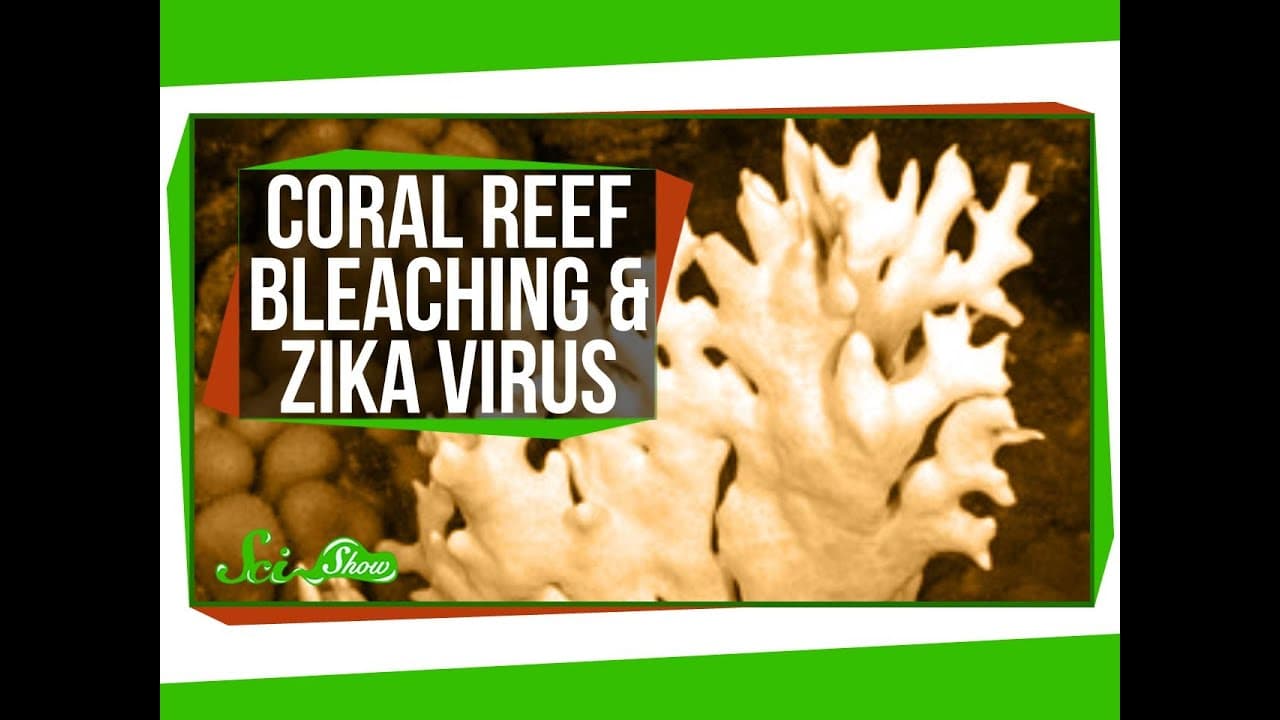
Coral bleaching continues to devastate the Great Barrier Reef, while scientists have made progress in understanding the Zika virus and its structure.
Transcript
Imagine scuba diving around the corals of Great Barrier Reef. You are now probably picturing vibrant colors and a bustling ecosystem. But if you decided to visit right now, you’d mostly be seeing the whitish skeletons of corals. Last week, the Australian Coral Bleaching Task Force announced that they’d completed aerial surveys of about 4000 kilomet... Read More
Key Insights
- 🤘 Coral bleaching in the Great Barrier Reef is a significant environmental concern, with all but 4 out of 520 surveyed reefs showing signs of bleaching.
- 😋 Coral reefs are vital ecosystems supporting a quarter of marine life and providing food and shelter to thousands of species.
- 😮 Rising ocean temperatures, combined with climate patterns like El Niño, contribute to coral bleaching events.
- 👶 The Zika virus, previously associated with microcephaly in babies, has had its 3D structure discovered. This breakthrough helps in understanding the virus's behavior and potential treatments.
- 🧠 The 3D structure of the Zika virus reveals distinctive carbohydrate groups and protein loops that may be linked to its ability to infect different types of tissues, including the brain.
- ❓ Understanding the structure of the Zika virus is a crucial step in developing preventive measures and treatments.
- 👷 The cryo-EM microscopy technique was utilized to visualize and construct the digital 3D model of the Zika virus's structure.
Install to Summarize YouTube Videos and Get Transcripts
Explore YouTube Video Summarizer or Get YouTube Transcript Extractor
Questions & Answers
Q: What causes coral bleaching?
Coral bleaching is primarily caused by a combination of warmer water temperatures due to climate change and the El Niño weather pattern, which disrupts the symbiotic relationship between coral polyps and algae.
Q: How does coral recover from bleaching?
When waters cool down, the algae can often recolonize the coral, leading to its revival. However, if the coral remains bleached for a longer period, about half of the affected corals may die.
Q: How does the Zika virus spread?
The Zika virus is mainly transmitted through the bite of infected Aedes mosquitoes. It can also be transmitted during sexual intercourse or from a pregnant mother to her fetus.
Q: What is the significance of understanding the 3D structure of the Zika virus?
Understanding the 3D structure helps scientists study the virus's mechanisms and potentially develop effective treatments or vaccines. The specific structure of the carbohydrate groups and protein loops on Zika may be crucial in understanding how it infects different types of tissues.
Summary & Key Takeaways
-
Recent aerial surveys have revealed that out of the 520 reefs surveyed, all but 4 showed signs of coral bleaching, which is caused by rising ocean temperatures.
-
Coral reefs are crucial ecosystems that support thousands of species and a quarter of all marine life.
-
Scientists have made significant progress in understanding the Zika virus, including the discovery of its 3D structure using cryo-EM microscopy.
Read in Other Languages (beta)
Share This Summary 📚
Summarize YouTube Videos and Get Video Transcripts with 1-Click
Try YouTube Summary with ChatGPT & Claude or YouTube Transcript Generator
Explore More Summaries from SciShow 📚


Summarize YouTube Videos and Get Video Transcripts with 1-Click
Try YouTube Summary with ChatGPT & Claude or YouTube Transcript Generator