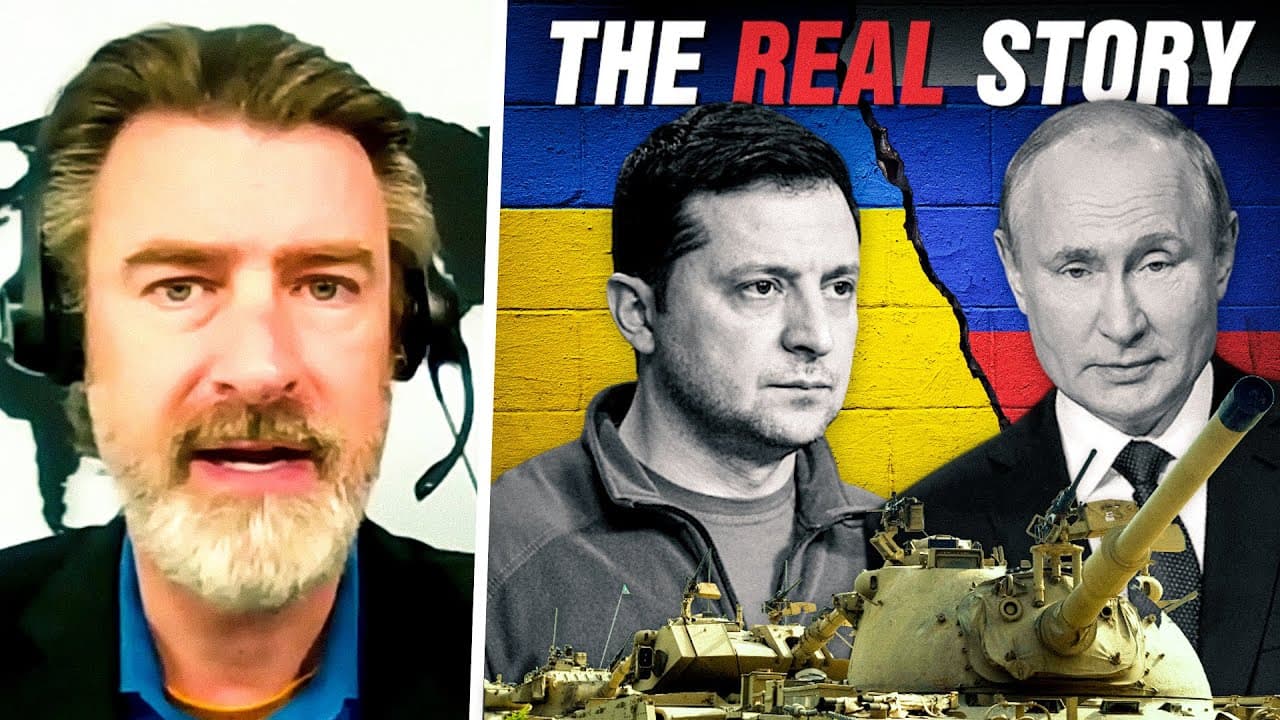
The Truth Behind The Russia vs Ukraine War: Peter Zeihan
TL;DR
The analysis explores the complexities behind the Russia-Ukraine conflict and its implications for global security.
Transcript
peter how are you i'm doing great how about yourself i am doing fantastic i'm super excited to talk to you when i told people that you were coming on i got inundated with questions and uh and all kinds of things to talk about so maybe first let's just start with the russia ukraine conflict i think is kind of the the event that everyone is focused o... Read More
Key Insights
- 🪛 The longstanding history of Russian insecurity and territorial aspirations drives current actions in Ukraine.
- 🎖️ Russia's demographic decline complicates its military capacity and urgency in the Ukraine conflict.
- 💠 Miscalculations by Russia regarding Western unity and support significantly shaped the course of the conflict.
- ☢️ NATO's role has shifted from passive observer to active supporter, impacting the conflict's dynamics.
- 🎖️ Logistic failures characterize Russia's military performance, undermining its strategic objectives.
- 📁 The conflict has heightened geopolitical tensions, risking direct confrontations between NATO and Russia.
- 🦻 Effective military aid to Ukraine may alter early conflict predictions and outcomes.
Install to Summarize YouTube Videos and Get Transcripts
Explore YouTube Video Summarizer or Get YouTube Transcript Extractor
Questions & Answers
Q: What are the key factors that led to the Russia-Ukraine conflict according to the analysis?
The analysis identifies historical insecurities, NATO's expansion, and internal demographic trends in Russia as key factors. Russia, feeling encroached upon, sought to secure strategically vital regions. The post-Cold War era has left Russia wanting to regain influence and prevent future vulnerabilities, leading to military actions in Ukraine.
Q: How did Russia's expectations differ from the reality of the conflict?
Russia anticipated a swift victory, predicting Ukraine would collapse under pressure. They also expected stronger support from allies like China. In reality, Ukraine showcased fierce resistance, and international support, including economic sanctions and military aid from NATO countries, exceeded expectations, prolonging Russian setbacks.
Q: What implications does NATO's involvement have for the conflict?
NATO's support brings both military aid and strategic implications. The flow of weapons helps Ukraine resist but raises the stakes, as a Russian success could lead to a direct confrontation with NATO forces. Thus, the conflict is now a focal point for potential broader geopolitical confrontations, especially regarding nuclear deterrent strategies.
Q: How does the analysis characterize Russian military performance in Ukraine?
The analysis suggests that the Russian military is performing inadequately, making significant logistic errors and suffering from low morale. Their inability to execute effective multi-domain operations highlights issues within their military structure that are worse than in past conflicts, suggesting serious operational deficiencies.
Q: What has been the reaction of global powers to the ongoing conflict?
Global powers have rallied in unexpected unity against Russia's actions. Countries like Japan and South Korea have implemented sanctions, and NATO allies have collectively provided military assistance to Ukraine, demonstrating a concerted effort to counter Russian aggression in ways previously unpredicted.
Q: Why does the analyst consider this conflict the "last war of the Cold War"?
The analyst views the conflict as an endpoint of Cold War dynamics, suggesting that as long as Russian security concerns remain central to their strategies, outcomes will reflect historical patterns of confrontation. This war marks a culmination of the post-Cold War era's geopolitical tensions, indicating a potential shift in global order.
Q: What might happen if Russia achieves its territorial ambitions?
Should Russia succeed in capturing Ukraine, it may embolden further territorial ambitions in Eastern Europe, risking not just regional stability but drawing NATO into a direct conflict. This escalation could prompt grave responses, including potential nuclear considerations, radically altering the security landscape in Europe.
Q: What are the expectations for the conflict as it continues into later stages?
The expectation is for significant bloodshed as military capabilities are ramped up on both sides. Increased supply of Western weaponry to Ukraine could lead to higher Russian attrition rates, suggesting a potential turning point, where failure for Russia might lead to desperate measures and possible nuclear escalation.
Summary & Key Takeaways
-
The Russia-Ukraine conflict is driven by historical security concerns and demographic shifts in Russia, leading to a perceived urgency for territorial gains.
-
Russia underestimated Ukraine's resistance and overestimated the support from allies like China, indicating flawed intelligence within the Kremlin.
-
NATO's support for Ukraine, especially in terms of weaponry, significantly impacts the conflict dynamics, with risks of escalation into a broader confrontation with Russia.
Read in Other Languages (beta)
Share This Summary 📚
Summarize YouTube Videos and Get Video Transcripts with 1-Click
Try YouTube Summary with ChatGPT & Claude or YouTube Transcript Generator
Explore More Summaries from Anthony Pompliano 📚

Summarize YouTube Videos and Get Video Transcripts with 1-Click
Try YouTube Summary with ChatGPT & Claude or YouTube Transcript Generator