How to Use an Email Sequence to Turn Prospects Into Customers
TL;DR
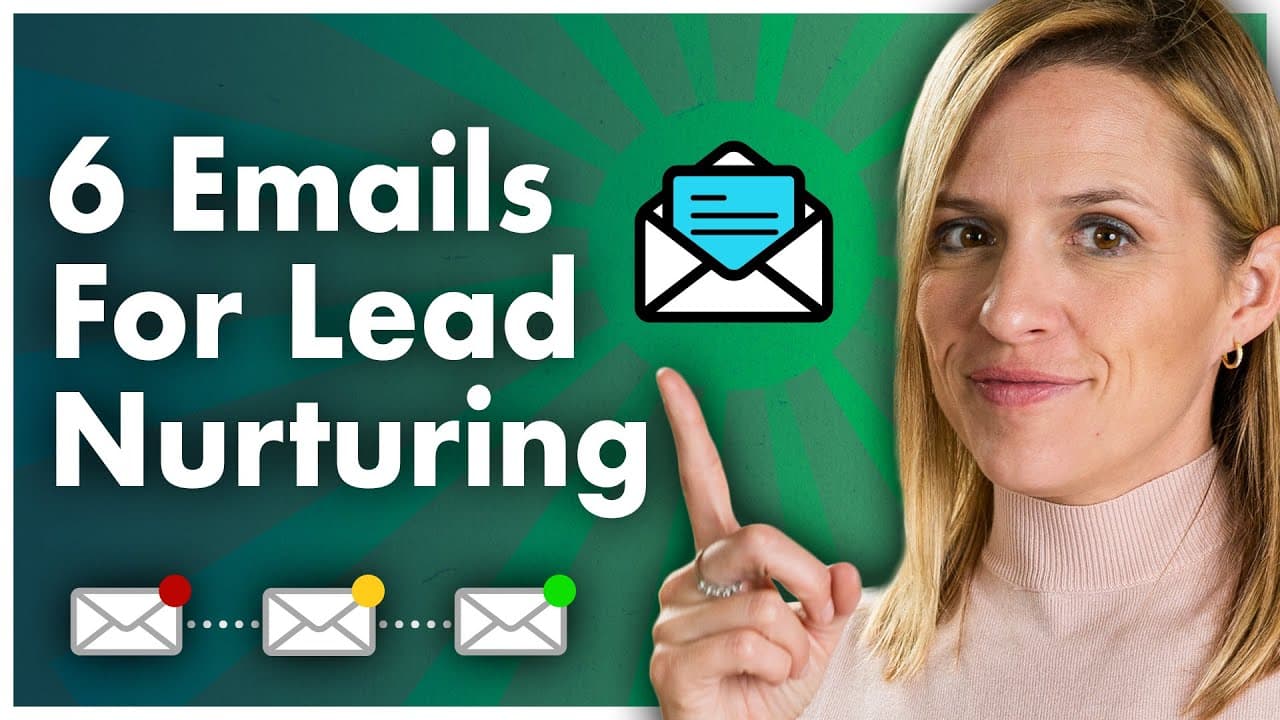
Learn a six-step email system to convert prospects into customers.
Transcript
- In this video, I'm gonna walk you through the six emails that you need to include in your nurture system every single month to help ensure that you're building loyalty, engagement and growing sales. And if you stick around to the end, I'm gonna show you how to re-engage a list you haven't been emailing for a while. (bright music) When you think a... Read More
Key Insights
- The video introduces a six-step email sequence designed to nurture prospects into loyal customers, emphasizing the importance of email order and content.
- The first email, the 'permission email,' helps recipients feel they belong by acknowledging their imperfections, fostering a sense of community and trust.
- Clout emails establish authority by showcasing the sender's expertise through platforms like podcasts or features in reputable publications.
- Training emails provide valuable insights or strategies, either directly within the email or through linked content, to educate and engage the audience.
- Recommendation emails suggest external products or services, potentially including affiliate links, to build trust and show genuine care for the audience's needs.
- Ask emails directly request the audience to purchase a product or service, a step often neglected by marketers who focus solely on content.
- Feedback emails close the loop by soliciting opinions from the audience, demonstrating that their thoughts are valued and encouraging future engagement.
- The 'permission sandwich' cycle can be repeated throughout the year, with variations in content, to maintain audience interest and drive sales.
Install to Summarize YouTube Videos and Get Transcripts
Explore YouTube Video Summarizer or Get YouTube Transcript Extractor
Questions & Answers
Q: What is the purpose of the permission email?
The permission email is designed to make recipients feel like they belong by acknowledging their imperfections. It creates a sense of community and trust, encouraging them to engage with the content and stay subscribed. This initial step is crucial in building a relationship with the audience.
Q: How do clout emails benefit the email sequence?
Clout emails establish the sender's authority and credibility by showcasing their expertise through platforms like podcasts or features in reputable publications. This step is important as it positions the sender as a knowledgeable figure worth listening to, thereby increasing the likelihood of audience engagement and trust.
Q: What content is typically included in a training email?
Training emails provide valuable insights, strategies, or hacks to the audience. This content can be delivered directly within the email or through a link to a video or article. The goal is to educate the audience, fill knowledge gaps, and demonstrate the sender's expertise in a specific area.
Q: Why are recommendation emails important in this sequence?
Recommendation emails suggest products or services outside of the sender's offerings, potentially including affiliate links. This approach shows that the sender cares about more than just selling their products, building trust with the audience. If recipients find value in the recommendations, they associate that positive experience with the sender.
Q: What role do ask emails play in the sequence?
Ask emails directly request the audience to purchase a product or service. This step is often overlooked by marketers who focus on content without explicitly prompting a sale. By including ask emails, marketers can drive conversions and ensure that the email sequence contributes to revenue growth.
Q: How does the feedback email contribute to audience engagement?
Feedback emails solicit opinions from the audience, showing that their thoughts are valued. This interaction not only encourages future engagement but also provides the sender with valuable insights into audience preferences. It strengthens the relationship by demonstrating that the sender cares about the audience's views.
Q: What is the 'permission sandwich' cycle?
The 'permission sandwich' cycle refers to the repeated use of the six-step email sequence throughout the year. By varying the content within each email type, marketers can maintain audience interest and drive consistent engagement. This systematic approach ensures that the audience remains engaged and sales continue to grow.
Q: How can marketers re-engage a dormant email list?
To re-engage a dormant email list, marketers should acknowledge the absence and communicate upcoming changes and content. By addressing the 'elephant in the room' and promising valuable information, marketers can rekindle interest and set the stage for renewed engagement, ensuring the audience is excited about future interactions.
Summary & Key Takeaways
-
The video outlines a six-step email sequence aimed at converting prospects into customers by building loyalty and engagement. Each email type serves a specific purpose, from establishing belonging and authority to providing training and recommendations.
-
Marketers are encouraged to repeat this 'permission sandwich' cycle regularly, adjusting content to keep the audience engaged. This systematic approach is shown to be effective in growing sales and maintaining customer interest.
-
The presenter also addresses how to re-engage a dormant email list by acknowledging the absence and promising valuable content, thus reinvigorating audience interest and setting the stage for future engagement.
Read in Other Languages (beta)
Share This Summary 📚
Summarize YouTube Videos and Get Video Transcripts with 1-Click
Try YouTube Summary with ChatGPT & Claude or YouTube Transcript Generator
Explore More Summaries from Social Media Examiner 📚

Summarize YouTube Videos and Get Video Transcripts with 1-Click
Try YouTube Summary with ChatGPT & Claude or YouTube Transcript Generator