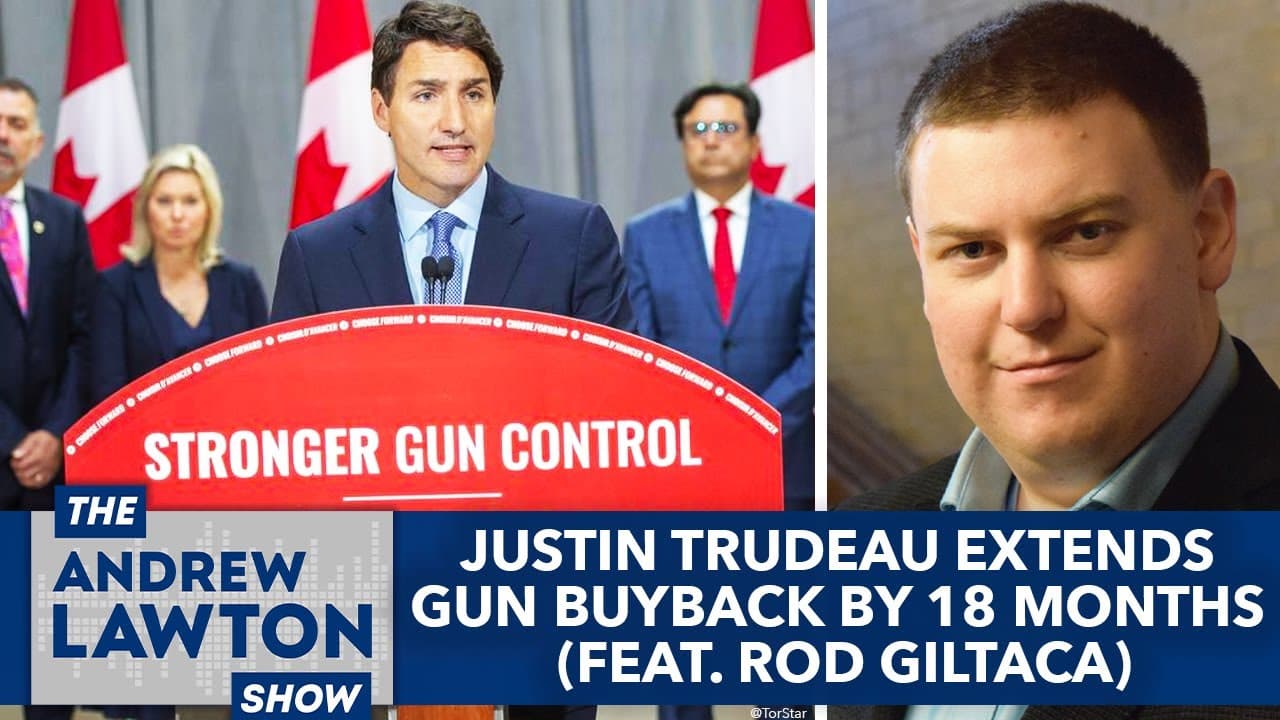
Justin Trudeau extends gun buyback by 18 months (feat. Rod Giltaca)
TL;DR
The content discusses the ongoing consequences of COVID-19 restrictions and recent gun control policies in Canada.
Transcript
so so welcome to canada's most irreverent talk show this is the andrew lawton show brought to you by true north hello and welcome this is the andrew lawton show here on true north it's great to have you tuned into the program and one of the things i am always going to say on this day to anyone irish or not is happy st patrick's day although that is... Read More
Key Insights
- 🍉 The term "two weeks to flatten the curve" highlights the evolving nature of pandemic restrictions, revealing a disconnect between initial intentions and ongoing policies.
- 🤨 The Canadian government's extension of firearm amnesty raises concerns about property rights and the implications of legitimizing prolonged restrictions on lawful gun owners.
- 😀 Public health measures have faced scrutiny for their politicized nature, impacting trust and compliance among Canadians.
- 🤙 The portrayal of Canada as a diplomatic facilitator rather than a leader calls into question the efficacy of its foreign policy in addressing urgent global issues.
- 🗯️ The challenges of addressing smuggling and illegal gun ownership overshadow discussions about lawful firearm ownership rights.
- 🧑⚕️ There is considerable public concern surrounding the negative impact of government restrictions on mental health, business viability, and community morale as a result of COVID-19 policies.
- 🏛️ The layered effects of COVID-19 restrictions on different classes of citizens showcase a troubling trend of societal segregation based on vaccination status.
Install to Summarize YouTube Videos and Get Transcripts
Explore YouTube Video Summarizer or Get YouTube Transcript Extractor
Questions & Answers
Q: What is the significance of the phrase "two weeks to flatten the curve" as discussed in the content?
The phrase symbolizes the initial call for pandemic-related restrictions that were expected to be temporary. However, the discussion points out how this has evolved into ongoing restrictions over two years, indicating a failure to return to normalcy and prompting concerns about governmental overreach.
Q: How has the Canadian government’s amnesty for firearms been received by gun owners?
Gun owners have mixed feelings about the government's decision to extend the amnesty period for firearms banned in 2020. While it prevents them from becoming criminals immediately, many view it as a temporary solution that prolongs uncertainty and could lead to further loss of rights in the future.
Q: What role does the concept of property rights play in the firearms debate highlighted in the discussion?
The property rights argument emphasizes that lawful gun owners have a legitimate claim to their possessions, which the government is attempting to confiscate without reasonable justification. This raises broader questions about rights and the limits of government authority, challenging the legality of such actions.
Q: Why is there skepticism about the Canadian government’s handling of gun control and public safety?
Skepticism arises from the government’s reliance on emotional political narratives rather than evidence-based policy. Critics argue that gun bans instituted without addressing the smuggling and illegal possession of firearms do not effectively enhance public safety.
Q: How does the content portray Canada's role in international diplomacy?
Canada is depicted as lacking significant influence on the world stage, often relegated to a supportive role rather than a decisive player. The commentary emphasizes the idea that Canada is more of a facilitator or "convenor" rather than a leader in international relations.
Q: What criticisms are made about the current state of public health leadership in Canada?
The content criticizes public health leadership for becoming overly politicized and failing to uphold credibility as community trust wanes. Reports have suggested that many recommendations lacked scientific rigor, contributing to widespread doubt about public health directives.
Q: What is the broader implication of the emphasis on mask mandates and COVID-19 restrictions in the discussion?
The proponents argue that constant governmental restrictions signal an infringement on personal freedoms, challenging the normalization of such mandates. The discussion suggests that governmental overreach must be critically evaluated, as it sets dangerous precedents for personal liberties.
Q: How does the discussion on Canadian foreign policy reflect on the upcoming leadership candidates?
The conversation indicates that the future leadership candidates should recognize the importance of being realistic about Canada’s global capabilities. The expectation is that they should prioritize pragmatic approaches to foreign policy that align with Canada’s true standing in international relations.
Summary & Key Takeaways
-
The show recognizes the two-year mark since the "two weeks to flatten the curve" proclamation, highlighting the persistent restrictions still affecting Canadians today.
-
A significant focus is placed on the Canadian government's handling of gun control, particularly the extension of an amnesty for recently banned firearms, criticized for being politically motivated.
-
The discussion underlines concerns about property rights and governmental overreach, contrasting with the need for realistic foreign policy that accurately represents Canada's global influence.
Read in Other Languages (beta)
Share This Summary 📚
Summarize YouTube Videos and Get Video Transcripts with 1-Click
Try YouTube Summary with ChatGPT & Claude or YouTube Transcript Generator
Explore More Summaries from True North 📚
Summarize YouTube Videos and Get Video Transcripts with 1-Click
Try YouTube Summary with ChatGPT & Claude or YouTube Transcript Generator