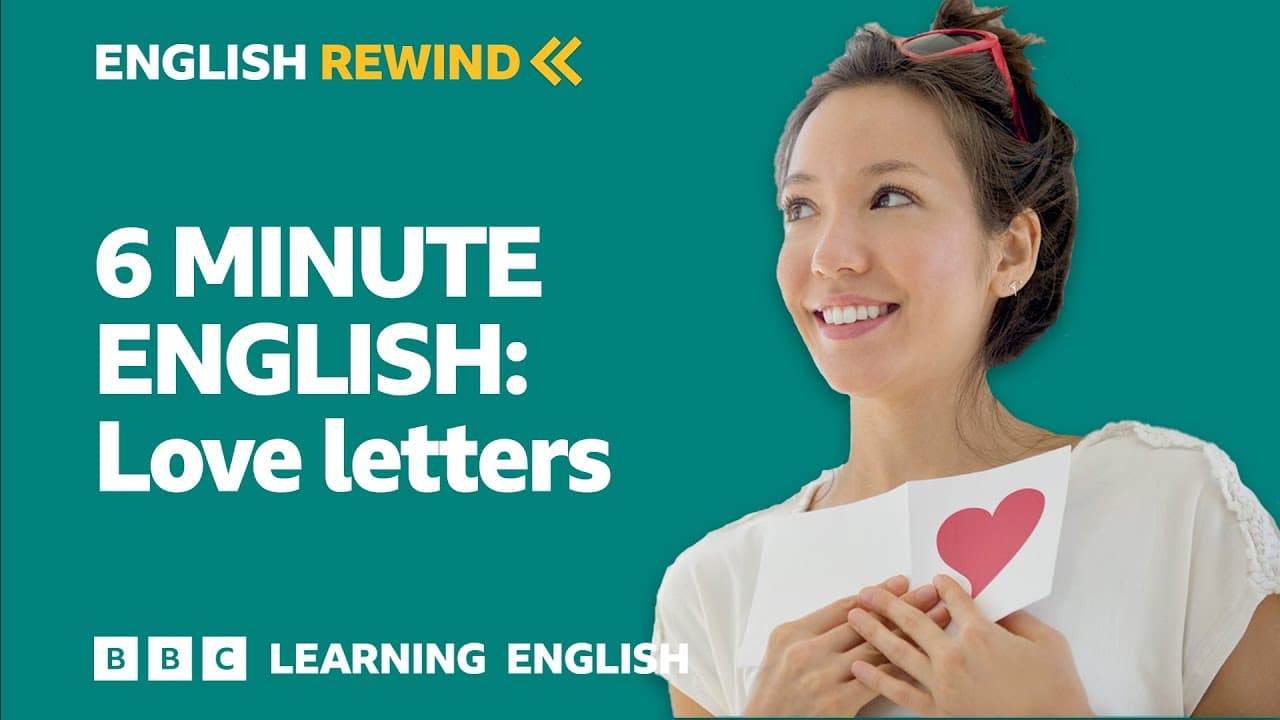
What Can We Learn from Historic Love Letters?
TL;DR
The 'Wives and Sweethearts' exhibition showcases love letters from soldiers over the past 200 years, highlighting how military life impacts personal relationships. These letters evoke strong emotions, revealing the consistent structure of expressing love and sharing mundane details, even amid separation and loss. The Royal Mail, established in 1516, has played a crucial role in facilitating these heartfelt communications.
Transcript
Hello! This is a programme from the BBC Learning English archive. It was first broadcast in February 2011 on the BBC Learning English website. We hope you enjoy it. This is 6 Minute English from BBC Learning English dot com. Hello, I'm Yvonne Archer and Rob has joined me for today's 6 Minute English. Now, Rob, put your romantic hat on and tell us, ... Read More
Key Insights
- The exhibition 'Wives and Sweethearts' at London's National Army Museum showcases love letters from soldiers spanning 200 years.
- Love letters reveal how army life influenced relationships, highlighting both emotional connections and the challenges of separation.
- The term 'sweetheart' is an old-fashioned term for someone we hold dear, similar to 'girlfriend' or 'boyfriend' today.
- Many letters in the exhibition are described as 'very moving', evoking strong emotions and sometimes dealing with loss.
- Despite the passage of time, the structure of love letters remains consistent, starting with declarations of love and ending with reassurances.
- The mundane details in the middle of letters show how life continues normally despite the separation caused by war.
- Security concerns often limit the details soldiers can share about their activities in letters, to avoid worrying loved ones.
- The Royal Mail, Britain's postal service, was founded in 1516, facilitating communication over centuries, including love letters.
Install to Summarize YouTube Videos and Get Transcripts
Explore YouTube Video Summarizer or Get YouTube Transcript Extractor
Questions & Answers
Q: What is the focus of the 'Wives and Sweethearts' exhibition?
The 'Wives and Sweethearts' exhibition at London's National Army Museum focuses on showcasing love letters from soldiers over the last 200 years. It aims to illustrate how army life has affected personal relationships between soldiers and their loved ones, highlighting both emotional connections and the challenges posed by separation and loss.
Q: How does the exhibition define the term 'sweetheart'?
In the exhibition, 'sweetheart' is described as an old-fashioned noun used to refer to someone we are fond of or hold dear. It is akin to modern terms like 'girlfriend' or 'boyfriend'. The term reflects affection and emotional closeness, and it can also be used affectionately for children or appreciated colleagues.
Q: What common structure do love letters follow according to the exhibition?
Love letters, as highlighted in the exhibition, often follow a consistent structure. They typically begin with declarations of love and expressions of how much the writer misses the recipient. They end with reassurances not to worry. The middle part often contains mundane details about everyday life, maintaining a sense of normalcy despite the separation.
Q: Why do soldiers often avoid sharing detailed information in their letters?
Soldiers often refrain from sharing detailed information in their letters due to security concerns. This practice is intended to prevent sensitive information from being disclosed, which could compromise safety. Additionally, it helps avoid causing unnecessary worry to their loved ones at home, ensuring that the letters remain a source of comfort and connection.
Q: What is the historical significance of the Royal Mail in the context of the exhibition?
The Royal Mail, founded in 1516, holds historical significance as it has been a vital communication medium over the centuries, including during times of war. It facilitated the exchange of love letters between soldiers and their loved ones, allowing them to maintain emotional connections despite physical separation and the challenges of military life.
Q: How do the love letters in the exhibition evoke emotions?
The love letters in the exhibition are described as 'very moving', evoking strong emotions because they capture the deep affection and longing between separated loved ones. They often deal with themes of separation, uncertainty, and in some cases, loss, making them poignant reflections of the emotional challenges faced by soldiers and their families.
Q: What role do mundane details play in love letters according to the exhibition?
Mundane details in love letters serve to maintain a sense of normalcy and connection despite the separation caused by military service. By sharing everyday happenings, the letter writers help their loved ones feel involved in their lives, reinforcing the emotional bond and providing comfort that life continues even when they are apart.
Q: How does the exhibition reflect on the evolution of communication over time?
The exhibition reflects on the evolution of communication by showcasing how love letters have remained a consistent form of emotional expression over 200 years. Despite changes in language and technology, the fundamental structure and purpose of these letters—to convey love, reassurance, and mundane details—have endured, highlighting the timeless nature of written correspondence in maintaining personal connections.
Summary & Key Takeaways
-
The 'Wives and Sweethearts' exhibition explores 200 years of love letters from soldiers, revealing the impact of military life on personal relationships. It highlights the emotional and challenging aspects of separation and loss.
-
The term 'sweetheart' is explored, showing its evolution from an old-fashioned term to modern equivalents like 'girlfriend' or 'boyfriend'. Love letters consistently express affection and mundane details, maintaining a connection during separation.
-
Security concerns restrict soldiers from sharing detailed information in letters, ensuring loved ones' safety and peace of mind. The Royal Mail, established in 1516, has been a crucial medium for such communication over the centuries.
Read in Other Languages (beta)
Share This Summary 📚
Summarize YouTube Videos and Get Video Transcripts with 1-Click
Try YouTube Summary with ChatGPT & Claude or YouTube Transcript Generator
Explore More Summaries from BBC Learning English 📚
Summarize YouTube Videos and Get Video Transcripts with 1-Click
Try YouTube Summary with ChatGPT & Claude or YouTube Transcript Generator