VHDL Structural modeling | Full Adder | Digital System Design | Lec-05
TL;DR
Structural VHDL modeling involves creating code based on circuit architecture, using specific components like gates.
Transcript
hi everyone in this video I'm going to explain about the third style of vhdl code which is a structural model in structural model completely we will write the vhdl code based upon this internal architecture so we write code we write structural vhdl code based on the internal internal structure of the circuit okay suppose if you are having a full ad... Read More
Key Insights
- ❓ The structural VHDL model emphasizes a detailed breakdown of circuits, focusing on internal architecture.
- 🥳 Writing VHDL code for components promotes a clearer understanding of how individual parts function together in a larger system.
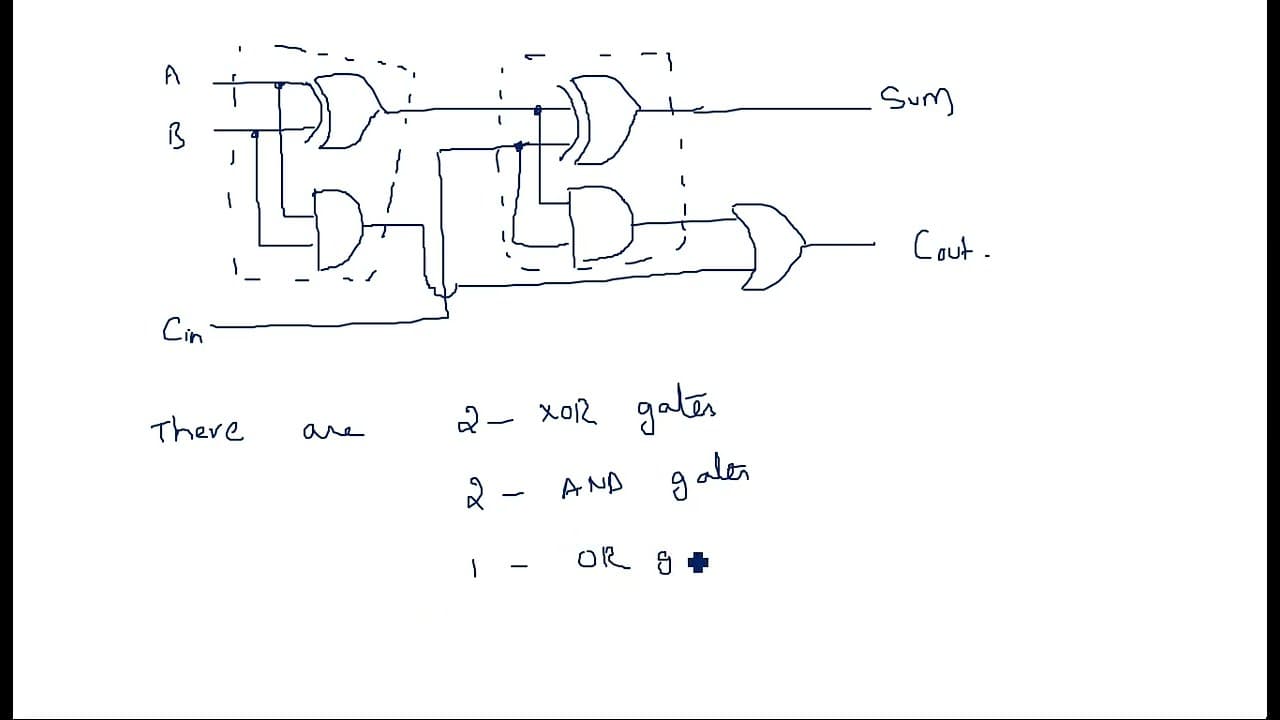
- 🪜 A full adder structure includes two half adders and an OR gate, illustrating complex relationships in digital designs.
- 🎨 Component instantiation is essential for ensuring that all modules are correctly defined and can be interconnected within the main design.
- 🖐️ Internal signals play a critical role by carrying data between components, facilitating seamless integration of logic gates.
- 👻 Modular coding allows for code reuse, which streamlines processes and reduces errors in digital design.
- 👶 Understanding dependencies between VHDL topics, such as logic design and circuit theory, enhances the learning experience for new designers.
Install to Summarize YouTube Videos and Get Transcripts
Explore YouTube Video Summarizer or Get YouTube Transcript Extractor
Questions & Answers
Q: What is the purpose of using a structural model in VHDL?
The structural model in VHDL serves to detail the internal architecture of a circuit by defining and interconnecting its components. This allows for a clearer representation of how smaller modules, such as gates, come together to form complex structures, like a full adder, thus facilitating a thorough understanding of circuit behavior.
Q: How is a full adder constructed in the VHDL structural model?
A full adder is constructed using two half adders and an OR gate. Each half adder consists of an XOR gate and an AND gate. The outputs from the half adders are combined in the OR gate, which produces the final sum and carry outputs. This hierarchical approach highlights component relationships within the circuit.
Q: Why is it important to write individual codes for components in the structural model?
Writing individual codes for components, like XOR and AND gates, is crucial as it allows for modularity and reuse of code. Each component can be tested individually before being integrated into larger designs. This approach also simplifies debugging and maintenance of the VHDL code, making complex designs more manageable.
Q: What are the key steps involved in writing the structural VHDL code for a full adder?
Key steps include defining the entity with input and output ports, creating an internal signal declaration, implementing component instantiation for necessary gates, and clearly outlining how each component is connected using port mapping. This organized structure facilitates understanding and modifies the circuit as needed.
Summary & Key Takeaways
-
The structural model in VHDL focuses on the internal architecture of the circuit, where components are defined and connected to create a full adder.
-
Individual codes for various logic gates (XOR, AND, OR) are written and later port-mapped together in the main program to complete the structural model.
-
Understanding VHDL requires knowledge of digital circuits, switching theory, and logic design, accommodating the interdependence of these subjects in circuit design.
Read in Other Languages (beta)
Share This Summary 📚
Summarize YouTube Videos and Get Video Transcripts with 1-Click
Try YouTube Summary with ChatGPT & Claude or YouTube Transcript Generator