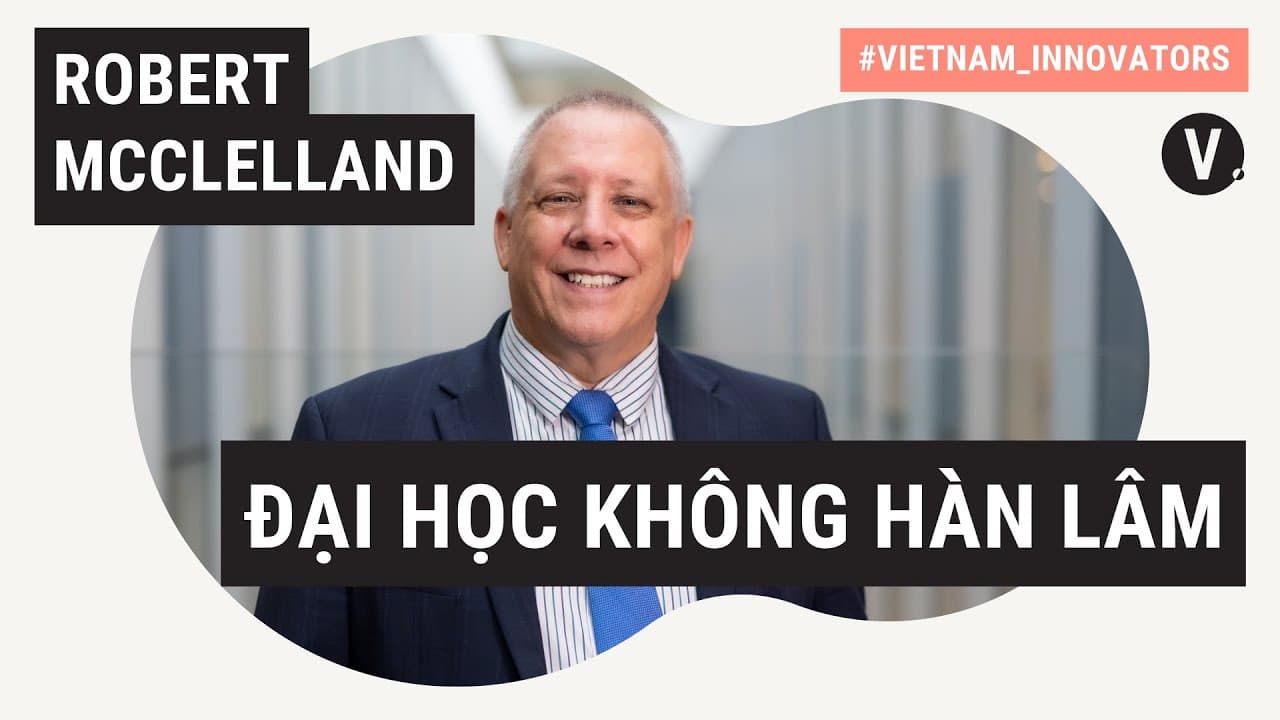
Ngài Robert McClelland, Professor, Deputy Dean, SBM RMIT Vietnam | Vietnam Innovators EP08
TL;DR
Interview with Robert McClelland on education innovation at RMIT Vietnam.
Transcript
[Applause] hey everyone welcome back to vietnam innovators my name is ruby nguyen and i usually host the vietnamese version of the show however today i am very honored to have a chance to host the english version of the show as well and i have an esteemed guest with me today professor robert mcclellan the putin dean at rmit school of business and m... Read More
Key Insights
- Robert McClelland has over 40 years of experience in education, transitioning from science to business and eventually to RMIT Vietnam.
- The pandemic forced a shift to online learning, which RMIT Vietnam navigated by leveraging digital tools and maintaining educational quality.
- Vietnam's young population is tech-savvy, aiding the transition to online education and creating opportunities for digital learning innovations.
- RMIT Vietnam uses a blended learning approach, combining traditional methods with digital tools to enhance student engagement and learning outcomes.
- The university's MBA program focuses on real-world applications, aligning with World Economic Forum skills requirements and sustainable development goals.
- RMIT Vietnam's curriculum is continuously updated to reflect industry needs, preparing students for fast-evolving business environments.
- The pandemic has increased MBA enrollments, with RMIT Vietnam seeing significant growth due to travel restrictions and its strong local reputation.
- RMIT Vietnam emphasizes practical learning experiences, using industry partnerships to provide students with real-world problem-solving opportunities.
Install to Summarize YouTube Videos and Get Transcripts
Explore YouTube Video Summarizer or Get YouTube Transcript Extractor
Questions & Answers
Q: What brought Robert McClelland to Vietnam and RMIT?
Robert McClelland's journey to Vietnam was influenced by his extensive experience in education and his personal connections to Southeast Asia. After a long career in the UK, he saw an opportunity at RMIT Vietnam, a prestigious institution, and decided to pursue it, drawn by both professional and personal reasons.
Q: How did the pandemic impact RMIT Vietnam's education approach?
The pandemic necessitated a rapid shift to online learning, which RMIT Vietnam managed effectively due to their existing digital infrastructure. The institution embraced digital disruption, using tools like Zoom and Teams to ensure continuity in education while maintaining quality and engagement.
Q: What challenges did RMIT Vietnam face during the transition to online learning?
A major challenge was convincing students and parents of the value of online education, given RMIT's high tuition fees. Initial skepticism led to a drop in enrollment, but as the institution demonstrated the effectiveness of their online programs, student confidence and participation increased.
Q: How does RMIT Vietnam prepare students for the future of work?
RMIT Vietnam's curriculum is designed to align with global skills requirements, focusing on digital literacy, problem-solving, and leadership. The institution continuously updates its programs to reflect industry needs, ensuring students are equipped with relevant skills for future job markets.
Q: What is the role of blended learning at RMIT Vietnam?
Blended learning at RMIT Vietnam combines traditional and digital methods to enhance education. This approach leverages digital tools to mimic social media environments, making learning more engaging and relevant to students' daily experiences, thereby improving educational outcomes.
Q: Why is the MBA program at RMIT Vietnam popular during the pandemic?
The pandemic restricted international travel, leading to increased local enrollments at RMIT Vietnam. The MBA program's focus on real-world applications and its alignment with global skills requirements make it attractive to students seeking relevant and high-quality education during uncertain times.
Q: How does RMIT Vietnam incorporate industry needs into its curriculum?
RMIT Vietnam collaborates with industry partners and government to ensure their curriculum reflects real-world demands. This collaboration provides students with practical learning experiences and insights into current industry challenges, preparing them for successful careers post-graduation.
Q: What are the future plans for RMIT Vietnam's educational programs?
RMIT Vietnam plans to introduce new programs focused on emerging fields like blockchain, AI, and fintech. These programs aim to provide students with cutting-edge knowledge and skills, ensuring they are well-prepared for the evolving demands of the global job market.
Summary & Key Takeaways
-
Robert McClelland, Deputy Dean at RMIT Vietnam, shares insights into the university's innovative approach to education, emphasizing the importance of adapting to digital disruption. With a strong foundation in blended learning, RMIT Vietnam leverages technology to enhance educational experiences.
-
The COVID-19 pandemic accelerated the shift to online learning, and RMIT Vietnam's preparedness allowed for a smooth transition. The institution's focus on digital tools and blended learning has been instrumental in maintaining educational quality and student engagement.
-
RMIT Vietnam's MBA program is designed to meet the demands of a rapidly changing business environment. By aligning with global skills requirements and incorporating real-world applications, the program prepares students for leadership roles in various industries.
Read in Other Languages (beta)
Share This Summary 📚
Summarize YouTube Videos and Get Video Transcripts with 1-Click
Try YouTube Summary with ChatGPT & Claude or YouTube Transcript Generator
Explore More Summaries from Vietcetera 📚




Summarize YouTube Videos and Get Video Transcripts with 1-Click
Try YouTube Summary with ChatGPT & Claude or YouTube Transcript Generator