Rule of Thirds for Beginners in Photography | What Is Rule of Thirds | The Rule of Thirds Explained
TL;DR
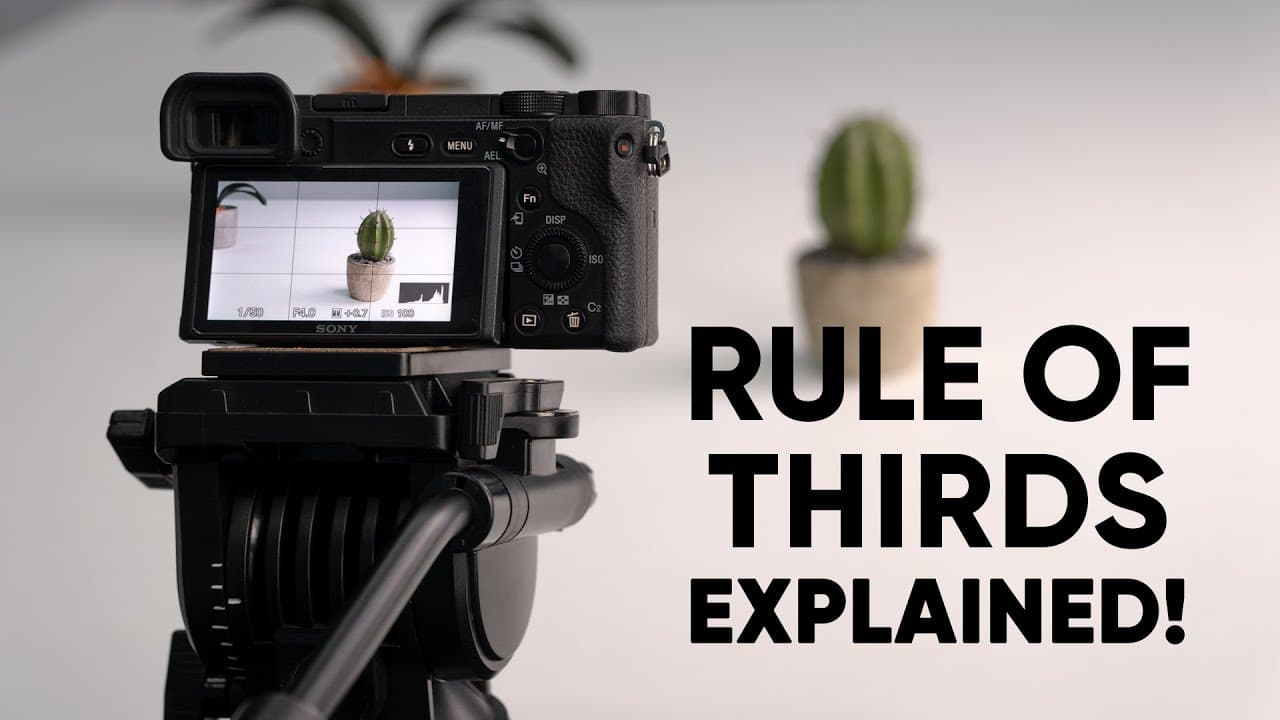
The rule of thirds is a composition technique that divides the frame into nine sections and suggests placing the main subject on the intersecting points for a more interesting and dynamic composition.
Transcript
composition is an important part of photography high-end camera gears can certainly ease up the process of taking a stunning image but a perfect composition takes more than that it requires an observant eye technical expertise patience and experience you can make an average looking subject a bit more interesting with the help of some fundamental ph... Read More
Key Insights
- 📷 Photography composition requires more than just high-end camera gears; it requires an observant eye, technical expertise, patience, and experience.
- 🖼️ The rule of thirds is an easy-to-grasp and widely used technique in photography for achieving a perfect composition.
- 🕶️ Placing the main subject on the intersecting points of the rule of thirds creates a more interesting and lively composition.
- 📸 Most cameras have an inbuilt rule of thirds guide, making it easy to apply this technique in your photography.
- 👁️ Placing the subject in the center of the frame can make it appear static and less engaging, while the rule of thirds adds dynamism.
- 🌄 The rule of thirds can be applied to landscape photography to create depth and enhance the overall composition.
- 🖼️ Post-production cropping and positioning can also utilize the rule of thirds to improve the composition of an image.
- 🎑 The rule of thirds may not always be necessary, such as in cases of symmetrical compositions or shallow depth of field subjects.
Install to Summarize YouTube Videos and Get Transcripts
Explore YouTube Video Summarizer or Get YouTube Transcript Extractor
Questions & Answers
Q: How does the rule of thirds enhance a photograph's composition?
The rule of thirds enhances a photograph's composition by creating visual interest through asymmetrical placement of the main subject on the intersecting points, leading the viewer's eyes to explore the image and spend more time observing it.
Q: When should the rule of thirds be applied in photography?
The rule of thirds can be applied in various photography genres, such as portraits and landscapes, to create a more dynamic composition. It can also be used in post-production cropping. However, there are situations, like shallow depth of field compositions, where the rule may not be necessary.
Q: Why is it important to practice and understand the rule of thirds in photography?
It is important to practice and understand the rule of thirds in photography because it helps photographers create more visually engaging compositions. By mastering this technique, photographers can effectively guide the viewer's eyes and enhance their interaction with the image.
Q: Are there any instances where the rule of thirds should be broken?
While the rule of thirds is a useful guideline, there are instances where breaking it can be justified. For example, in compositions that require a symmetrical feel, such as photographs of the Taj Mahal, placing the subject in the center communicates the intended aesthetic. Additionally, in compositions with shallow depth of field, focusing on the subject by placing it in the center without adhering to the rule can be effective.
Summary & Key Takeaways
-
The rule of thirds involves dividing the frame into nine sections using two horizontal and two vertical lines, with the intersecting points as key areas to place the main subject.
-
Placing the subject on the intersecting points creates more space in the frame and directs the viewer's eyes to the larger portion of the edge, resulting in a more engaging composition.
-
The rule of thirds can be applied to various photography genres, including portraits, landscapes, and post-production cropping, but there are situations where it may not be necessary or should be broken.
Read in Other Languages (beta)
Share This Summary 📚
Summarize YouTube Videos and Get Video Transcripts with 1-Click
Try YouTube Summary with ChatGPT & Claude or YouTube Transcript Generator
Explore More Summaries from Camera Zone 📚
Summarize YouTube Videos and Get Video Transcripts with 1-Click
Try YouTube Summary with ChatGPT & Claude or YouTube Transcript Generator