Chattrapati Shivaji Maharaj | Rise Of 🇮🇳’s Greatest Emperor - Medha B | The Ranveer Show 248
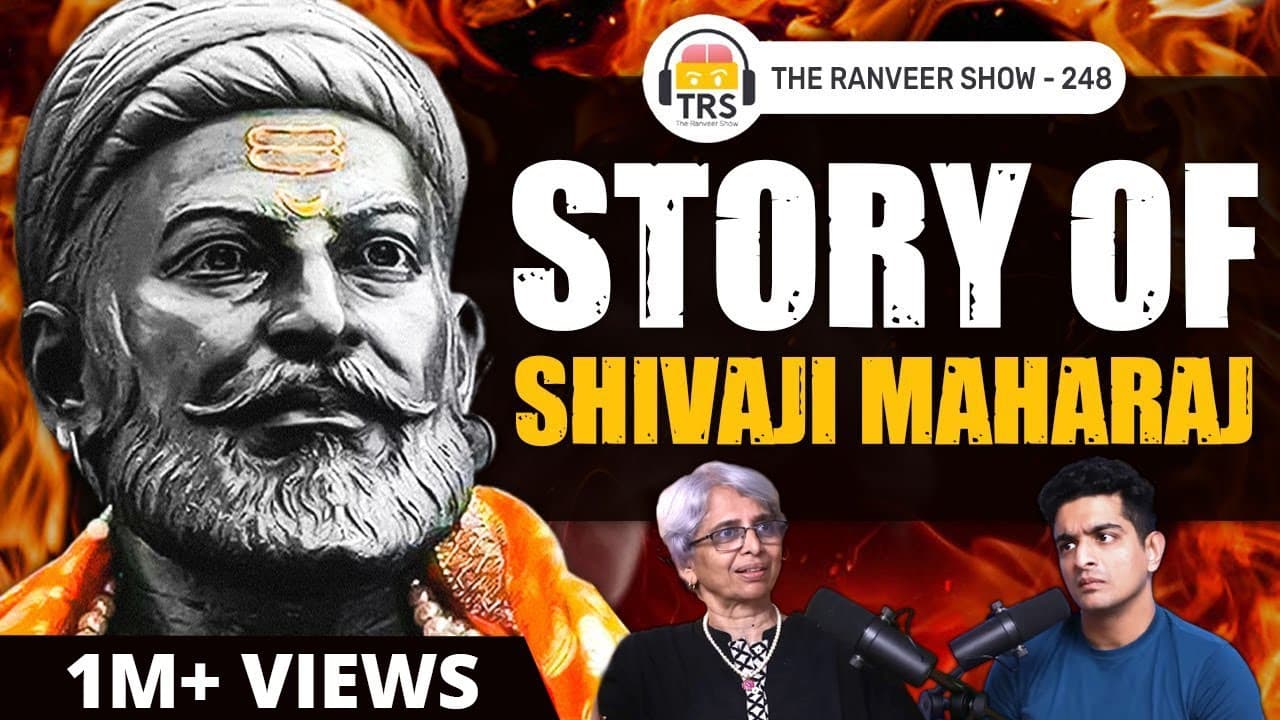
TL;DR
Shivaji Maharaj’s early years reveal his philosophies and strategies that laid the Maratha Empire's foundation.
Transcript
you know in one of my books she would shivrai's wife kutala Rani asked him what is what Freedom means to you so he tells her in simple words Freedom means to me that I must do what I want to do and I must refuse what I do not want to do which was not the case in his growing up yours which was not the case with most of the maratha clan he knew he wa... Read More
Key Insights
- 🖐️ Shivaji Maharaj’s understanding of freedom laid the groundwork for his independent rule and philosophies, focusing on personal autonomy and the well-being of his subjects.
- 🎖️ His early military strategies involved capturing and enhancing fortresses, which served both as military bases and symbols of power.
- 👻 Shivaji's methods of guerrilla warfare allowed him to leverage the Maratha landscape effectively against larger enemy forces, showcasing innovative military strategies.
- 🥺 He initiated agricultural reforms that not only led to increased local productivity but also strengthened economic stability, essential for financing his military endeavors.
- 🫥 Shivaji’s vision for a centralized command structure was pioneering in Indian history, establishing clear lines of authority and accountability within his military.
- 🫡 His policies against slavery and human trafficking reflected a progressive approach for his time, advocating for the dignity and respect of all individuals.
- 🖐️ The establishment of a nascent navy played a critical role in securing trade routes, demonstrating Shivaji's foresight in ensuring economic independence.
- 🏛️ His relationships with his advisors were built on trust and collaboration, contrasting with the mistrust that characterized Aurangzeb's leadership.
Install to Summarize YouTube Videos and Get Transcripts
Explore YouTube Video Summarizer or Get YouTube Transcript Extractor
Questions & Answers
Q: What did Shivaji Maharaj define as freedom in his discussion with his wife?
Shivaji explained that freedom means being able to do what one wants to do and refusing what one does not wish to do. This perspective highlights his desire for autonomy, contrasting with the oppressive experiences he faced growing up within the Maratha clan, which often acted under Mughal influence.
Q: How did Shivaji initially address the issues in his territory after acquiring power?
Upon gaining control, Shivaji focused on repairing dilapidated forts and improving agricultural practices in his territory. He initiated the rehabilitation of the land by inviting cultivators back, utilizing the soil effectively, and establishing a taxation system that began to fill his treasury, empowering his founding of the Maratha Empire.
Q: What strategic insight did Shivaji display regarding guerrilla tactics?
Shivaji employed guerrilla tactics effectively by using his knowledge of the terrain to conduct surprise attacks and ambushes against larger forces. This approach capitalized on agility over brute strength, a method that allowed him to engage and defeat the more heavily armed Mughal and Adil Shahi forces.
Q: In what ways did Shivaji's vision for his army differ from the existing systems in the region?
Shivaji sought to create a centralized military system that relied on a standing army paid directly from his treasury, eliminating dependence on local jagirdars. This structure aimed for efficiency and loyalty, contrasting sharply with the fragmented and often unreliable mansabdari system of the Mughals, where soldiers' pay depended on the whims of their lords.
Summary & Key Takeaways
-
The content explores the early years of Shivaji Maharaj, emphasizing his philosophy of freedom, which he defined as doing what one wants and rejecting the rest, contrasting with the control he experienced in his youth.
-
It details Shivaji's initial military actions, his strategic vision for agriculture and fortification, and his innovative economic practices that helped establish a self-sufficient Maratha Empire.
-
The discussion highlights the political dynamics of the time, including the opposition led by Afzal Khan, the Adil Shahi Empire, and Aurangzeb’s rising influence, setting the stage for Shivaji's legendary confrontations.
Read in Other Languages (beta)
Share This Summary 📚
Summarize YouTube Videos and Get Video Transcripts with 1-Click
Try YouTube Summary with ChatGPT & Claude or YouTube Transcript Generator
Explore More Summaries from The Ranveer Show - All Episodes 📚

Summarize YouTube Videos and Get Video Transcripts with 1-Click
Try YouTube Summary with ChatGPT & Claude or YouTube Transcript Generator