Chemistry for kids: Make a DIY bubble snake! | Kate the Chemist | Big Think
TL;DR
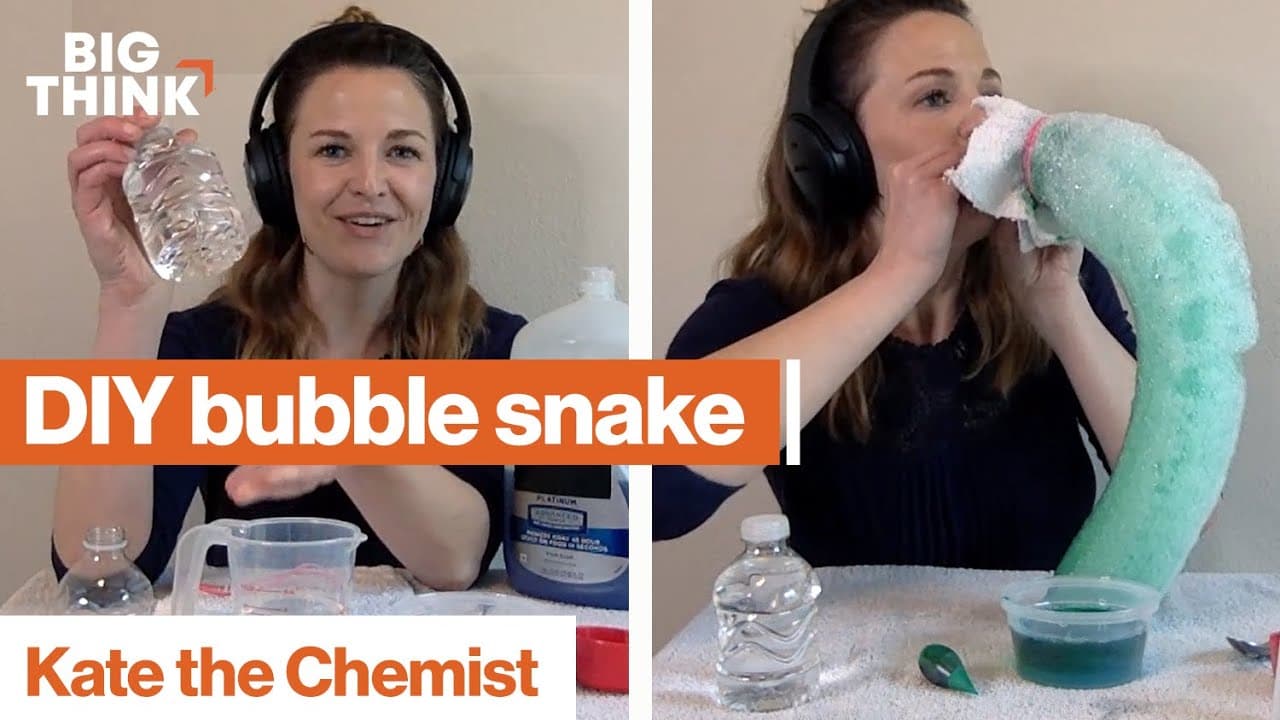
Learn how to create a safe and fun bubble snake science experiment at home with your kids using common household items.
Transcript
KATE THE CHEMIST: If you are at home and stuck with your kid you might as well do something fun and educational with them. What I've done here is put together a super, super fun science demonstration that is safe to do at home with your kids and hopefully all these ingredients you already have in your pantry or your craft drawer or something like t... Read More
Key Insights
- 👁️🗨️ The bubble snake science experiment is a fun and educational activity to do at home with kids.
- ❓ It requires simple materials that are usually available in most households.
- 🍳 The experiment promotes kinesthetic learning and provides a break from excessive screen time.
- 👻 It can be done outdoors, allowing the bubble snake to be carried by the wind for added enjoyment.
- 🦺 The activity is safe and does not involve any dangerous elements.
- 👶 Children can learn about the molecules present in their exhaled breaths and engage in discussions about carbon dioxide, oxygen, and nitrogen.
- 👪 The experiment encourages family bonding and provides an opportunity for parents to spend quality time with their children.
Install to Summarize YouTube Videos and Get Transcripts
Explore YouTube Video Summarizer or Get YouTube Transcript Extractor
Questions & Answers
Q: What materials do you need for the bubble snake science experiment?
You will need a plastic bottle, dish soap, water, food coloring, a towel, and a rubber band.
Q: Is the bubble snake experiment safe for kids?
Yes, the experiment is completely safe and does not involve any dangerous elements like fire or explosions.
Q: Can the bubble snake be blown indoors?
It is recommended to do the experiment outdoors or in a well-ventilated area due to the exhaled gases. However, if done indoors, make sure to stay within a designated space and maintain distance from others.
Q: Does the bubble snake experiment have educational value?
Yes, the experiment provides an opportunity to discuss the molecules present in exhaled breaths and learn about carbon dioxide, oxygen, and nitrogen.
Summary & Key Takeaways
-
Kate the Chemist shares a step-by-step guide to creating a bubble snake science experiment using a plastic bottle, dish soap, water, food coloring, and a towel.
-
The experiment allows children to engage in hands-on learning while having fun and being outdoors.
-
It provides an opportunity to discuss the molecules present in exhaled breaths, such as carbon dioxide, oxygen, and nitrogen.
Read in Other Languages (beta)
Share This Summary 📚
Summarize YouTube Videos and Get Video Transcripts with 1-Click
Try YouTube Summary with ChatGPT & Claude or YouTube Transcript Generator
Explore More Summaries from Big Think 📚



Summarize YouTube Videos and Get Video Transcripts with 1-Click
Try YouTube Summary with ChatGPT & Claude or YouTube Transcript Generator