The Fairest Way to Cut Cake | Steven Brams | Big Think
TL;DR
Researchers have developed algorithms for fair division in peace treaties and disputes, leading to efficient and equitable solutions.
Transcript
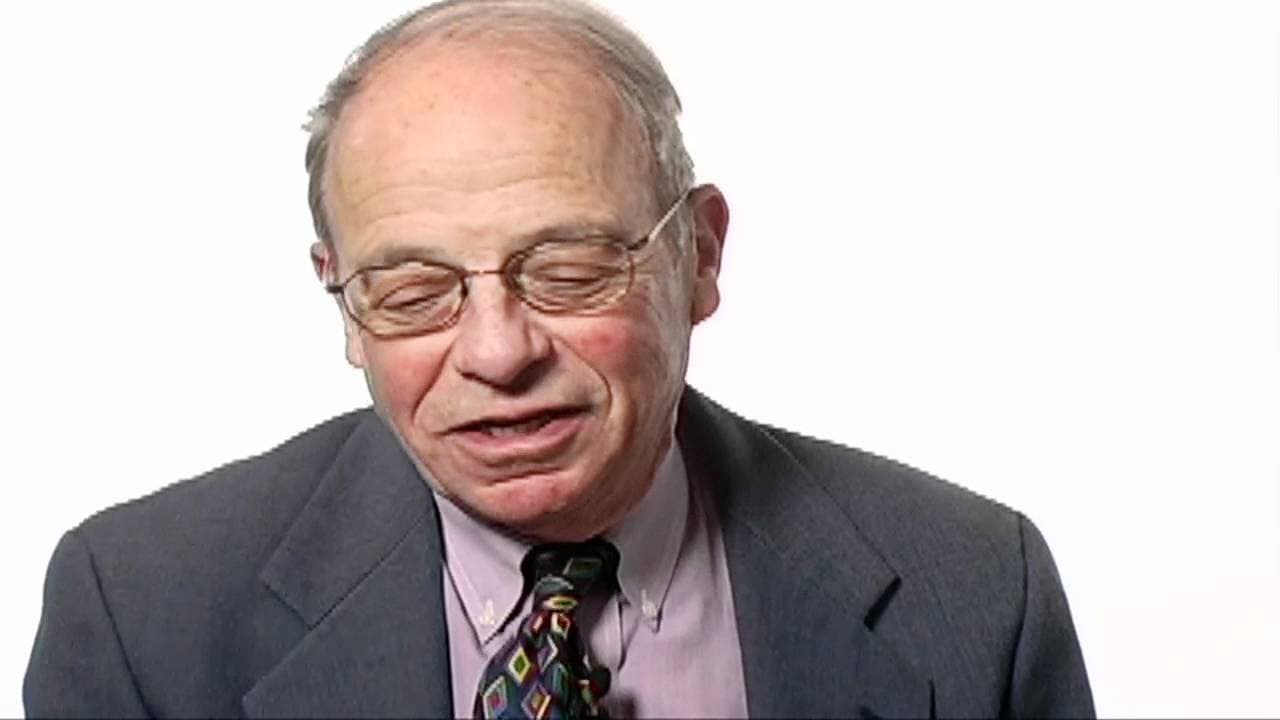
well we actually did apply one of our procedures to uh the um 1978 Camp David agreement between Israel and Egypt which eventuated in a peace treaty in 1979 and there were several major issues uh dividing Israel in Egypt uh return of the Sinai after the uh six after the 73 War which had been captured in the 67 War uh for Israel was recognition uh di... Read More
Key Insights
- ✌️ Fair division algorithms can accurately predict the outcome of peace treaty negotiations, making them useful tools in conflict resolution.
- 🥶 By considering the importance of different assets to each party, fair division algorithms ensure envy-free and equitable distributions in divorce cases.
- 💇 The cake-cutting algorithm developed by the researchers generalizes the concept of "I cut, you choose" to divide divisible assets.
- 😥 The adjusted winter algorithm, patented by NYU, offers a point allocation system for dispute resolution, providing attractive properties such as efficiency and envy-freeness.
- 😒 The use of fair division algorithms can make dispute resolution less burdensome, cost-effective, and time-saving compared to traditional legal proceedings.
- ❓ While alternative dispute resolution approaches focus on communication and understanding, algorithms provide a rational and unbiased solution.
- 🧚 The researchers' fair division algorithms have been tested in the laboratory and applied to real-life cases with promising results.
Install to Summarize YouTube Videos and Get Transcripts
Explore YouTube Video Summarizer or Get YouTube Transcript Extractor
Questions & Answers
Q: How did the researchers test the accuracy of their fair division algorithms?
The researchers tested their algorithms by applying them to the Camp David agreement and accurately predicting the outcome. They also conducted laboratory tests and used them in real-life cases, with positive results.
Q: What are the benefits of using fair division algorithms in dispute resolution?
Fair division algorithms provide efficiency and equity in dispute resolution. They save time by being quicker than legal proceedings and eliminate biased negotiating tactics, ensuring a fair and rational outcome.
Q: How do fair division algorithms work in dividing marital property during a divorce?
Fair division algorithms consider the importance assigned by each party to different assets, such as cars or houses, and determine a distribution that is envy-free and equitable. This allows both parties to receive at least 2/3 to 3/4 of what they wanted.
Q: Why is using algorithms for dispute resolution considered a better alternative to traditional legal proceedings?
Algorithms offer a more efficient and cost-effective approach to dispute resolution, as they eliminate the need for lengthy litigation or negotiation. Additionally, algorithms provide fair and rational solutions, preventing parties from exaggerating or posturing during negotiations.
Summary & Key Takeaways
-
The researchers applied their procedures to the Camp David agreement, accurately predicting the outcome of the peace treaty negotiations.
-
Their algorithms can be used to divide marital property in divorces, ensuring an equitable and envy-free distribution.
-
The team also developed a cake-cutting algorithm for dividing divisible assets, such as land, and patented an adjusted winter algorithm for dispute resolution.
Read in Other Languages (beta)
Share This Summary 📚
Summarize YouTube Videos and Get Video Transcripts with 1-Click
Try YouTube Summary with ChatGPT & Claude or YouTube Transcript Generator
Explore More Summaries from Big Think 📚


Summarize YouTube Videos and Get Video Transcripts with 1-Click
Try YouTube Summary with ChatGPT & Claude or YouTube Transcript Generator