Big Think Interview With Alfred Mele | Big Think
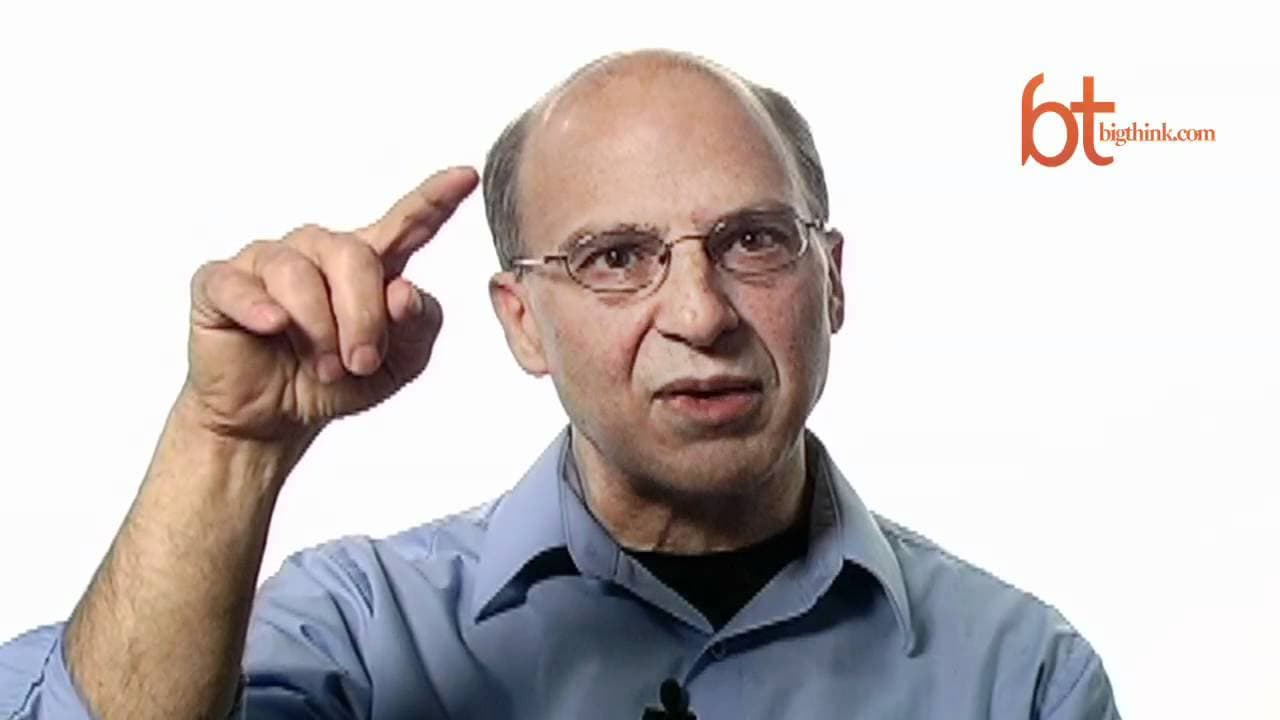
TL;DR
Philosophical professor, Alfred Meley, discusses his interest in philosophy, particularly Aristotle's theory of human motivation and the concept of self-deception. He explores the existence of free will and its connection to luck, as well as the growing collaboration between philosophy and science.
Transcript
my name is Alfred meley and I'm a professor of philosophy at Florida State University let's see uh of course I was very young I was probably 19 when I made the decision and uh I was always very interested in difficult puzzles and games especially chess and there is that uh intricate aspect to philosophy that attracted me um but I was also very inte... Read More
Key Insights
- 👾 Alfred Meley's interest in philosophy was driven by his fascination with puzzles and games, as well as his curiosity about human behavior.
- 🥺 Aristotle's views on weakness of will and human motivation shaped Meley's research and writing, leading him to develop his own empirical perspective on self-deception and irrationality.
- 🥶 Meley argues that luck may be necessary for free will, but it does not negate individual agency and the ability to make choices.
Install to Summarize YouTube Videos and Get Transcripts
Explore YouTube Video Summarizer or Get YouTube Transcript Extractor
Questions & Answers
Q: What initially drew Alfred Meley to the study of philosophy?
Alfred Meley's interest in philosophy was sparked by the intricate puzzles and games it presented, as well as his curiosity about human behavior.
Q: What aspect of Aristotle's philosophy particularly intrigued Alfred Meley?
Alfred Meley was particularly interested in Aristotle's theory of human motivation, specifically his views on weakness of will and why individuals may act against their better judgment.
Q: How did Alfred Meley develop his own perspective on self-deception and irrationality?
Alfred Meley conducted extensive research in social psychology and motivational psychology, drawing on empirical evidence to develop his own perspective on self-deception and irrational behavior, which he discusses in his book "Irrationality."
Q: What is the relationship between luck and free will, according to Alfred Meley?
Alfred Meley argues that while luck may be necessary for free will, it does not negate the existence of free will. He suggests that individual agency and the ability to make choices are still present, even in the face of luck or random influences.
Q: How has the collaboration between philosophy and science evolved in recent years?
The collaboration between philosophy and science has grown significantly, with more emphasis on using scientific methods to study philosophical topics. This interdisciplinary approach has led to advancements in understanding concepts such as free will.
Summary & Key Takeaways
-
Alfred Meley became interested in philosophy at a young age and was drawn to the intricate puzzles and games it presented, particularly in relation to human behavior.
-
His fascination with Aristotle's theory of human motivation led him to develop his own empirical perspective on self-deception and irrationality, which he explores in his book "Irrationality."
-
Meley discusses the concept of luck in relation to free will, stating that while luck may be necessary for free will, it does not necessarily negate it.
-
Collaborations between philosophy and science have increased in recent years, with a focus on studying philosophical topics through scientific methods.
Read in Other Languages (beta)
Share This Summary 📚
Summarize YouTube Videos and Get Video Transcripts with 1-Click
Try YouTube Summary with ChatGPT & Claude or YouTube Transcript Generator
Explore More Summaries from Big Think 📚




Summarize YouTube Videos and Get Video Transcripts with 1-Click
Try YouTube Summary with ChatGPT & Claude or YouTube Transcript Generator