How do ears help with balancing? plus 9 more videos.. #aumsum #kids #science #education #children
TL;DR
Understanding how our ears, eyes, and plants function provides insights into balance, vision, osmosis, photosynthesis, and more.
Transcript
Topic: Ear. How do ears help with balancing? They really do. You don't believe me. Ok. Can you play a guitar and walk at the same time? How do you think you are able to maintain your balance? Do you know why you can't balance yourself anymore? Wait, I will tell you. This happens because there is a connection between our ears and body balance. Our e... Read More
Key Insights
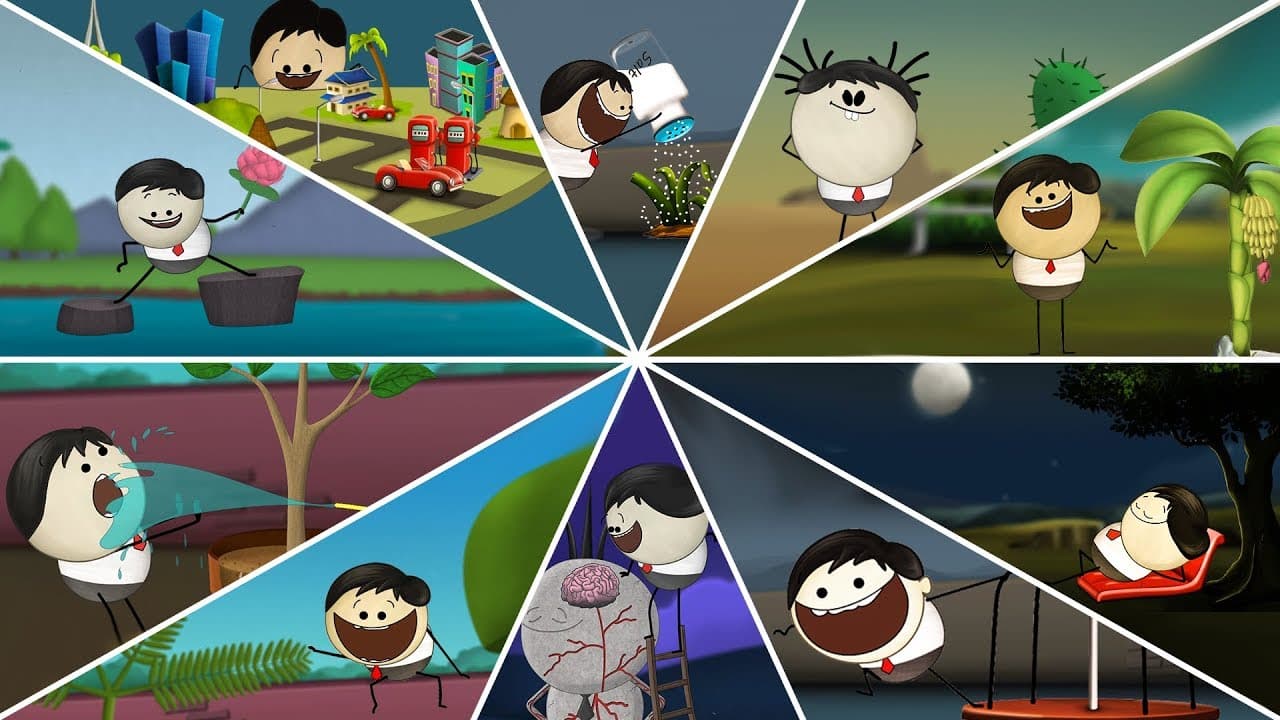
- 🎧 The inner ear's semicircular canals and hair cells are crucial for maintaining balance and detecting head movements.
- 😃 Having two eyes provides a wider field of view and enables depth perception through the brain's combination of slightly different images.
- 🤽 Osmosis plays a role in the death of grass when salt is sprinkled on it, causing the loss of water from plant cells.
- 🌱 Plants respire, releasing carbon dioxide at night, which can be harmful if inhaled excessively.
- 💦 Transpiration and the presence of stomata on the upper surface of leaves in water lilies and cacti serve specific functions related to minimizing water loss.
Install to Summarize YouTube Videos and Get Transcripts
Explore YouTube Video Summarizer or Get YouTube Transcript Extractor
Questions & Answers
Q: How do our ears help with balancing?
Our inner ear, consisting of fluid-filled semicircular canals and hair cells, detects head movements and sends signals to the brain to maintain balance.
Q: Why do we have two eyes instead of one?
Having two eyes provides a broader field of view and enables depth perception by receiving slightly different images that the brain combines.
Q: What happens when salt is sprinkled on grass?
Salt disrupts osmosis, causing water to flow out of the plant cells and leading to the death of the grass.
Q: Why is it not advisable to sleep under a tree at night?
During the night, plants do not perform photosynthesis and continue to respire, releasing more carbon dioxide than oxygen, which can lead to suffocation and lack of oxygen.
Summary & Key Takeaways
-
Ears: The inner ear consists of semicircular canals that contain fluid and hair cells, which help maintain balance. Moving our head causes the fluid to move, sending signals to the brain about our head movements.
-
Eyes: Having two eyes provides a wider field of view, and the slight difference in the angle at which each eye sees an object enables depth perception. The upper surface of leaves is greener and shinier due to increased exposure to sunlight and transpiration.
-
Osmosis: Salt sprinkled on grass disrupts osmosis, causing the water inside the plant cells to flow out, leading to the death of the grass.
-
Respiration: Sleeping under a tree at night is not recommended as the absence of photosynthesis causes the accumulation of carbon dioxide, leading to a lack of oxygen and potential suffocation.
Read in Other Languages (beta)
Share This Summary 📚
Summarize YouTube Videos and Get Video Transcripts with 1-Click
Try YouTube Summary with ChatGPT & Claude or YouTube Transcript Generator
Explore More Summaries from It's AumSum Time 📚



Summarize YouTube Videos and Get Video Transcripts with 1-Click
Try YouTube Summary with ChatGPT & Claude or YouTube Transcript Generator