Van Gogh’s Mental Illness: Was Epilepsy Responsible for His Madness & Genius? | Big Think
TL;DR
Vincent Van Gogh likely had temporal lobe epilepsy, which manifested in symptoms such as mood lability, stickiness, irritability, and visual hallucinations, potentially influencing his artwork.
Transcript
So most people are familiar with the idea that Vincent Van Gogh had mental illness. Different camps so to speak of mental illness almost like to claim Van Gogh as their own. So groups say, you know, oh he had schizophrenia. He had bipolar disorder. I would argue that Van Gogh who clearly had documented certain symptoms which ranged from being high ... Read More
Key Insights
- 🌍 Van Gogh likely had temporal lobe epilepsy, based on his symptoms of mood lability, stickiness, irritability, and visual hallucinations.
- ❓ His intense and chaotic relationships can be attributed to his mental illness.
- ❓ The abstract and nightmarish quality of his paintings may reflect his subjective experiences.
- 👨⚕️ Van Gogh's doctor in Remy suspected epilepsy and treated him accordingly.
- ❓ Alcohol, particularly absinthe, may have worsened his mental illness symptoms and contributed to episodes of psychosis.
- 🥺 The combination of temporal lobe epilepsy and absinthe consumption could have heightened activity in his brain, leading to increased illness.
- 🇻🇺 Van Gogh's mental illness possibly influenced his artwork.
Install to Summarize YouTube Videos and Get Transcripts
Explore YouTube Video Summarizer or Get YouTube Transcript Extractor
Questions & Answers
Q: What were some of Van Gogh's documented symptoms that suggest he had mental illness?
Van Gogh displayed symptoms such as mood lability, stickiness (intense bonding with people), irritability, and visual hallucinations. These symptoms contributed to his turbulent and chaotic relationships.
Q: How do Van Gogh's paintings reflect his mental illness?
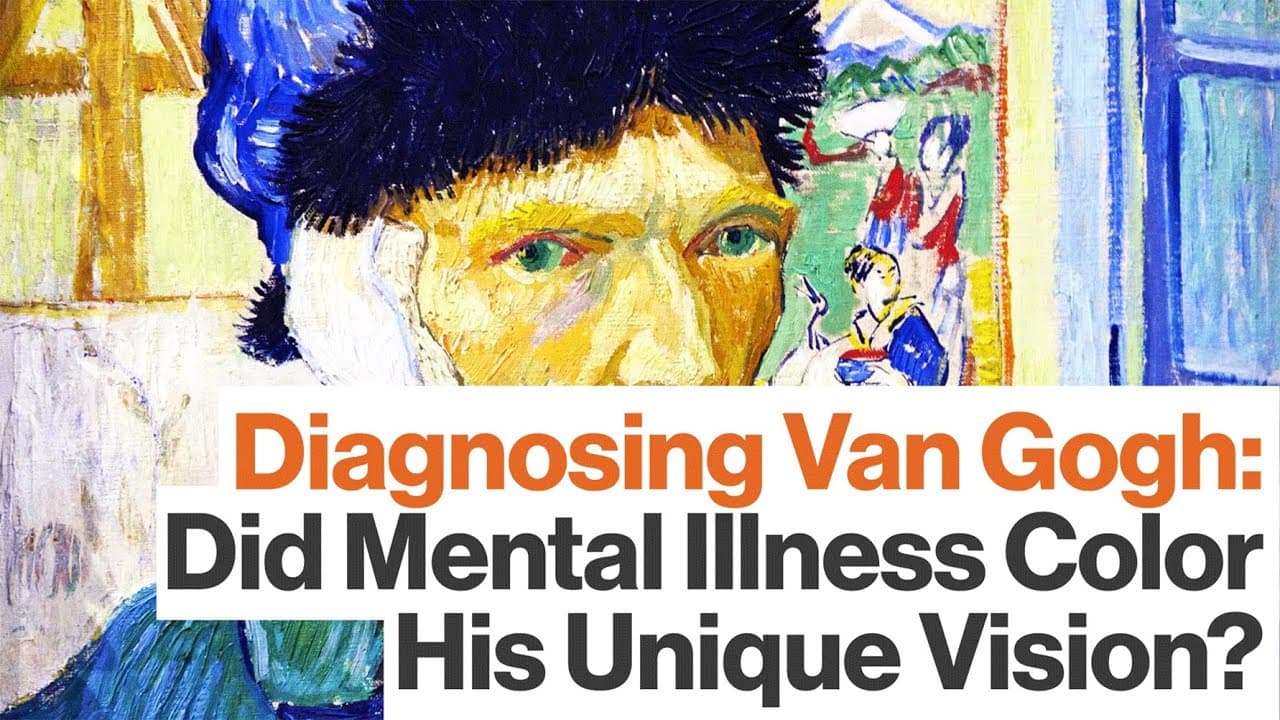
Van Gogh's paintings have a distinct abstract and nightmarish quality to them, which may be a visual representation of his subjective experiences related to temporal lobe epilepsy. The distortions and intense colors seen in his artwork could align with the visual hallucinations experienced by someone with this condition.
Q: Was Van Gogh officially diagnosed with any mental illness during his lifetime?
While not officially diagnosed, his doctor in Remy suspected that Van Gogh had epilepsy and provided treatment for it. This suggests that there was an understanding of the potential connection between his symptoms and illness.
Q: How does alcohol consumption, particularly absinthe, relate to Van Gogh's mental illness?
Absinthe, which Van Gogh consumed, has a high alcohol content that lowers the seizure threshold in the brain. This, in combination with his temporal lobe epilepsy, could have exacerbated his symptoms and potentially led to psychotic episodes, such as the incident where he cut off a portion of his ear.
Summary & Key Takeaways
-
Vincent Van Gogh exhibited symptoms of temporal lobe epilepsy, including mood lability, stickiness, irritability, and visual hallucinations, which resulted in intense and chaotic relationships.
-
His paintings have an abstract and nightmarish quality, possibly influenced by his mental illness.
-
Van Gogh's illness may have been exacerbated by his alcohol consumption, particularly absinthe, which lowers the seizure threshold in the brain.
Read in Other Languages (beta)
Share This Summary 📚
Summarize YouTube Videos and Get Video Transcripts with 1-Click
Try YouTube Summary with ChatGPT & Claude or YouTube Transcript Generator
Explore More Summaries from Big Think 📚




Summarize YouTube Videos and Get Video Transcripts with 1-Click
Try YouTube Summary with ChatGPT & Claude or YouTube Transcript Generator