Nazi Germany and Systems of Power | Saagar Enjeti and Lex Fridman
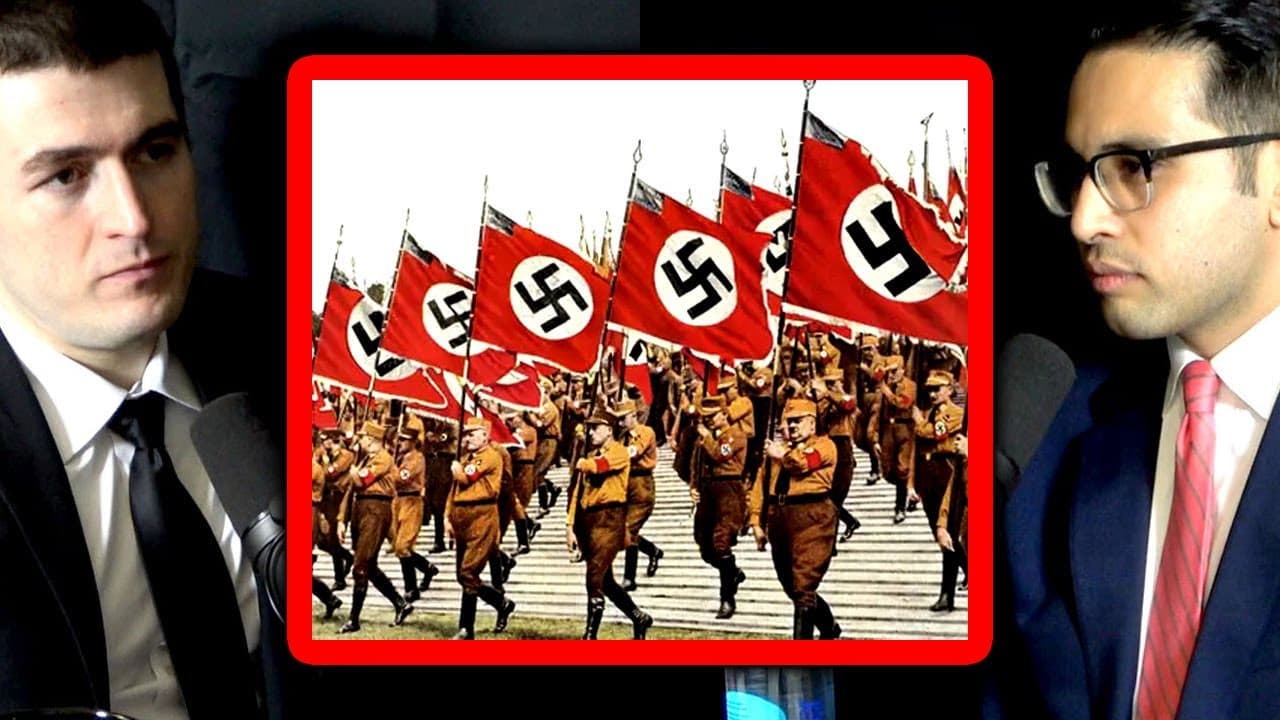
TL;DR
The conversation touches on the lessons we can learn from the atrocities of Hitler, Stalin, and Mao, as well as the importance of understanding systems, power dynamics, and incentives in order to bring about meaningful change.
Transcript
if we stick on uh hitler for just a minute uh what lessons do you take from that time do you think it's a unique moment in human history that world war ii i mean both stalin and hitler you know is is it something that's just an outlier in all of humans history in terms of the atrocities or is there uh the lessons to be learned you mentioned we ment... Read More
Key Insights
- 🙈 World War II and the atrocities committed by Hitler, Stalin, and Mao can be seen as consequences of systemic issues, rather than isolated incidents.
- 🫱 To gain a comprehensive understanding of the Nazi regime, one must study its policies beyond war-related activities, such as immigration and science.
- ✊ Understanding systems of power and their incentives is critical to understanding and influencing behavior within those systems.
- 🎨 Systems are often resistant to change, as they are designed to produce specific outcomes.
- 🙂 Historical lessons can help shed light on potential outcomes and consequences of novel situations.
- 🔉 The Senate and media relationships in Washington, D.C. have remained relatively consistent throughout history, indicating the longevity of certain systems.
- 🎨 The system within Washington, D.C. is designed to produce specific outcomes and requires a deep understanding of its structure and incentives in order to effect meaningful change.
Install to Summarize YouTube Videos and Get Transcripts
Explore YouTube Video Summarizer or Get YouTube Transcript Extractor
Questions & Answers
Q: Is World War II a unique moment in human history in terms of the atrocities committed by Hitler and Stalin?
While World War II was indeed a significant event in history, the atrocities can be seen as the result of systemic issues rather than a unique occurrence. Understanding the monarchical system and the balance of power provides insights into the context of the time.
Q: What can we learn from living under the Nazi regime without the war?
Exploring the policies implemented during the Third Reich, such as immigration and science, offers insights into the principles and ideologies that supported the Nazi regime. Analyzing these policies helps us understand the extent of control and influence exerted by the regime outside of war.
Q: How do systems of power and their incentives shape behavior?
Understanding systems of power involves recognizing the incentives and disincentives within these systems. These incentives play a crucial role in creating behaviors and outcomes. By comprehending the motivations and risks within a system, one can better assess the potential for change.
Q: Why is it challenging to bring about meaningful change in systems?
Systems are designed to produce specific outcomes, making it difficult to implement significant changes from the outside. In order to bring about meaningful change, one must understand the complexities of the system, its structure, and the incentives that drive behavior.
Summary & Key Takeaways
-
The speaker discusses the lessons to be learned from Hitler's time and whether it was a unique moment in human history or not.
-
They highlight the importance of studying different policies, such as immigration and science, during the Third Reich.
-
The speaker suggests that the atrocities committed by Hitler, Stalin, and Mao can be understood as the consequences of the monarchical system and the balance of power in Europe.
Read in Other Languages (beta)
Share This Summary 📚
Summarize YouTube Videos and Get Video Transcripts with 1-Click
Try YouTube Summary with ChatGPT & Claude or YouTube Transcript Generator
Explore More Summaries from Lex Clips 📚




Summarize YouTube Videos and Get Video Transcripts with 1-Click
Try YouTube Summary with ChatGPT & Claude or YouTube Transcript Generator