How Do Philosophers Address Skepticism?
TL;DR
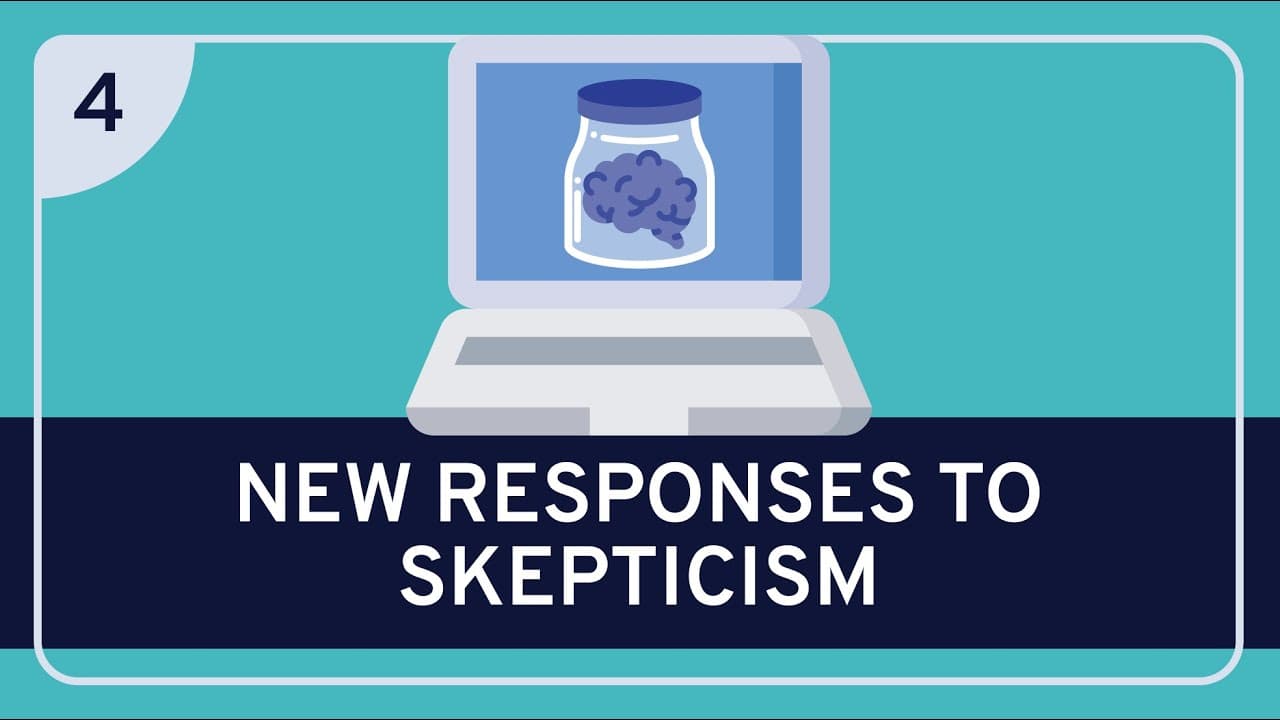
Contemporary philosophers tackle skepticism through semantic theories and defensive strategies. Hilary Putnam argues skepticism self-destructs due to semantic externalism, while David Chalmers suggests skepticism isn't threatening as beliefs remain true within their context. Timothy Williamson's defensive approach focuses on understanding why skepticism seems appealing, likening it to an overactive cognitive immunity system.
Transcript
my name is Jennifer Nagel I teach philosophy at the University of Toronto and today I want to talk to you about several new ways contemporary philosophers tackle the problem of skepticism this video covers three different proposed solutions to the skeptical problem the first two are semantic or meaning based approaches and the third is a strategy w... Read More
Key Insights
- Semantic externalism is the idea that word meanings are determined by external factors, not just internal thoughts.
- Hilary Putnam argues that skepticism self-destructs because skeptics can't use meaningful language to describe their scenarios.
- David Chalmers suggests that even if we live in a simulated reality, our everyday beliefs remain true within that context.
- Timothy Williamson's defensive approach views skepticism as an overactive cognitive immunity system that undermines itself.
- Skepticism can be appealing due to our natural tendency to double-check and suspend judgment.
- The defensive approach aims to explain why skepticism seems attractive, not to convert skeptics.
- Semantic theories propose that meaningful language requires real-world context and experiences.
- Understanding the nature of knowledge can help build defenses against skepticism's appeal.
Install to Summarize YouTube Videos and Get Transcripts
Explore YouTube Video Summarizer or Get YouTube Transcript Extractor
Questions & Answers
Q: How do semantic theories address skepticism?
Semantic theories, like those proposed by Hilary Putnam, argue that skepticism self-destructs because skeptics can't use meaningful language to describe their scenarios without real-world context. Semantic externalism suggests that word meanings are determined by external factors, making it impossible for skeptics to meaningfully argue their points without contradicting themselves.
Q: What is Hilary Putnam's view on skepticism?
Hilary Putnam argues that skepticism self-destructs due to semantic externalism. He posits that for skeptics to describe their scenarios meaningfully, they need real-world context, which they lack. This means that the language used in skeptical arguments can't support the scenarios skeptics propose, ultimately undermining their claims.
Q: How does David Chalmers' perspective reduce skepticism's threat?
David Chalmers suggests that even if we are living in a simulated reality, our everyday beliefs remain true within that context. This perspective reduces skepticism's threat by maintaining that most of our beliefs are valid regardless of the underlying nature of reality, as they are true within the environment we experience.
Q: What is the defensive approach to skepticism?
The defensive approach, as explained by Timothy Williamson, recognizes skepticism as an overactive cognitive immunity system. It suggests that skepticism's appeal lies in our natural tendency to suspend judgment. By understanding why skepticism seems attractive and what knowledge truly is, we can resist skepticism without needing to convert skeptics.
Q: Why does skepticism seem appealing according to Timothy Williamson?
Timothy Williamson suggests that skepticism seems appealing because it taps into our natural ability to suspend judgment and double-check our beliefs. This cognitive immunity system is generally beneficial but can become overactive, leading to skepticism. Understanding this tendency helps us resist skepticism's appeal without requiring decisive arguments for every belief.
Q: How does semantic externalism relate to skepticism?
Semantic externalism, advocated by Hilary Putnam, relates to skepticism by suggesting that word meanings are determined by external factors, not just internal thoughts. This means skeptics can't meaningfully describe their scenarios without real-world context, causing their arguments to self-destruct as they can't support their claims without contradicting themselves.
Q: What role does real-world context play in semantic theories?
In semantic theories, real-world context is crucial for determining the meaning of words. Hilary Putnam's semantic externalism posits that without real-world experiences and context, language used in skeptical scenarios lacks meaningfulness. This undermines skeptical arguments, as they can't meaningfully describe their scenarios without contradicting themselves.
Q: How can understanding the nature of knowledge help resist skepticism?
Understanding the nature of knowledge helps resist skepticism by clarifying what is truly required for knowledge. If skepticism relies on the mistaken belief that decisive arguments are necessary for knowledge, then recognizing that this isn't the case undermines skepticism's appeal. This understanding builds defenses against skepticism without needing to convert skeptics.
Summary & Key Takeaways
-
Hilary Putnam's semantic externalism posits that skepticism fails because meaningful language requires real-world context. Without such context, skeptical scenarios can't be meaningfully described, thus self-destructing.
-
David Chalmers argues that even in a simulated reality, our beliefs remain true within that environment. This perspective diminishes the threat of skepticism by maintaining the validity of everyday knowledge.
-
Timothy Williamson's defensive approach suggests skepticism is like an overactive cognitive immunity system. By understanding the nature of knowledge, we can resist skepticism's misleading appeal without needing decisive arguments.
Read in Other Languages (beta)
Share This Summary 📚
Summarize YouTube Videos and Get Video Transcripts with 1-Click
Try YouTube Summary with ChatGPT & Claude or YouTube Transcript Generator
Explore More Summaries from Wireless Philosophy 📚
Summarize YouTube Videos and Get Video Transcripts with 1-Click
Try YouTube Summary with ChatGPT & Claude or YouTube Transcript Generator