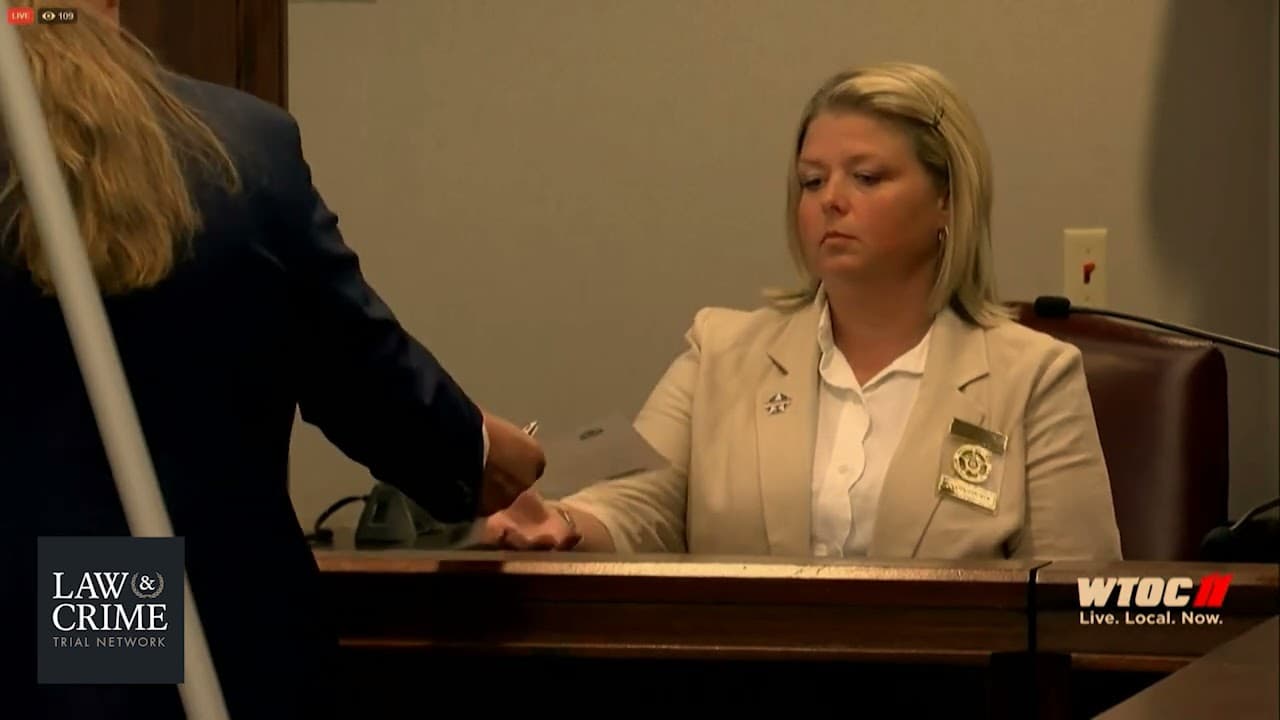
Ahmaud Arbery Hearing Day 2 Part 1
TL;DR
Recording and using jail phone calls in court raises constitutional concerns regarding due process, equal protection, spousal privilege, and the Fourth Amendment's protection against unreasonable searches and seizures.
Transcript
yes and then i can make argument i can tell the court this on monday when i went by the jail to check on who my witness would be and the documents i subpoenaed were prepared and given to me i learned that they were in the process of downloading 1500 jail calls to digital devices i didn't ask which agency requested that be done and whose calls they ... Read More
Key Insights
- 👏 The use of recorded jail phone calls in court raises constitutional issues related to due process, equal protection, spousal privilege, and the Fourth Amendment.
- 🤙 Inmates have a limited expectation of privacy in jail calls, but the defense argues that conversations about their pending cases should be protected.
- 🫤 The defense claims that the recording and use of jail phone calls to incriminate defendants goes beyond the legitimate security concerns of the jail.
- 🗯️ The prosecution argues that there is no violation of constitutional rights as inmates have no reasonable expectation of privacy in jail calls, except for privileged conversations with attorneys.
Install to Summarize YouTube Videos and Get Transcripts
Explore YouTube Video Summarizer or Get YouTube Transcript Extractor
Questions & Answers
Q: Does the jail have the right to record and monitor inmate phone calls?
Yes, the jail has the right to record and monitor all inmate phone calls except for privileged calls with attorneys.
Q: What arguments did the defense present regarding the use of jail phone calls in court?
The defense argues that using recorded jail phone calls in court violates due process, equal protection, spousal privilege, and the Fourth Amendment rights of defendants.
Q: What concerns are raised regarding the use of recorded jail phone calls in court?
The concerns revolve around the potential violation of defendants' constitutional rights to privacy, fairness, and protection against self-incrimination.
Q: What is the position of the prosecution on using jail phone calls in court?
The prosecution argues that inmates have no reasonable expectation of privacy in jail calls, except for privileged calls with attorneys. They contend that the use of recorded calls is permitted by statute and serves the jail's legitimate security interests.
Summary & Key Takeaways
-
The defense argues that using recorded jail phone calls in court violates due process and equal protection under the 14th Amendment, as well as the spousal privilege and Fourth Amendment rights.
-
They contend that the use of recorded calls to incriminate defendants and potentially lead to their punishment goes beyond the legitimate security concerns of the jail.
-
The defense claims that inmates have a limited and legitimate expectation of privacy in conversations with non-attorneys and non-spouses regarding their pending cases.
Read in Other Languages (beta)
Share This Summary 📚
Summarize YouTube Videos and Get Video Transcripts with 1-Click
Try YouTube Summary with ChatGPT & Claude or YouTube Transcript Generator
Explore More Summaries from Law&Crime Network 📚


Summarize YouTube Videos and Get Video Transcripts with 1-Click
Try YouTube Summary with ChatGPT & Claude or YouTube Transcript Generator