The "Headless" Way To Enlightenment: Douglas Harding's Enlightenment Experiments
TL;DR
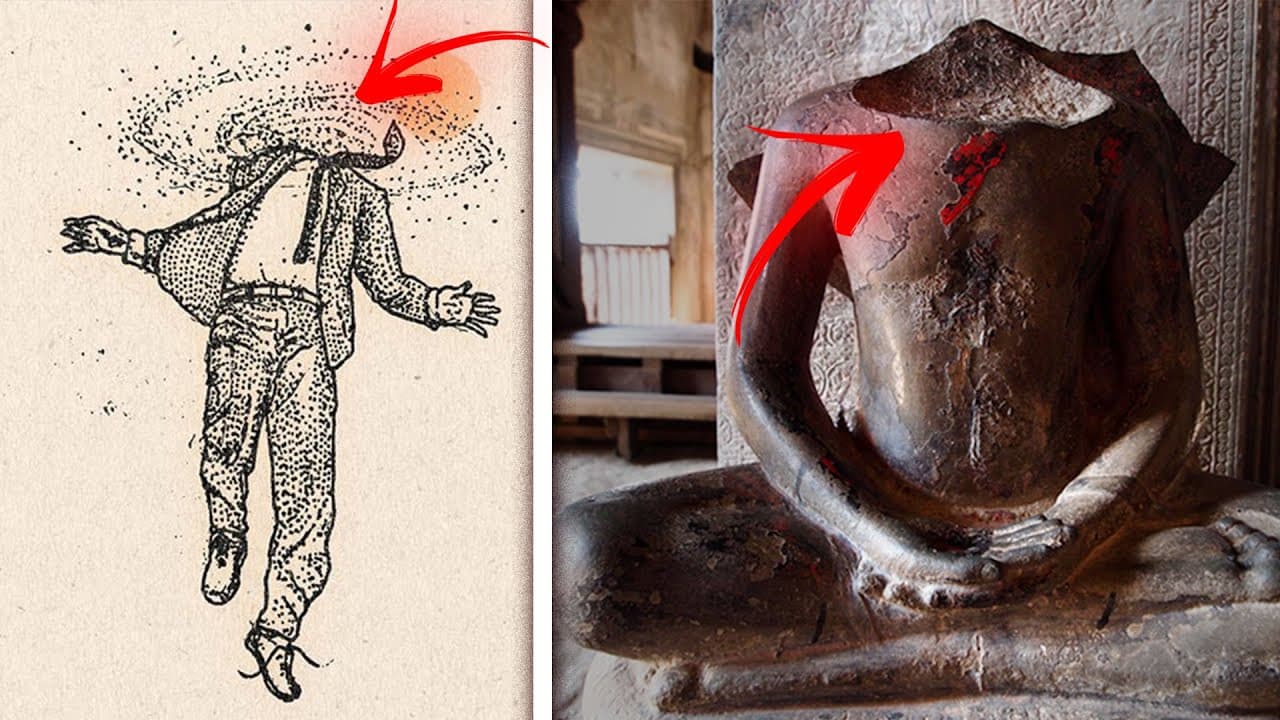
Douglas Harding, inspired by a moment of realization in the Himalayas, developed practical exercises to help people recognize their true nature as boundless awareness, challenging conventional notions of self and promoting non-duality.
Transcript
The Headless way is simply to see who you are without the story of a person Douglas Harding on having no head Zen and the rediscovery of the obvious Douglas Harding must be read in the first person sense the man was not claiming to have been literally decapitated from a first-person point of view his emphasis on headlessness is a stroke of Genius t... Read More
Key Insights
- 🌟 Douglas Harding's teachings on headlessness offer a clear description of glimpsing the non-duality of consciousness, leading to profound insights into our true nature.
- 🧠 Harding's no-head experience occurred in the Indian Himalayas, where he realized the boundless field of awareness where his head should have been.
- 🎯 Harding developed practical exercises, such as the view from behind, to challenge preconceived notions of the self and encourage a shift in perspective towards interconnectedness with existence.
- 📚 "On Having No Head: Zen and the Rediscovery of the Obvious" is Harding's most well-known book, presenting his philosophy on self-discovery and the interconnectedness of the self and the universe.
- 🖐️ The finger-pointing exercise, inspired by a self-portrait in The Analysis of Sensations, guides individuals to directly experience their headlessness and true nature as pure awareness.
- 🌌 Harding's teachings align with Zen Buddhism in their focus on direct experience, non-dual awareness, and mindfulness as means of realizing one's true nature and transcending the limitations of the ego.
- 🔄 Advaita Vedanta, a part of Hinduism emphasizing non-dualism, shares similarities with the headless way in recognizing the underlying unity of all things and the illusory nature of apparent differences.
- ⚡ Recognizing our headlessness is just the beginning, and Deepening the inquiry by continually contemplating our true nature is essential to further insights and spiritual realization.
Install to Summarize YouTube Videos and Get Transcripts
Explore YouTube Video Summarizer or Get YouTube Transcript Extractor
Questions & Answers
Q: How did Douglas Harding first discover his headlessness?
Douglas Harding had his first experience of headlessness in the Himalayas when he simply stopped thinking and became present, forgetting his name and all preconceived notions of self. In this state, he saw that there was nothing above his shoulders and no separate head.
Q: Why did Douglas Harding develop practical exercises to help others recognize their headlessness?
After his transformative experience, Harding realized that recognizing one's headlessness can lead to profound insights and a shift in perception. He developed exercises to challenge individuals' preconceived notions and allow them to directly experience the non-dual nature of their true selves.
Q: How can the finger-pointing exercise help in recognizing one's headlessness?
The finger-pointing exercise involves directing attention to the finger and the space around it, then shifting to the space inside and outside the head. By realizing that the space inside the head is the same as the space outside, one can experience the boundless awareness that is their true nature.
Q: How does Douglas Harding's teachings relate to Zen Buddhism and Advaita Vedanta?
Harding's teachings share similarities with Zen Buddhism and Advaita Vedanta, as all three emphasize direct experience, non-dual awareness, and the recognition of the underlying unity of all things. They encourage a shift in perception and a deep inquiry into one's true nature.
Summary & Key Takeaways
-
Douglas Harding, an architect in London and India, had a transformative moment in the Himalayas where he realized he had no head but instead boundless awareness.
-
Harding dedicated his life to teaching others how to recognize their own headlessness through practical exercises and experiments.
-
His teachings emphasize direct experience, non-dual awareness, and the importance of continuously deepening the inquiry into one's true nature.
Read in Other Languages (beta)
Share This Summary 📚
Summarize YouTube Videos and Get Video Transcripts with 1-Click
Try YouTube Summary with ChatGPT & Claude or YouTube Transcript Generator
Explore More Summaries from Asangoham 📚

Summarize YouTube Videos and Get Video Transcripts with 1-Click
Try YouTube Summary with ChatGPT & Claude or YouTube Transcript Generator