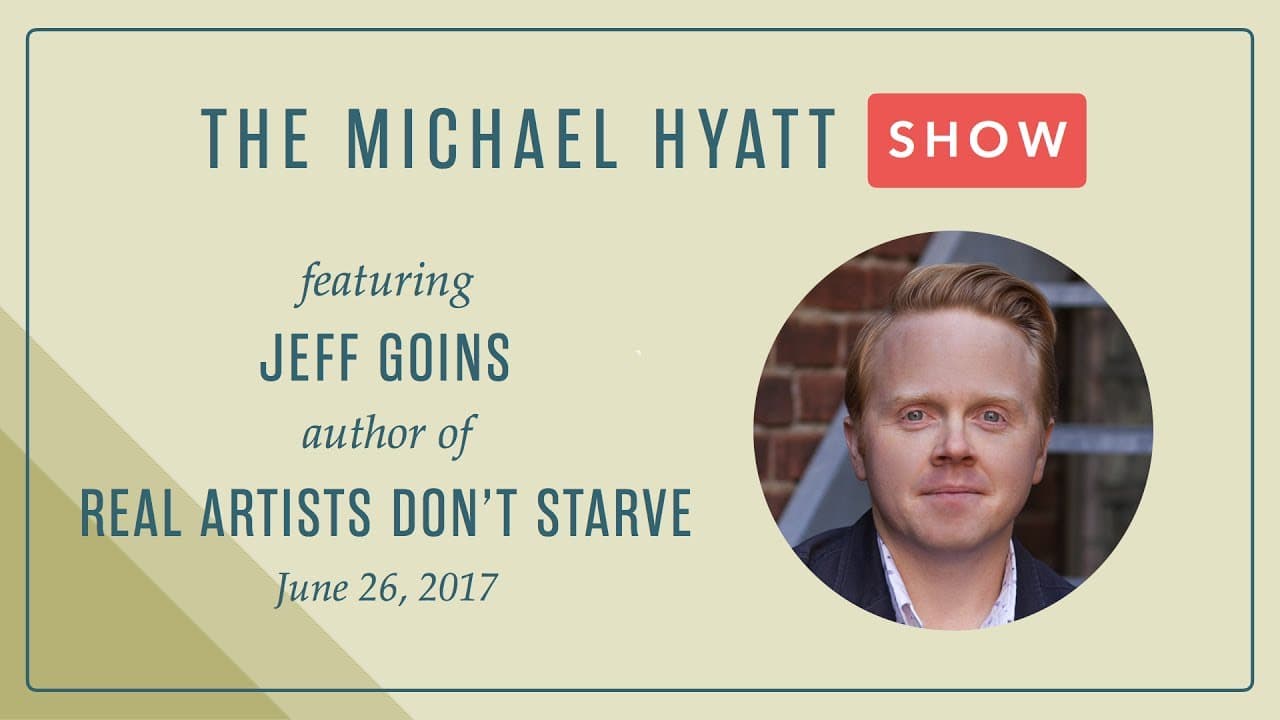
The Michael Hyatt Show with Special Guest, Jeff Goins
TL;DR
Jeff Goins argues that starving is a choice, not a necessity.
Transcript
hey guys Michael Hyatt here welcome to this episode of the Michael Hyatt show we're going to be starting in just a minute this is the pre-show so if you've turned in early fantastic I'm glad you're here and I'd love to have your friends here with us too so please click on the share button while we're waiting to start invite them to join you're goin... Read More
Key Insights
- Jeff Goins challenges the myth of the starving artist, suggesting that financial success and creative fulfillment are not mutually exclusive.
- Michelangelo, often perceived as a starving artist, was actually one of the wealthiest artists of his time, debunking the stereotype.
- Goins emphasizes that being a thriving artist involves making strategic choices and learning necessary business skills.
- The concept of 'practicing in public' is vital for artists to gain visibility and build a supportive community.
- Building a creative career doesn't require quitting your day job immediately; gradual transition allows for stability and growth.
- A supportive community or 'scene' is crucial for creative success, providing encouragement and opportunities for collaboration.
- Goins outlines 12 rules that differentiate thriving artists from starving ones, focusing on mindset and strategic actions.
- The story of the starving artist is a romanticized narrative that does not reflect the potential for success in creative careers.
Install to Summarize YouTube Videos and Get Transcripts
Explore YouTube Video Summarizer or Get YouTube Transcript Extractor
Questions & Answers
Q: Why do we romanticize the myth of the starving artist?
The myth of the starving artist was popularized in the 19th century by Henry Murger, who romanticized poverty and art in his stories. This narrative has persisted, suggesting that true art comes from suffering. However, Jeff Goins argues that this is a story we choose to believe, and it's not a necessary condition for creativity.
Q: How did Michelangelo's financial success challenge the starving artist myth?
Michelangelo, often considered a quintessential starving artist, was actually the wealthiest artist of the Renaissance, with financial holdings equivalent to $50 million today. His success challenges the notion that financial prosperity and artistic integrity cannot coexist.
Q: What are some key differences between starving and thriving artists?
Thriving artists make strategic choices, such as cultivating patrons, collaborating with others, and practicing in public. They view financial success as a means to create more art, whereas starving artists may resist business skills and believe in the necessity of suffering for their art.
Q: What advice does Jeff Goins give to those lacking artistic encouragement?
Goins advises finding a supportive community or 'scene' where creative work is already happening. This could involve joining online groups, attending local meetups, or simply reaching out to others in the creative field for encouragement and collaboration.
Q: How can someone transition from a day job to a full-time creative career?
Goins recommends a gradual transition, where one builds their creative career on the side while maintaining their day job. This approach allows for financial stability and the opportunity to prove the concept before fully committing to the creative career.
Q: What role does community play in a creative's success?
Community provides essential support, encouragement, and opportunities for collaboration. Being part of a creative scene helps artists gain visibility and connect with others who can offer guidance and inspiration.
Q: How can artists rebuild momentum if it slows down?
Artists should revisit timeless strategies that have always worked, such as practicing in public and engaging with their community. Adapting these strategies to new channels and environments can help regain momentum and reach new audiences.
Q: What is the main takeaway from Jeff Goins' message?
The main takeaway is that being a starving artist is a choice, not a necessity. By making strategic decisions, learning essential business skills, and engaging with a supportive community, artists can thrive both creatively and financially.
Summary & Key Takeaways
-
Jeff Goins, in his book 'Real Artists Don’t Starve,' argues that the concept of the starving artist is a myth. He provides historical and contemporary examples of successful artists to support his claim.
-
Goins emphasizes the importance of strategic choices, such as cultivating patrons and collaborating with others, to thrive as an artist. He also highlights the need for artists to learn basic business skills.
-
The episode encourages creatives to challenge the stereotype of financial instability and to pursue their passions with a mindset geared towards success, supported by a community of like-minded individuals.
Read in Other Languages (beta)
Share This Summary 📚
Summarize YouTube Videos and Get Video Transcripts with 1-Click
Try YouTube Summary with ChatGPT & Claude or YouTube Transcript Generator
Explore More Summaries from Michael Hyatt 📚






Summarize YouTube Videos and Get Video Transcripts with 1-Click
Try YouTube Summary with ChatGPT & Claude or YouTube Transcript Generator