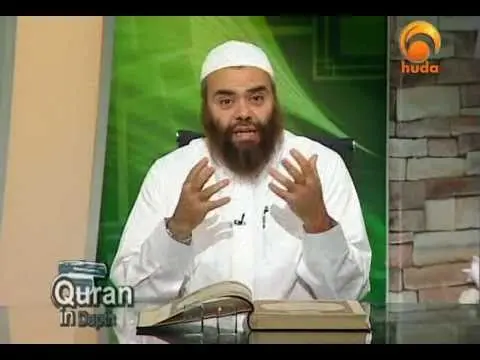
The Major Sins Series- Riba/Interest/Usury - Abu Usamah 8/18

TL;DR
Riba, or interest and usury, is presented as the seventh major sin because believers are commanded to abandon it and warned of war with Allah and His Messenger if they refuse. After conquering Mecca, the Prophet Muhammad canceled outstanding riba, beginning with money owed to his uncle Al-Abbas. Read on to understand the Quranic warning, the response expected from believers, and the Prophet’s example of justice.
Transcript
alhamdulillah ald h the seventh major sin which is devouring and taking and using and utilizing Usery or interest he brings the statement of Allah subhanahu all you who believe fear Allah and give up that which remains of your desire for Reba if you were truly Believers all you believe fear Allah and give up that which remains of your desire for Re... Read More
Key Insights
- 😘 Usury is a major sin in Islam and is heavily condemned in the Quran and Hadith.
- 😫 The Prophet Muhammad set an example by ending usury and making it impermissible for his own family.
- 💍 Possession by jinn is mentioned as a consequence of engaging in usury.
- 🏦 Islamic banks and financial institutions strive to avoid usury, but it is difficult due to the nature of the traditional banking system. Supporting Islamic banks is encouraged as a step towards a more ethical financial system.
Install to Summarize YouTube Videos and Get Transcripts
Explore YouTube Video Summarizer or Get YouTube Transcript Extractor
Questions & Answers
Q: Why are riba, interest, and usury considered a major sin?
The cited Quranic passage commands believers to fear Allah and give up what remains of their desire for riba. It warns those who refuse to beware of war with Allah and His Messenger.
Q: What does the Quran tell believers who are owed money from riba?
They are instructed to abandon the remaining riba they are owed. The command is directed to those owed money resulting from riba and links obedience to being true believers.
Q: What warning is given to people who refuse to give up riba?
They are warned of war with Allah and His Messenger. The lecture presents this warning as evidence that riba must not be treated as a small issue.
Q: How should true believers respond to the command concerning riba?
They should give up their desire to receive riba and obey the command. The speaker says believers fear disobeying Allah and do not claim a separate choice after Allah and His Messenger decree an affair.
Q: How did the Prophet Muhammad set an example in abolishing riba?
After conquering Mecca, he declared that riba remaining from the earlier period was null, void, and no longer payable. He applied the ruling publicly instead of merely telling others what to do.
Q: Whose outstanding riba did the Prophet Muhammad cancel first?
He began with the riba owed to his rich and powerful uncle Al-Abbas. Anyone who owed Al-Abbas money from riba before that day no longer had to pay it.
Q: What lesson about justice comes from the cancellation of Al-Abbas’s riba?
The Prophet applied the prohibition first to someone close to him rather than exempting his own family. The speaker presents this as an example of fairness and of establishing the ruling for everyone else.
Q: What broader lesson does the lecture draw for people who teach others?
People who call others to obey Allah should attempt to embody what they teach. The lecture contrasts the Prophet’s example with people who order righteousness but fail to practice it themselves or within their families.
Summary & Key Takeaways
-
Usury, also known as interest or Riba, is condemned as a major sin in Islam.
-
The Quran advises believers to give up their desire for usury and warns that Allah and His Messenger are at war with those who engage in it.
-
Possession by jinn and the severity of usury are mentioned as consequences for those who continue to engage in it.
Read in Other Languages (beta)
Share This Summary 📚
Summarize YouTube Videos and Get Video Transcripts with 1-Click
Try YouTube Summary with ChatGPT & Claude or YouTube Transcript Generator
Explore More Summaries from Digital Mimbar 📚

Summarize YouTube Videos and Get Video Transcripts with 1-Click
Try YouTube Summary with ChatGPT & Claude or YouTube Transcript Generator