Session Three: Exciting and Ongoing Developments
TL;DR
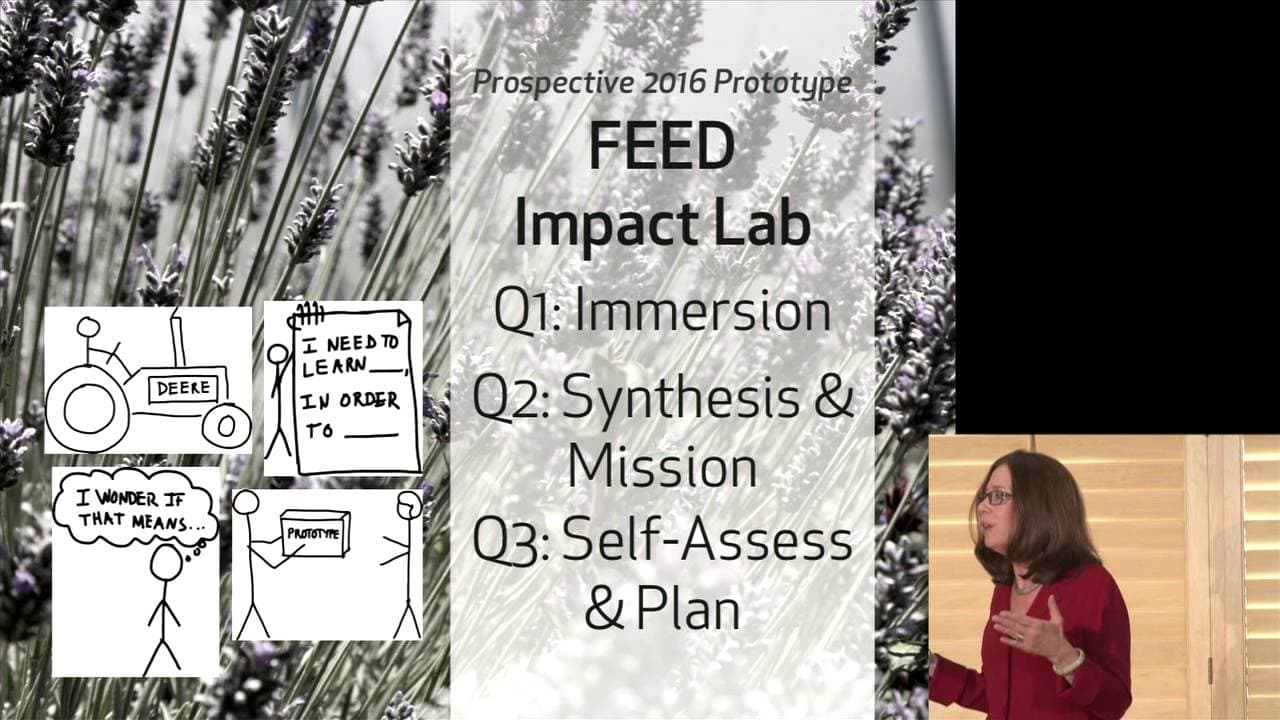
Stanford University's FEED Collaborative aims to create impact in environmental sustainability, social justice, and human health through experiential learning and innovation projects focused on the local food system.
Transcript
[MUSIC] Stanford University. >> [APPLAUSE]
Good morning everyone. Hannah and I are delighted to be here to tell you a little bit about this very exciting development at Stanford, called the FEED Collaborative. So a couple of years ago, my co-founder Matt Rothe, who's in the back. Matt, wave your hand. And I, decided it would be a really interest... Read More
Key Insights
- 😋 The FEED Collaborative is a collaboration between Stanford University's d.School and the School of Earth Sciences, combining design thinking and academic knowledge to create impact in the local food system.
- 😋 The collaboration focuses on increasing sustainability, building relationships, and enhancing economic vitality in the local food system.
- 🤗 The FEED Collaborative innovates education at Stanford by providing hands-on learning opportunities and engaging students in real-world projects.
Install to Summarize YouTube Videos and Get Transcripts
Explore YouTube Video Summarizer or Get YouTube Transcript Extractor
Questions & Answers
Q: What is the goal of the FEED Collaborative?
The goal of the FEED Collaborative is to create positive impact in environmental sustainability, social justice, and human health through innovative projects focused on the local food system.
Q: How does the FEED Collaborative innovate education at Stanford?
The FEED Collaborative offers students hands-on opportunities to learn and engage with the local food system, going beyond traditional classroom learning. It aims to activate academic knowledge and make it applicable in the real world through partnerships and design thinking.
Q: What are some key areas of focus for the FEED Collaborative?
The FEED Collaborative focuses on permanently protecting local farmland, supporting sustainable agricultural practices, enhancing the economic vitality of local farms, building relationships between producers and consumers, and increasing access to fresh and healthy food.
Q: How does the FEED Collaborative involve students in the food system?
The FEED Collaborative immerses students in the food system through field trips, observations, and interactions with farmers and food producers. Students are encouraged to empathize with different perspectives and use design thinking to develop innovative solutions to food system challenges.
Summary & Key Takeaways
-
FEED Collaborative is a partnership between Stanford University's d.School and the School of Earth Sciences, combining academic knowledge and design thinking to create a positive impact in the local food shed.
-
The collaboration focuses on increasing sustainability and innovation in the local food system by protecting farmland, enhancing economic vitality, and building relationships between producers, buyers, and consumers.
-
FEED Collaborative is also pioneering a new way of educating students at Stanford through hands-on opportunities and experiential learning in the food system.
Read in Other Languages (beta)
Share This Summary 📚
Summarize YouTube Videos and Get Video Transcripts with 1-Click
Try YouTube Summary with ChatGPT & Claude or YouTube Transcript Generator
Explore More Summaries from Stanford 📚


Summarize YouTube Videos and Get Video Transcripts with 1-Click
Try YouTube Summary with ChatGPT & Claude or YouTube Transcript Generator