The Biggest and Brightest Space News of 2023
TL;DR
Scientists discovered the most energetic explosion, one of the faintest galaxies, the most massive magnetic star, and evidence of the largest solar storm in history.
Transcript
A lot of places celebrate the New Year with firework displays. But let’s face it, even all the fireworks on Earth are no match for the light show that space is ready to put on at the drop of a very large cosmic hat. And massive explosions aren't the only astronomical wonders we discovered in 2023. Scientists also detected one of the universe's olde... Read More
Key Insights
- 🫢 Barbie, the most energetic explosion observed, challenges current understanding and may be caused by a cloud of gas being ripped apart by a supermassive black hole.
- ❓ Studying faint galaxies like JD1 provides insights into the development of the early universe and the clearing of intergalactic hydrogen.
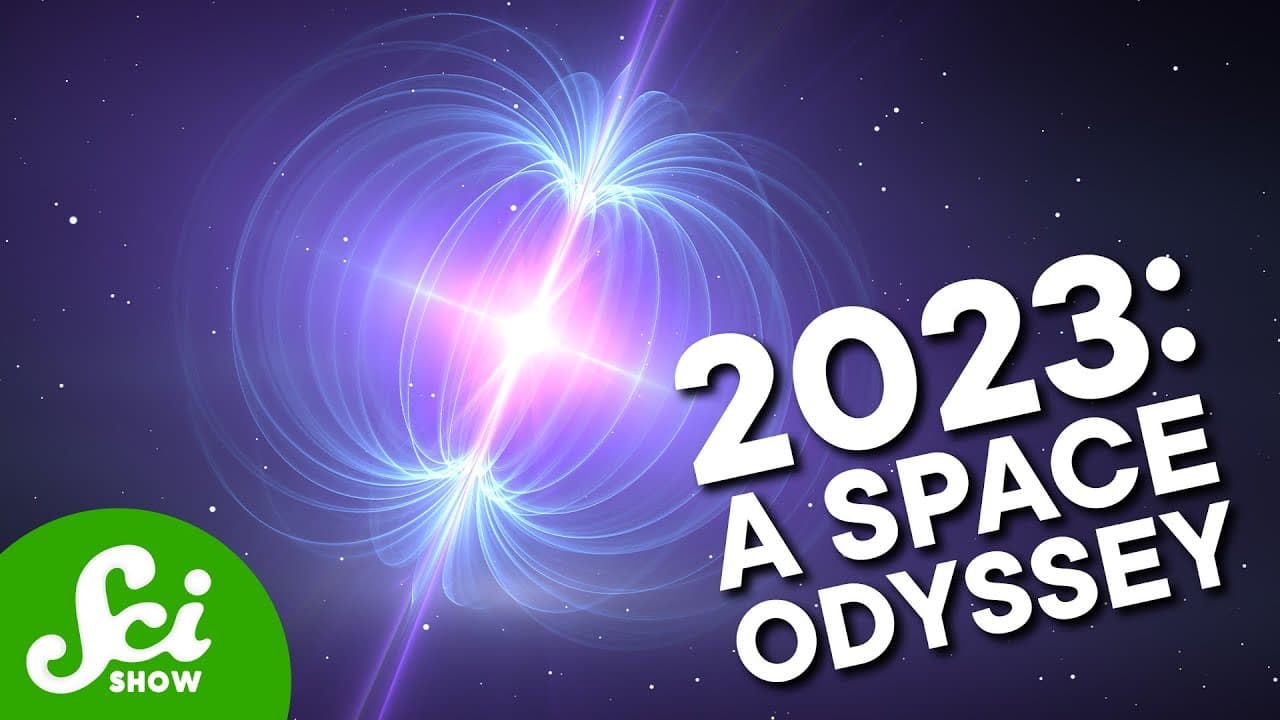
- 🤩 HD 45166, the most massive magnetic star ever observed, may hold clues to understanding the formation of magnetars.
- 👣 Evidence of the largest solar storm in history emphasizes the need to better understand and track these events due to their potential impact on Earth's infrastructure and communication systems.
Install to Summarize YouTube Videos and Get Transcripts
Explore YouTube Video Summarizer or Get YouTube Transcript Extractor
Questions & Answers
Q: What makes the explosion Barbie unique compared to other transients?
Barbie emits more than ten times the amount of light as a typical supernova and has outlasted other transients, leading scientists to believe it may be caused by a cloud of gas being ripped apart by a supermassive black hole.
Q: How did scientists determine the luminosity of the faint galaxy JD1?
By measuring JD1's redshift, scientists were able to calculate its distance and determine its luminosity, confirming it as the faintest galaxy observed from its time period.
Q: What is a magnetar, and why is HD 45166 significant?
A magnetar is a neutron star with a powerful magnetic field. HD 45166, the most massive magnetic star observed, may provide insights into the conditions required to produce magnetars.
Q: How did scientists discover evidence of the largest solar storm in history?
Researchers found a spike in radiocarbon levels in tree rings from 14,300 years ago, indicating a massive solar storm. The radiocarbon isotope is produced when the Sun's charged particles interact with the Earth's upper atmosphere, and large storms can significantly impact our modern world.
Summary & Key Takeaways
-
Scientists have observed a massive explosion, nicknamed Barbie, which exceeds the luminosity of any known similar transient.
-
The faintest galaxy, JD1, was observed using the James Webb Space Telescope, providing insights into the early stages of galaxy development.
-
HD 45166, the most massive magnetic star ever observed, may hold clues to the formation of magnetars.
-
Evidence of the largest solar storm in history was found in tree rings, emphasizing the importance of understanding and tracking solar events.
Read in Other Languages (beta)
Share This Summary 📚
Summarize YouTube Videos and Get Video Transcripts with 1-Click
Try YouTube Summary with ChatGPT & Claude or YouTube Transcript Generator
Explore More Summaries from SciShow 📚

Summarize YouTube Videos and Get Video Transcripts with 1-Click
Try YouTube Summary with ChatGPT & Claude or YouTube Transcript Generator