How to Build a Future-Ready Mindset
TL;DR
A future-ready mindset involves actively creating your future rather than passively predicting it. Key elements include radical optimism, curiosity, experimentation, empathy, and leveraging personal strengths. By cultivating these traits, individuals can overcome anxiety about the future, embrace change, and take control of their destiny, leading to personal growth and innovation.
Transcript
The idea for your future ready mine really started when I observed many many people in this world to not being able to deal with that uncertainty that the future actually holds right and that created a lot of anxiety for people around the future. One of the experiences I had a couple of years ago really helped me to understand that we have more con... Read More
Key Insights
- The future is not something you predict but something you create by actively imagining and shaping it.
- A 'Future Ready Mind' consists of six dimensions: Radical Optimism, Unreserved Openness, Compulsive Curiosity, Perpetual Experimentation, Empathy, and a personal superpower, Dimension X.
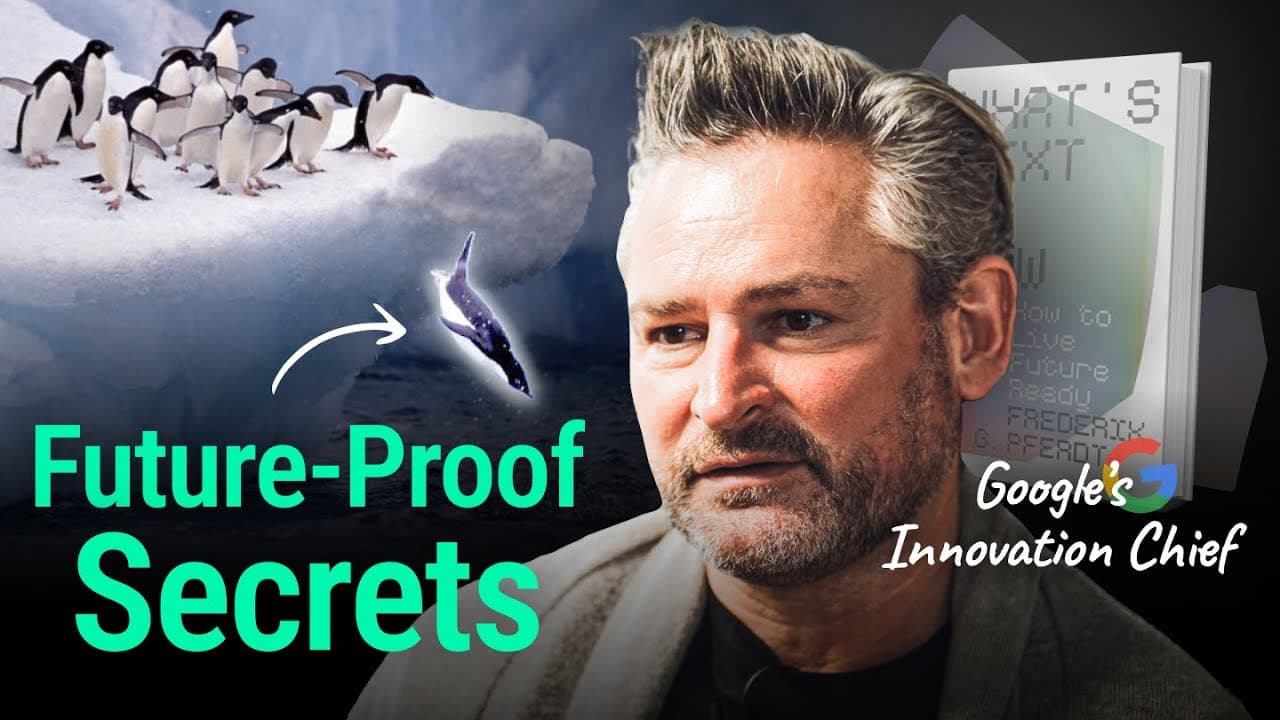
- Google fosters innovation by creating a culture that encourages risk-taking, exemplified by the Penguin Award, which rewards employees for bold actions.
- Innovative organizations view experiments as learning opportunities rather than failures, fostering a culture of continuous improvement.
- In the rapidly evolving AI era, thriving requires a mindset focused on participation and experimentation rather than fear.
- Practical exercises, such as daily visualization of one's future and gratitude journaling, can help individuals design their desired future.
- Organizations like Google create environments that reduce friction in moving from idea to prototype, facilitating innovation.
- Training programs focused on empathy, expansive thinking, and experimentation are crucial for developing an innovative mindset.
Install to Summarize YouTube Videos and Get Transcripts
Explore YouTube Video Summarizer or Get YouTube Transcript Extractor
Questions & Answers
Q: How can I create a future-ready mindset?
Creating a future-ready mindset involves cultivating six dimensions: radical optimism, unreserved openness, compulsive curiosity, perpetual experimentation, empathy, and leveraging a personal superpower. These traits help individuals actively shape their future by embracing change and innovation. Daily practices like visualization and gratitude journaling can reinforce these dimensions, enabling individuals to take control of their destiny and thrive amidst uncertainty.
Q: What are the six dimensions of a 'Future Ready Mind'?
The six dimensions of a 'Future Ready Mind' include radical optimism, unreserved openness, compulsive curiosity, perpetual experimentation, empathy, and a personal superpower known as Dimension X. Each dimension plays a crucial role in fostering a mindset that embraces change, innovation, and personal growth. Together, they empower individuals to create their desired future by actively engaging with new opportunities and challenges.
Q: How does Google encourage innovation among its employees?
Google encourages innovation by creating a culture that rewards risk-taking and experimentation. Initiatives like the Penguin Award recognize employees who take bold actions, while spaces like The Garage provide an environment for rapid prototyping and idea development. These efforts, combined with training programs focused on empathy and expansive thinking, help transform employees into innovators who actively contribute to the company's growth and success.
Q: Why is experimentation important in innovation?
Experimentation is crucial in innovation because it allows individuals and organizations to learn quickly from trial and error. By viewing experiments as learning opportunities rather than failures, innovative organizations can continuously improve and adapt to changing circumstances. This mindset fosters a culture of growth and resilience, enabling individuals to explore new ideas and approaches without fear of failure, ultimately leading to meaningful innovations.
Q: What practical exercises can help design a desired future?
Practical exercises for designing a desired future include daily visualization and gratitude journaling. Visualization involves imagining your future self and the life you want to lead, helping to clarify goals and intentions. Gratitude journaling, where you note down positive aspects of your day, shifts focus towards optimism and opportunity. These practices strengthen a future-ready mindset, enabling individuals to actively shape their future and embrace change with confidence.
Q: How can organizations create a culture of innovation?
Organizations can create a culture of innovation by implementing initiatives that encourage risk-taking and experimentation, such as the Penguin Award at Google. Providing environments like The Garage for rapid prototyping helps reduce friction in moving from idea to execution. Additionally, training programs focused on empathy, expansive thinking, and experimentation equip employees with the skills needed to innovate. This combination fosters a supportive environment where creativity and growth thrive.
Q: What role does empathy play in a future-ready mindset?
Empathy plays a vital role in a future-ready mindset by fostering understanding and connection with others and oneself. It involves recognizing and addressing the needs of others and one's future self, enabling better decision-making and collaboration. By cultivating empathy, individuals can navigate complex social dynamics and anticipate future challenges, enhancing their ability to innovate and create meaningful solutions that resonate with diverse perspectives.
Q: What are common misconceptions about the future?
Common misconceptions about the future include viewing it as something that happens to us rather than something we create, believing it is controlled by others, or denying its significance by longing for the past. These misconceptions lead to anxiety and inaction. Recognizing that the future is shaped by our actions and mindset empowers individuals to take control, embrace change, and actively design the future they desire through informed decisions and innovative thinking.
Summary & Key Takeaways
-
Frederik Pferdt emphasizes that the future is something we actively create, not just something that happens to us. He introduces the concept of a 'Future Ready Mind,' which includes dimensions like optimism, curiosity, and empathy. By cultivating these traits, individuals can overcome anxiety about the future and take control of their destiny, leading to personal growth and innovation.
-
Key methods used at Google to foster innovation include creating a culture that encourages risk-taking and experimentation. The Penguin Award, for instance, rewards employees for bold actions, while spaces like The Garage facilitate rapid prototyping and idea development. These initiatives help transform employees into innovators.
-
Practical habits for designing one's future include daily visualization exercises and gratitude journaling. These practices help build a mindset that focuses on opportunities and optimism. By actively engaging in these exercises, individuals can better navigate uncertainty and shape their desired future.
Read in Other Languages (beta)
Share This Summary 📚
Summarize YouTube Videos and Get Video Transcripts with 1-Click
Try YouTube Summary with ChatGPT & Claude or YouTube Transcript Generator
Explore More Summaries from EO 📚





Summarize YouTube Videos and Get Video Transcripts with 1-Click
Try YouTube Summary with ChatGPT & Claude or YouTube Transcript Generator