Barbarian Tribe to Most Important Province in China's History - Entire Story of Canton and Baiyue
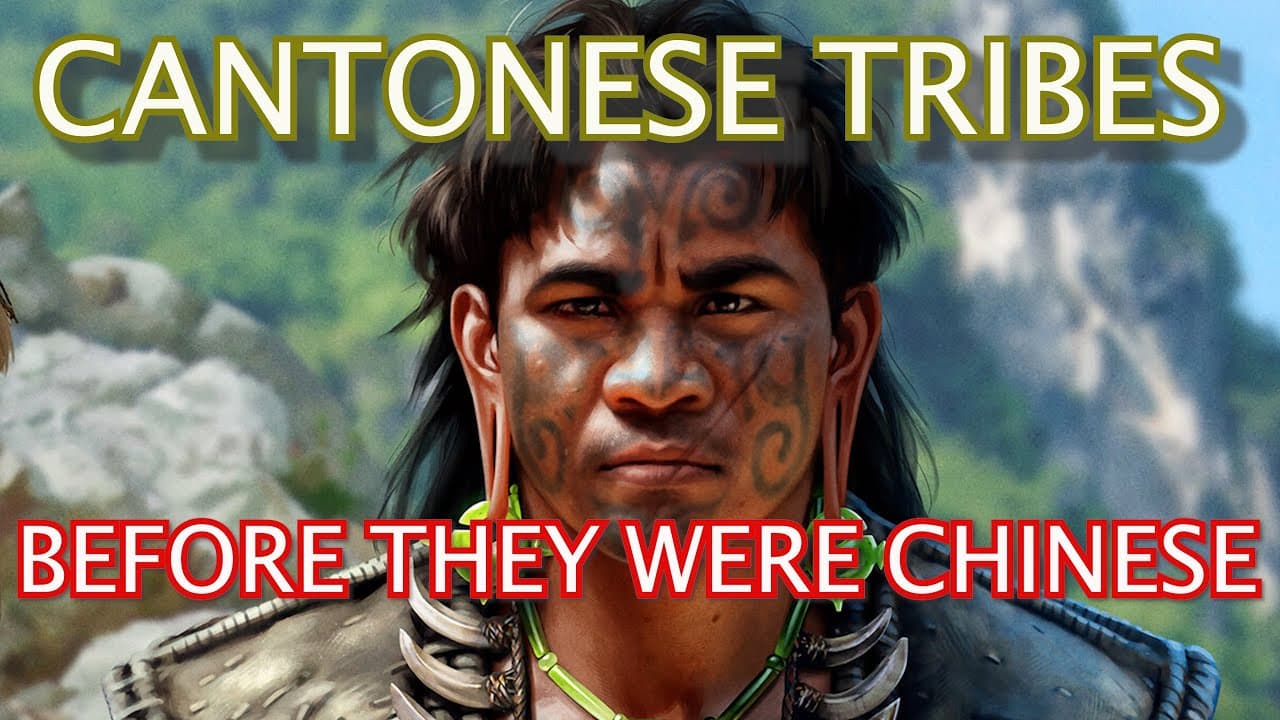
TL;DR
Canton, a province historically perceived as wild and untamed, became the most influential province in China's modern history, leading to the end of the warlord era and the establishment of China's first unified Republic.
Transcript
foreign Southern China as synonymous with China itself up until recent decades the window for the world to peer into Chinese culture was largely viewed through a Cantonese lens with the Cantonese language and culture proliferating throughout the Western World much more so than the northern counterparts of Mandarin culture which was hidden behind th... Read More
Key Insights
- 🌍 Chinese culture was largely viewed through a Cantonese lens, making it the most influential province in China's modern history.
- 🚩 Pre-imperial China focused on the Yellow River Basin and did not include the southern half of the country, where Canton is located.
- 🌟 The region of Vega, comprising Southeast China and Northern Vietnam, had distinct dialects and cultures.
- 💡 Cantonese was influenced by the Greer, a seafaring tribal group known for trade and shipbuilding skills.
- 📜 Dao, a general from Hubei, founded a new kingdom in Southern China, incorporating it into China's geopolitical arena.
- 🌊 Canton was the gateway between China and the rest of the world, witnessing the arrival of foreign traders and explorers.
- 💰 Smuggling business in Canton boomed despite Imperial bans on trade, leading to the establishment of the Portuguese colony Macau.
- 💥 The Opium Wars and Taiping Rebellion marked significant shifts in power in China, leading to the downfall of the Qing Dynasty and the rise of revolutionary movements in Canton.
Install to Summarize YouTube Videos and Get Transcripts
Explore YouTube Video Summarizer or Get YouTube Transcript Extractor
Questions & Answers
Q: How did Canton's position as a frontier province contribute to its cultural independence?
Canton's distance from the Yellow River Basin, the historical center of China, allowed it to maintain its own dialect, traditions, and cultural identity. This independence, combined with its role as a trading hub, contributed to Canton's unique position in Chinese history.
Q: What role did foreign colonizers and missionaries play in shaping Canton's history?
Foreign colonizers and missionaries brought Western ideas and religion to Canton, sparking political activism and the desire for change. They also played a significant role in the opium trade, causing conflicts and ultimately leading to the downfall of the Qing Dynasty.
Q: How did the Taiping Rebellion impact Canton's position in China?
The Taiping Rebellion, led by Cantonese rebel Hong Hua, was a violent rebellion against the Qing Dynasty. While it was ultimately suppressed, the rebellion highlighted the weakening grip of the Manchu rulers and set the stage for future revolutionary movements in China.
Q: How did Sun Yat-sen and his nationalist party contribute to Canton's influence in China?
Sun Yat-sen, a Cantonese revolutionary, founded the nationalist party and played a crucial role in overthrowing the Qing Dynasty. The nationalist party's base in Canton provided them with a significant advantage during the warlord era and led to international recognition of their government.
Q: How did Canton's position as a gateway to the world impact its development as a tech capital in modern China?
Canton's long history as a trading hub and its openness to foreign ideas and trade have contributed to its development as a tech capital. The cities of Sun Zen and Guangzhou, located in the Pearl River delta, have become centers of technology and innovation, earning the nickname "Silicon Valley of China."
Summary & Key Takeaways
-
Pre-imperial China's history was centered around the Yellow River Basin, and the concept of China had not permeated into the southern regions.
-
Canton, also known as Guangdong, was incorporated into China during the Qing Dynasty and had a long history of cultural independence.
-
Canton played a critical role in China's history by being the gateway for foreign trade and knowledge, the birthplace of revolutionary movements, and the center of political activism that led to the end of the Qing Dynasty.
Read in Other Languages (beta)
Share This Summary 📚
Summarize YouTube Videos and Get Video Transcripts with 1-Click
Try YouTube Summary with ChatGPT & Claude or YouTube Transcript Generator
Explore More Summaries from Soppy Frog Productions 📚

Summarize YouTube Videos and Get Video Transcripts with 1-Click
Try YouTube Summary with ChatGPT & Claude or YouTube Transcript Generator