2018 Kavli Prize Announcement Program
TL;DR
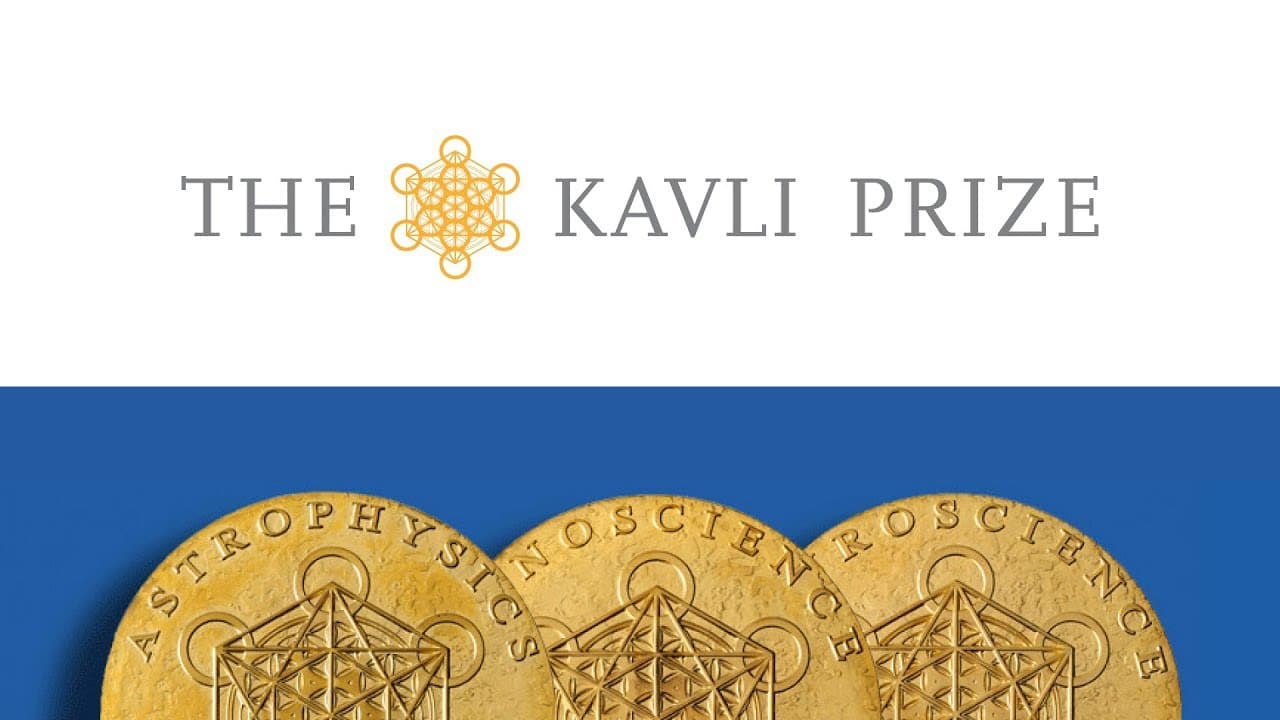
The 2018 Kavli Prize winners include scientists recognized for their groundbreaking research in astrophysics, nanoscience, and neuroscience, shedding light on important phenomena such as the formation of stars and planets, the invention of CRISPR-Cas9, and the mechanisms of hearing and deafness.
Transcript
so good morning everybody and welcome it's good to see you all I'm Brian Greene co-founder of the World Science Festival with Tracy day Wow rowdy crowd for 8 o'clock in the morning that is a very very good sign so we are so pleased you could join us for this announcement of the Copley prizes which recognizes scientists for their seminal advances in... Read More
Key Insights
- 💁 Astrochemistry research provides valuable insights into the formation of interstellar molecules and the origins of life on Earth.
- 👻 CRISPR-Cas9 is a game-changing nano tool that allows precise and efficient editing of genes, with broad applications in medicine, agriculture, and biology.
- 👂 The work on hearing and deafness enhances our understanding of how sound is perceived and processed in the brain, with potential implications for the treatment of hearing loss.
Install to Summarize YouTube Videos and Get Transcripts
Explore YouTube Video Summarizer or Get YouTube Transcript Extractor
Questions & Answers
Q: What is the significance of Avena Ventschuh's research in astrochemistry?
Avena Ventschuh's work in astrochemistry has enhanced our understanding of the formation and lifecycle of interstellar molecules, providing insights into the origins of life on Earth and offering hope for finding similar molecules on other planets.
Q: How does CRISPR-Cas9 revolutionize genetic engineering?
CRISPR-Cas9 is a nano tool that enables precise and inexpensive editing of genes, allowing researchers to correct mutations, remove defects, or insert new genetic code. Its potential applications range from treating genetic diseases to improving agriculture and livestock.
Q: What have Hudspeth, Fettiplace, and Petit uncovered about hearing and deafness?
These scientists have unraveled the cellular and molecular mechanisms of hearing, particularly focusing on hair cells in the inner ear. Their discoveries deepen our understanding of how sound is transformed into electrical signals in the brain and shed light on the causes of hearing loss and deafness.
Summary & Key Takeaways
-
Astrophysics: Avena Ventschuh is awarded for her contributions to astrochemistry, revealing the formation of interstellar molecules and shedding light on the origins of life on Earth.
-
Nanoscience: Jennifer Doudna, Emmanuelle Charpentier, and Virginijus Šikšnys are acknowledged for their invention of CRISPR-Cas9, a nano tool for editing DNA that revolutionizes genetics, agriculture, and medicine.
-
Neuroscience: James Hudspeth, Robert Fettiplace, and Christine Petit are recognized for their work on the molecular and neural mechanisms of hearing, deepening our understanding of how sound is transformed into electrical impulses in the brain.
Read in Other Languages (beta)
Share This Summary 📚
Summarize YouTube Videos and Get Video Transcripts with 1-Click
Try YouTube Summary with ChatGPT & Claude or YouTube Transcript Generator
Explore More Summaries from World Science Festival 📚

Summarize YouTube Videos and Get Video Transcripts with 1-Click
Try YouTube Summary with ChatGPT & Claude or YouTube Transcript Generator