Springtime Household Pests
TL;DR
Dr. Sutherland discusses spring household pests and management strategies.
Transcript
welcome everyone to the uh third uc ipm urban and community webinar series i'm kerry wendell rojas i'm the associate director for the urban and community program so today we have with us um our guest speaker dr andrew sutherland dr sutherland is the urban ipm advisor for the university of california division of agriculture and natur... Read More
Key Insights
- Dr. Andrew Sutherland is an expert in urban pest management, focusing on common springtime pests like carpet beetles, fleas, and fungus gnats.
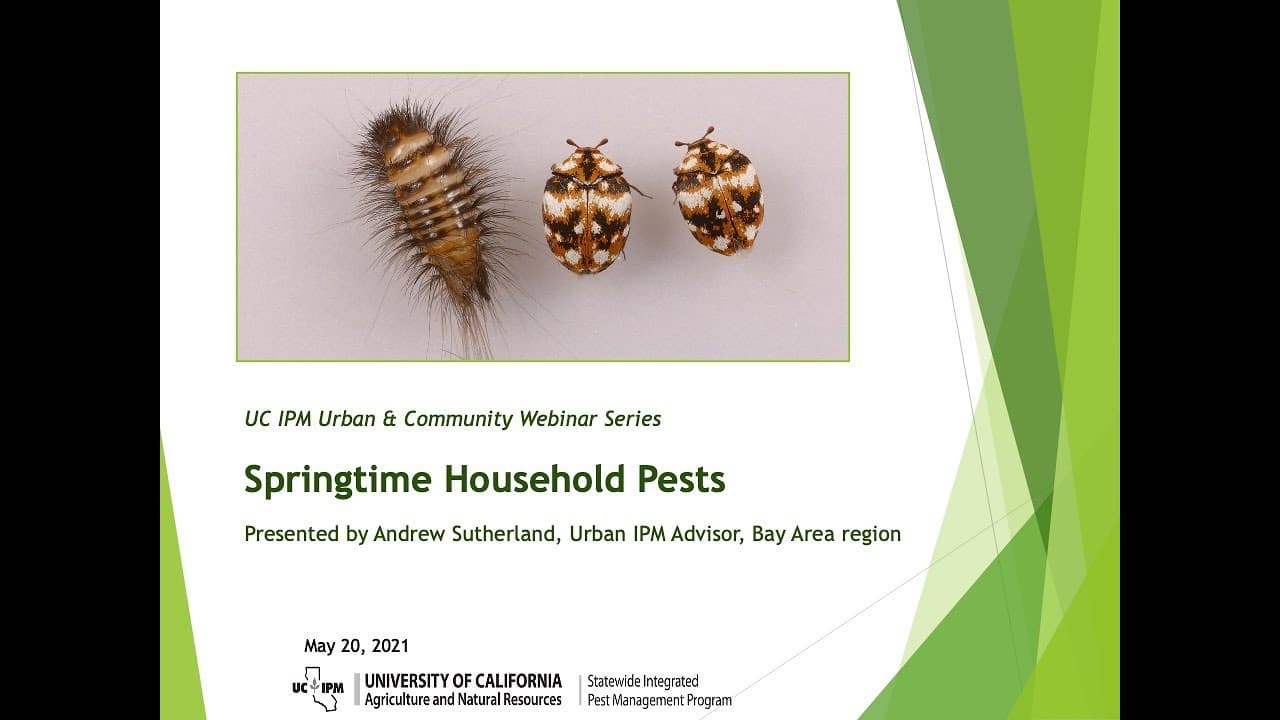
- Carpet beetles are small beetles resembling ladybugs, with larvae that damage natural fibers like wool and pet hair.
- Fleas are parasitic insects that primarily affect pets, with the cat flea being the most common, and require proactive management.
- Fungus gnats, often found in house plants, have larvae that can damage plant roots, with adults being a nuisance indoors.
- Integrated Pest Management (IPM) is a strategy that minimizes negative impacts of pest management, focusing on prevention and education.
- Springtime in California presents unique pest challenges due to its Mediterranean climate, with moist soil and warming temperatures.
- Preventive measures for pests include sealing windows and doors, vacuuming regularly, and using insect growth regulators where necessary.
- UC IPM offers resources and pest notes for identifying and managing a variety of household pests, emphasizing the importance of community education.
Install to Summarize YouTube Videos and Get Transcripts
Explore YouTube Video Summarizer or Get YouTube Transcript Extractor
Questions & Answers
Q: What are the main pests discussed in the webinar?
The main pests discussed in the webinar are carpet beetles, fleas, and fungus gnats. Dr. Sutherland provides detailed information on their life cycles, the damage they cause, and effective management strategies. These pests are particularly prevalent in the spring due to the favorable environmental conditions.
Q: How does Integrated Pest Management (IPM) help in managing pests?
Integrated Pest Management (IPM) helps in managing pests by minimizing the negative impacts associated with pest control. It emphasizes prevention and education, ensuring that pests are managed below unacceptable levels while reducing the use of harmful pesticides. IPM promotes sustainable practices that protect both the environment and communities.
Q: Why are fleas considered a significant pest problem?
Fleas are considered a significant pest problem because they are parasitic insects that feed on blood, primarily affecting pets like cats and dogs. They can transmit pathogens and tapeworms to pets and humans, posing serious health risks. Effective management requires proactive measures, such as treating pets with insecticides and identifying breeding locations.
Q: What preventive measures are recommended for managing carpet beetles?
Preventive measures for managing carpet beetles include sealing windows and doors to prevent adult beetles from entering, regular vacuuming to remove pet hair and potential food sources for larvae, and properly storing wool and other natural fiber items. These measures help prevent infestations by reducing the likelihood of beetles laying eggs indoors.
Q: How do fungus gnats affect house plants?
Fungus gnats affect house plants primarily through their larvae, which feed on fine roots and shoots in contact with the soil. This feeding can cause significant damage to plants, especially when populations are high. The adult gnats are a nuisance indoors, often attracted to light sources, but do not directly harm the plants.
Q: What role does climate play in pest prevalence during spring in California?
The Mediterranean climate in California, characterized by moist soil and warming temperatures in spring, creates ideal conditions for many pests. These environmental factors trigger specific life cycle stages in pests like carpet beetles and fleas, increasing their prevalence during this season. Understanding these conditions helps in developing effective management strategies.
Q: What resources does UC IPM provide for pest management?
UC IPM provides a range of resources for pest management, including detailed pest notes, educational webinars, and community outreach programs. These resources help individuals identify and manage various pests effectively, promoting sustainable practices and reducing the negative impacts of pest control on the environment and communities.
Q: How can homeowners manage flea infestations effectively?
Homeowners can manage flea infestations effectively by treating pets with appropriate insecticides, regularly vacuuming areas where pets spend time, and identifying and eliminating breeding locations. Insect growth regulators and other targeted insecticides may be used as needed, but proactive measures are crucial in preventing infestations from becoming severe.
Summary & Key Takeaways
-
Dr. Andrew Sutherland, an urban pest management expert, discusses common springtime household pests such as carpet beetles, fleas, and fungus gnats. He emphasizes the importance of Integrated Pest Management (IPM) strategies to minimize environmental impact while effectively managing pests.
-
Carpet beetles, fleas, and fungus gnats are highlighted as common pests, with specific management strategies for each. Carpet beetles damage natural fibers, fleas affect pets and can transmit diseases, and fungus gnats are nuisances in house plants.
-
Preventive measures are crucial in pest management, including sealing entry points, regular vacuuming, and using appropriate insecticides. UC IPM provides resources and educational materials to assist in identifying and managing these pests effectively.
Read in Other Languages (beta)
Share This Summary 📚
Summarize YouTube Videos and Get Video Transcripts with 1-Click
Try YouTube Summary with ChatGPT & Claude or YouTube Transcript Generator