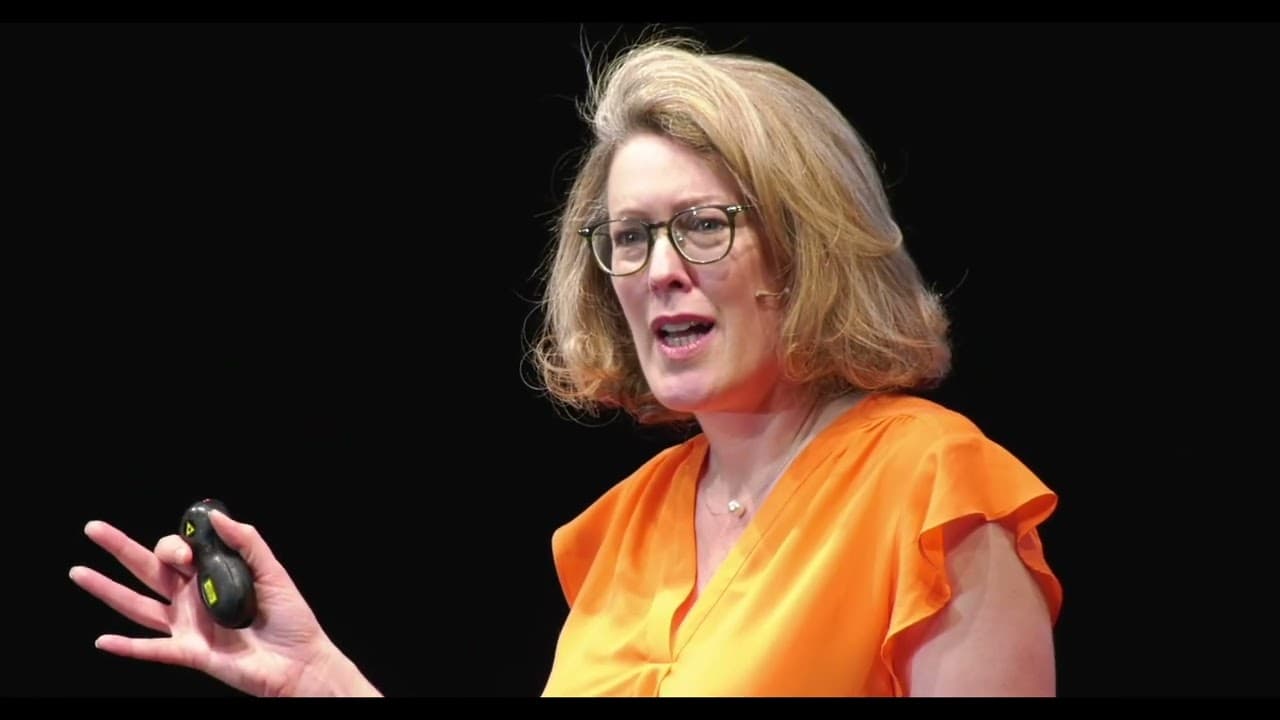
Revolution, Evolution & Devolution Of The Sharing Economy | Sabine Benoit | TEDxSurreyUniversity
TL;DR
The sharing economy has experienced rapid growth with companies like Airbnb and Uber, but the next wave of disruptions may come from sectors like education and banking, while caution must be exercised with professional service providers.
Transcript
i'd like you to imagine the daughter of my best friend her name is philly she's born on the 11th of september 2008. this was about the time where three guys in san francisco brian joe and nathan founded what later became airbnb this was also about the time where two other guys in the bay area started developing what is now uber 2008 was also the da... Read More
Key Insights
- 🌍 The sharing economy, characterized by asset-free platforms like Airbnb and Uber, has grown rapidly over the years, connecting users and making use of idle resources.
- 🚀 The sharing economy platforms, such as Too Good To Go and JustPark, are expanding beyond well-known companies like Airbnb and Uber, indicating the potential for hidden gems to become icons of the future.
- 📱 As technology advances, the sharing economy has the potential to revolutionize various sectors, such as legal services (App Council), storage (StashB), internet access (private Wi-Fi sharing), and even troubleshooting (Nerd App).
- 💡 The sharing economy disrupts established sectors by offering better customer service, leveraging the asset-free nature of platforms to fuel rapid growth.
- 💰 Incumbent sectors that exploit their gatekeeper role, provide complicated or mediocre service, or fail to make use of idle resources are susceptible to disruption by sharing economy platforms.
- 🏫 Even the education sector, represented by universities, could face disruption if platforms like Coursera and Udemy evolve to offer comprehensive programs that produce capable graduates at a fraction of the cost.
- 💳 Traditional banking is already experiencing disruption from companies like Wise and Monzo, suggesting that soon, peer-to-peer-enabled multi-currency accounts could replace expensive international transfers.
- ⚖️ To ensure the true benefits of the sharing economy, it is crucial to keep professional service providers in check, as they do not effectively utilize idle resources and can have negative consequences for local communities and employment rights.
Install to Summarize YouTube Videos and Get Transcripts
Explore YouTube Video Summarizer or Get YouTube Transcript Extractor
Questions & Answers
Q: What are some examples of "hidden gem" sharing economy companies that may become icons in the future?
Some lesser-known sharing economy companies mentioned in the content include Too Good to Go, Just Park, EV Match, Friend Assurance, and Stash B. These companies focus on preventing food waste, sharing private parking spaces, and providing insurance and storage solutions.
Q: What advantages does the sharing economy offer in terms of accessing resources?
The sharing economy allows individuals to access resources without needing to own them, leading to cost savings and reduced waste. It provides opportunities for people to share and make use of idle resources, creating a more sustainable and efficient system.
Q: How can the sharing economy disrupt the education sector?
In the education sector, sharing economy platforms like Coursera and Udemy could go beyond offering video lecture notes and develop programs that can produce capable graduates for a fraction of the cost of traditional universities. This could put traditional universities under pressure to adapt and potentially lead to major disruptions in the sector.
Q: How can the banking sector be disrupted by the sharing economy?
Companies like Wise and Monzo are already disrupting the banking sector, and one example is international transfers. Traditional banks often charge high fees for international transfers, but peer-to-peer enabled multi-currency accounts offered by sharing economy banks can provide a more cost-effective and streamlined alternative, benefiting consumers.
Q: What negative consequences can arise from professional service providers in the sharing economy?
Professional service providers, who buy properties solely for renting them on platforms like Airbnb or become full-time Uber drivers, can have detrimental effects on the communities they operate in. They may drive up housing costs, create a strain on local resources, and undermine social security and employment rights. It is important to prioritize the original idea of the sharing economy, which is making use of idle resources, to ensure the benefits are realized without these negative consequences.
Summary & Key Takeaways
-
The sharing economy, characterized by asset-free platforms, has grown quickly with companies like Airbnb and Uber leading the way.
-
Sectors like education and banking could be the next to face disruption from sharing economy platforms.
-
Caution must be taken regarding professional service providers, as they may not make use of idle resources and can have negative consequences.
Read in Other Languages (beta)
Share This Summary 📚
Summarize YouTube Videos and Get Video Transcripts with 1-Click
Try YouTube Summary with ChatGPT & Claude or YouTube Transcript Generator
Explore More Summaries from TEDx Talks 📚




Summarize YouTube Videos and Get Video Transcripts with 1-Click
Try YouTube Summary with ChatGPT & Claude or YouTube Transcript Generator