How to Integrate Christian Faith in Therapy
TL;DR
Implicit integration in therapy is a covert approach where spiritual issues are not directly discussed, while explicit integration involves openly addressing these issues. Both methods require ethical responsibility and clinical sensitivity. Christian therapists must adapt their approach based on the client's needs and preferences, ensuring informed consent and a respectful, prayerful practice.
Transcript
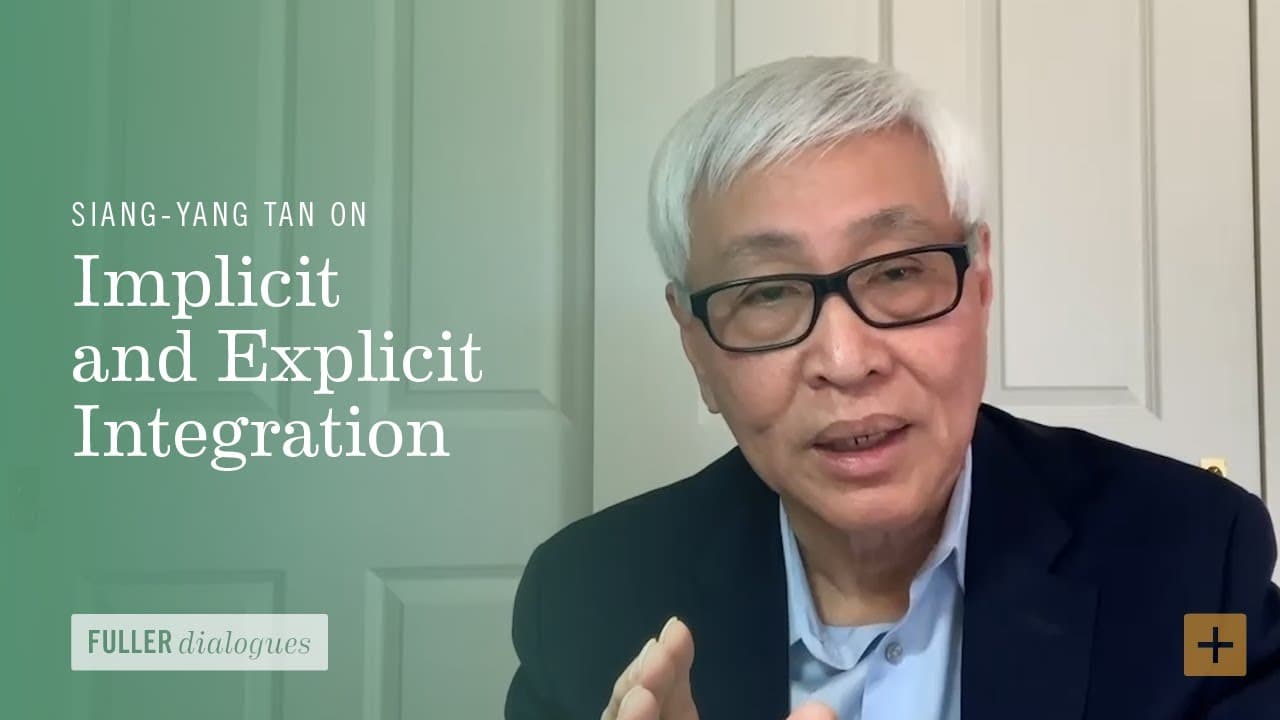
okay hi everyone i'm now into the second lecture in these series of lectures from fuller seminary the school of psychology and marriage and family therapy the integration symposium lectures this is now lecture two and the title of my lecture is implicit and explicit integration in christian counseling in psychotherapy christian faith in clinical pr... Read More
Key Insights
- Implicit integration is a covert approach that avoids direct discussion of spiritual issues.
- Explicit integration involves open and systematic use of spiritual resources in therapy.
- Christian therapy should be Christ-centered, biblically based, and spirit-filled.
- Ethical responsibility and clinical sensitivity are crucial in both integration approaches.
- Therapists should obtain informed consent before using spiritual interventions.
- Prayer and scripture can be used as spiritual resources in explicit integration.
- Therapists must adapt their approach based on the client's needs and preferences.
- The effectiveness of religious and spiritual therapies is supported by empirical evidence.
Install to Summarize YouTube Videos and Get Transcripts
Explore YouTube Video Summarizer or Get YouTube Transcript Extractor
Questions & Answers
Q: How does implicit integration differ from explicit integration in therapy?
Implicit integration in therapy is a covert approach where spiritual issues are not directly discussed with the client. The therapist may engage in silent prayer and maintain personal spirituality without imposing it on the client. In contrast, explicit integration involves openly addressing spiritual and religious issues, using spiritual resources like prayer and scripture in therapy sessions. Both methods require ethical responsibility and clinical sensitivity, with the choice depending on the client's needs and preferences.
Q: What are the ethical considerations in using spiritual interventions in therapy?
Using spiritual interventions in therapy requires obtaining informed consent from the client, ensuring that the therapist does not impose their religious beliefs or values. The interventions should be clinically sensitive and ethically responsible, respecting the client's autonomy and preferences. It is crucial to discuss and agree on the role of spiritual resources during the initial assessment and throughout therapy, adapting the approach to the client's openness and needs.
Q: Why is informed consent important in integrating spirituality in therapy?
Informed consent is crucial in integrating spirituality in therapy to ensure that the client is fully aware of and agrees to the use of spiritual resources and interventions. It protects the client's autonomy and respects their beliefs and preferences, preventing any imposition of the therapist's religious values. Obtaining informed consent is part of ethical practice, fostering trust and collaboration between the therapist and client in addressing spiritual issues.
Q: What role does prayer play in explicit integration in therapy?
In explicit integration, prayer is used as a spiritual resource to address religious and spiritual issues in therapy. It can take various forms, such as meditative, intercessory, or contemplative prayer, depending on the client's needs and preferences. Prayer is not merely a therapeutic technique but a means of fostering spiritual growth and connection with God. It should be used sensitively and ethically, with the client's informed consent and in alignment with their spiritual goals.
Q: How can scripture be used in Christian therapy?
Scripture can be used in Christian therapy to comfort, guide, or challenge unbiblical thinking. It may involve reading, meditating, or memorizing biblical texts, applying them to address the client's issues. In Christian cognitive behavior therapy, scripture helps restructure dysfunctional thoughts by aligning them with biblical teachings. The use of scripture should be sensitive, avoiding proof texting, and ensuring it supports the client's therapy goals and spiritual growth.
Q: What are some challenges in integrating spirituality with psychotherapy?
Challenges in integrating spirituality with psychotherapy include ensuring ethical practice, avoiding the imposition of the therapist's beliefs, and maintaining clinical sensitivity. Therapists must navigate diverse religious backgrounds and spiritual preferences, adapting their approach to each client's needs. Balancing spiritual interventions with psychological techniques requires skill and discernment, ensuring that both psychological and spiritual growth are addressed without compromising professional standards.
Q: What is the significance of spiritual disciplines in therapy?
Spiritual disciplines in therapy, such as prayer, meditation, and scripture study, serve as means of grace for spiritual formation and growth. They help clients deepen their relationship with God and develop Christ-like character. When integrated into therapy, these disciplines should be practiced non-legalistically and empowered by the Holy Spirit, focusing on both psychological healing and spiritual maturity. They can be tailored to the client's spiritual journey and therapy goals.
Q: How does empirical evidence support the use of religious and spiritual therapies?
Empirical evidence supports the effectiveness of religious and spiritual therapies, showing significant improvements in clients' psychological and spiritual functioning compared to no treatment or standard approaches. These therapies are as effective in reducing psychological distress and offer greater spiritual well-being. The evidence underscores the value of integrating spirituality in therapy, providing a solid foundation for its practice and encouraging its ethical and sensitive application in clinical settings.
Summary & Key Takeaways
-
Implicit integration in therapy is a covert approach where spiritual issues are not directly discussed with the client, relying instead on the therapist's silent prayers and personal spirituality. This method is suitable for clients uninterested in religious discussions or facing spiritual struggles.
-
Explicit integration involves openly addressing spiritual and religious issues, using resources like prayer and scripture in therapy. It requires informed consent and should be conducted ethically and sensitively, adapting to the client's openness and preferences.
-
Both implicit and explicit integration aim to enhance psychological and spiritual growth in clients. They are not mutually exclusive and can be used along a continuum, depending on the client's needs and the therapist's approach, ensuring a respectful and prayerful practice.
Read in Other Languages (beta)
Share This Summary 📚
Summarize YouTube Videos and Get Video Transcripts with 1-Click
Try YouTube Summary with ChatGPT & Claude or YouTube Transcript Generator